Why Battery Storage Is Becoming the Next Step for Pakistan’s Industrial Solar Market

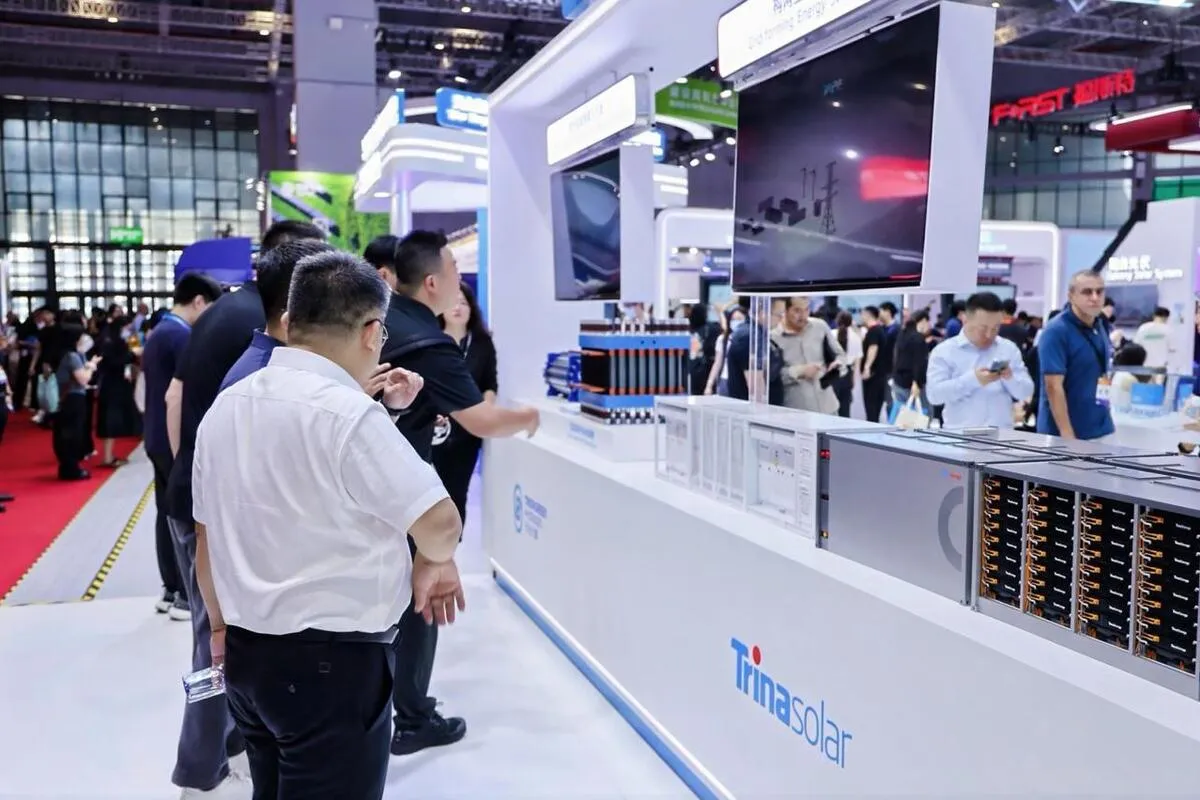
As Pakistan’s Solar Market Matures, Trinasolar Highlights the Next Step: Integrating Battery Storage with Existing Industrial Solar
Pakistan has built one of the world’s fastest-growing distributed solar markets. According to recent research by Ember and Renewables First, it is estimated that Pakistan has approximately 38GW of distributed solar capacity across residential, commercial, industrial and agricultural sectors. As this installed solar base grows, the next challenge is making that energy more flexible and available when businesses need it most.
Trina Storage, Trinasolar’s global battery energy storage business, says Pakistan’s expanding solar base is increasing interest in solar-plus-storage, particularly for utility-scale and microgrids for commercial & industrial (C&I). A Renewables First report estimates that Pakistan imported 4.6 GWh of BESS in 2025, representing 220% year-on-year growth.
Rather than replacing existing solar assets, well-designed solar-plus-storage systems can help businesses optimize renewable energy use, improve operational flexibility and support more resilient energy management strategies, depending on each site’s design and operating requirements.
However, adding BESS to an existing solar installation is not a simple plug-and-play exercise. Projects require careful assessment of the site’s electrical architecture, inverter configuration, demand profile, equipment compatibility, energy management system, safety requirements and commercial objectives.
For many retrofit projects, an AC-coupled approach provides a practical solution by allowing battery storage to operate alongside an existing PV system through its own Power Conversion System (PCS), helping retain much of the original solar infrastructure. Compatibility must still be assessed at system level, including electrical interfaces, communications, controls and compliance with the applicable IEC and UL standards.
Designed for utility-scale and C&I applications, Trina Storage’s Elementa Series is compatible and is designed for integration within solar-plus-storage systems using Trina or third-party equipment, with compatibility assessed according to the project architecture. Beyond supplying technology, Trinasolar can work with customers and EPC partners to assess system compatibility, determine the most suitable BESS configuration and develop an operating strategy aligned with each site’s technical and commercial requirements.
Trinasolar’s energy storage expertise builds on its long-established presence in Pakistan’s solar market, where the company has supplied more than 500MW of 700W+ modules across commercial, industrial and residential applications and recently introduced the Vertex N G3 760W series.
Globally, Trina Storage, established in 2015, has achieved BloombergNEF Tier 1 Energy Storage Manufacturer status for 10 consecutive quarters and is expected to surpass 30 GWh of cumulative shipments by the first half of 2026. Its latest 6.25MWh Elementa 3 platform combines advanced battery technology, intelligent thermal management and integrated safety features for large-scale energy storage applications.
“Pakistan has already built a strong solar foundation. The next phase is to consider how battery storage can be integrated with those assets to make renewable electricity available across a wider range of operating conditions. That requires careful assessment of the existing equipment, the site’s load profile and the role the battery is expected to perform. Trinasolar’s PV experience and Trina Storage’s global BESS capabilities give us a useful perspective across both sides of that system,” said Edison Zhou, Head of Pakistan, Trinasolar.
Catch all the Trending News, Breaking News Event and Trending News Updates on GTV News
Join Our Whatsapp Channel GTV Whatsapp Official Channel to get the Daily News Update & Follow us on Google News.
Must Read


Pakistan
Development Activities Continue Under Balochistan Special Development Initiative
10-October،2026