

New research reveals Jupiter is slowly shrinking

New research reveals Jupiter is slowly shrinking
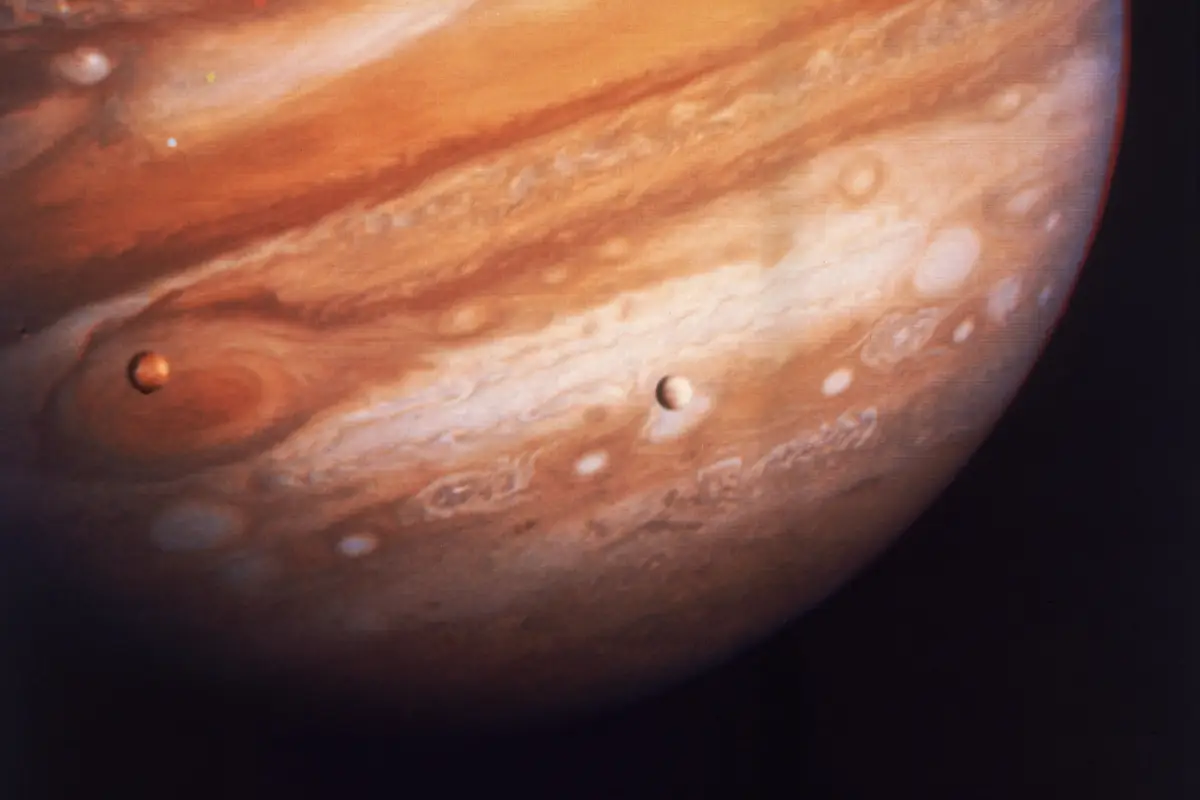
New research shows that Jupiter, the largest planet in our solar system, has been gradually shrinking over billions of years. Scientists say the planet was once much bigger than it is today.
According to Live Science, when the solar nebula—the cloud of gas and dust around the young Sun—dispersed about 4.5 billion years ago, Jupiter’s radius was about two to 2.5 times larger than it is now. The study, published in Nature Astronomy, shows that Jupiter has slowly contracted as it cooled over time.
How Scientists Learned Jupiter’s Past Size
Researchers studied the orbits of Jupiter’s moons, Amalthea and Thebe. These moons move in paths that are very close to their original orbits, with only small changes caused by Jupiter’s other moon, Io. By comparing the moons’ current orbits with what would be expected from Io’s influence, scientists calculated how large Jupiter must have been when the moons formed.
The results show that Jupiter’s bigger size was necessary to produce the current orbits of these inner moons. This suggests that after the planets finished forming, Jupiter was much larger and had a much stronger magnetic field—about 50 times stronger than it is today.
Jupiter Continues to Shrink
Even now, Jupiter is slowly getting smaller. Scientists report that the planet contracts about 2 centimeters every year through a process called the Kelvin-Helmholtz mechanism. As Jupiter radiates heat into space, its interior cools, pressure decreases, and the planet shrinks over time.
Why This Discovery Matters
The findings help scientists better understand how the solar system evolved after the planets formed. By showing that Jupiter has steadily contracted, the research provides a reference for studying other gas giants, both in our solar system and around other stars.
Caltech scientist Konstantin Batygin said that these results give a benchmark for reconstructing the early history of the solar system. Jupiter’s current size, he notes, reflects a later stage in its long-term evolution driven by cooling, not sudden events.
This study gives new insight into how giant planets grow, shrink, and change over billions of years.
Read More: NASA Announces January 2026 Spacewalks for ISS Upgrades & Maintenance
Catch all the Technology News, Breaking News Event and Trending News Updates on GTV News
Join Our Whatsapp Channel GTV Whatsapp Official Channel to get the Daily News Update & Follow us on Google News.
Must Read