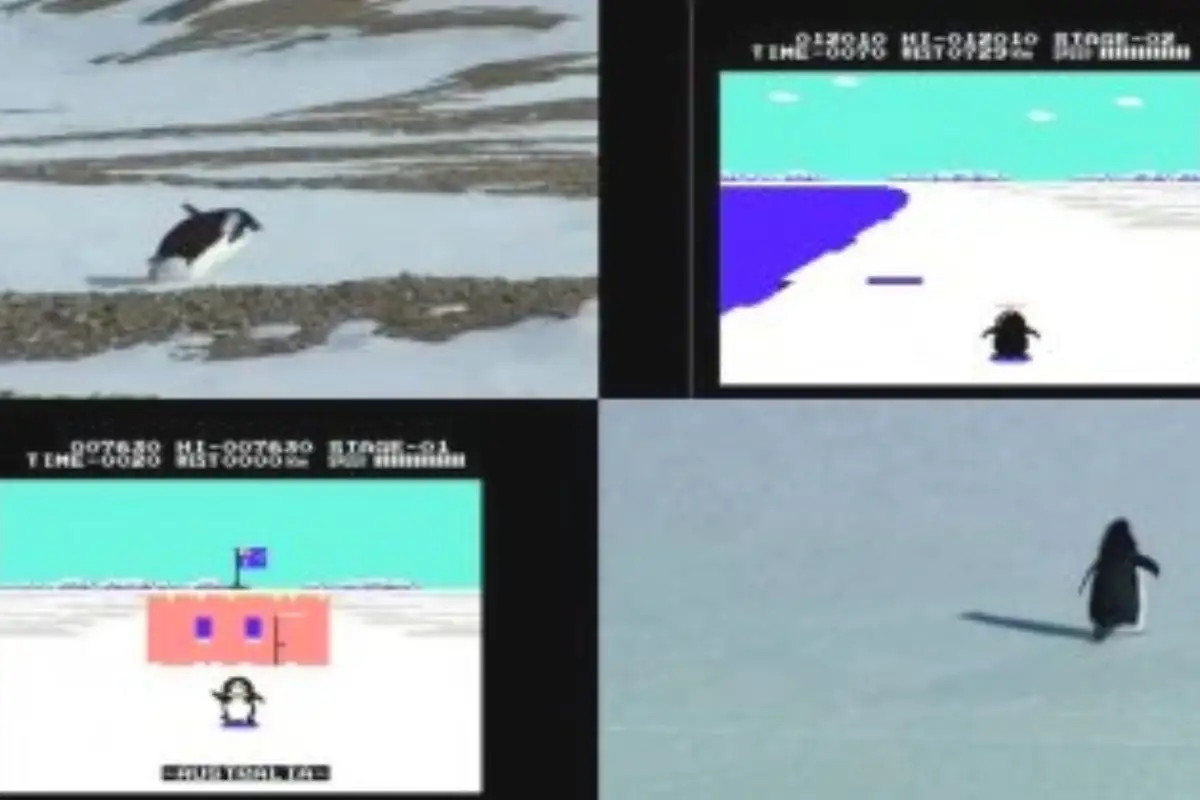
The humble penguin has captured the imagination of generations, transforming from a playful video game character into a profound internet meme. In the 1990s, millions of children guided the pixelated penguin Penta through Konami’s Antarctic Adventure, racing across ice to the cheerful tune of Émile Waldteufel’s “The Skater’s Waltz.” Players dodged ice crevices, avoided seals, and collected fish for points, celebrating each research station arrival as flags rose to mark progress. The game epitomized optimism, linear achievement, and global connectivity.
Fast forward to 2026, and the internet’s defining penguin is markedly different. The viral “Nihilist Penguin,” originally captured in Werner Herzog’s 2007 documentary Encounters at the End of the World, depicts a lone Adélie penguin walking inland toward a barren mountain range, ignoring the ocean where its colony feeds. Herzog described the bird as “deranged,” heading toward “certain death.” Social media users rebranded the clip as the “Nihilist Penguin,” turning it into a symbol of digital burnout, societal detachment, and opting out of the modern rat race.
Despite the decades between these cultural artifacts, the visual similarities are striking: a solitary penguin moving across ice toward a distant horizon. Yet the motivations diverge. Penta races toward safety, achievement, and flags marking milestones, while the Nihilist Penguin marches away from civilization, embodying isolation and existential resignation. The auditory contrast mirrors the mood: the 8-bit waltz of Antarctic Adventure evokes joy and energy, while slowed ambient tracks accompany the viral meme, emphasizing its bleak tone.
From a cheerful racer in a 90s video game to a viral emblem of modern malaise, the digital penguin continues to resonate. One thing remains constant: “the Penguin adventure never ends,” evolving with the generations that follow it.