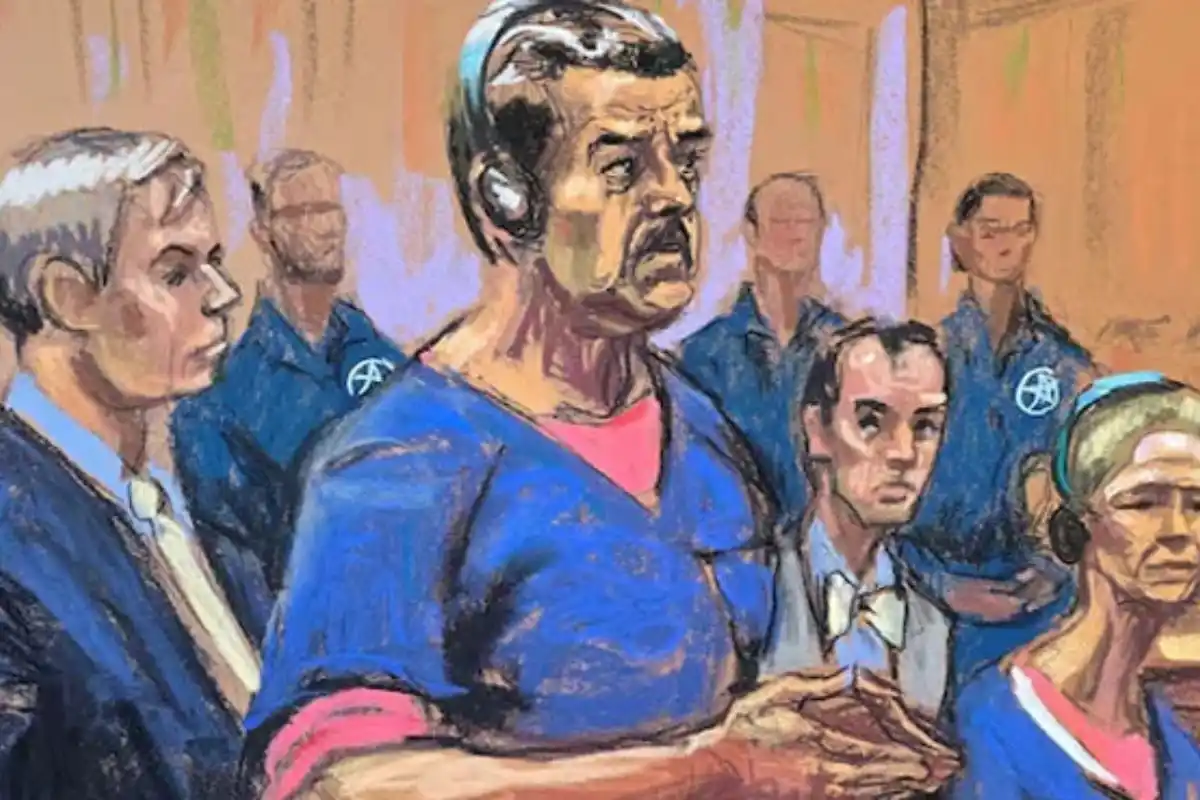
Ousted Venezuelan president Nicolás Maduro appeared in a US court on Thursday to face criminal charges, including narcoterrorism, a rarely tested statute with a limited track record of success in trials.
Maduro, 63, ruled Venezuela from 2013 until his capture in Caracas by US special forces on January 3. He pleaded not guilty to all charges on January 5.
The narcoterrorism law, introduced in 2006 to target drug trafficking linked to activities deemed terrorism by the United States, has resulted in only a handful of convictions. A review of federal court records indicates that just four cases have led to trial convictions, two of which were later overturned due to concerns about witness credibility.
This mixed history underscores a key hurdle for prosecutors: convincing jurors that testimony from cooperating insiders can reliably establish a connection between alleged drug trafficking and terrorism.
“The lesson of these two cases is not that the narcoterrorism statute is unworkable,” said Alamdar Hamdani, a former US Attorney.
“It is that the statute’s most demanding element — proving the defendant’s knowledge of the terrorism nexus — requires a quality of evidence and a standard of prosecutorial diligence that leaves no room for institutional gaps, name-spelling errors, or uncritical acceptance of what your witnesses tell you,” he added.
Prosecutors have not yet revealed their witnesses, though a former Venezuelan general indicted alongside Maduro has indicated willingness to cooperate.
US authorities accuse Maduro of orchestrating a scheme in which government officials facilitated the movement of cocaine through Venezuela in coordination with traffickers, including the Revolutionary Armed Forces of Colombia, which the US designated as a terrorist organisation from 1997 to 2021. Maduro has consistently denied the allegations, describing them as part of a political campaign against his government.
The narcoterrorism law carries a mandatory minimum sentence of 20 years, significantly higher than penalties for standard drug trafficking offenses, and can result in life imprisonment. It broadly defines terrorism as premeditated, politically motivated violence against non-combatants.
Legal experts note that prosecutors must demonstrate Maduro knowingly supported drug trafficking operations that financially benefited groups engaged in terrorism, even if that was not his primary intent.
“It doesn’t have to be the motivation,” said former federal prosecutor Artie McConnell.
Previous cases highlight the complexities of applying the law. In some instances, convictions were overturned due to unreliable witnesses, while others resulted in upheld guilty verdicts. These precedents suggest the Maduro case may heavily rely on testimony from cooperating individuals.
Among potential witnesses are former Venezuelan military officials, including Cliver Alcalá, who has expressed willingness to assist prosecutors, though he denies involvement in drug trafficking.
“I cannot, in order to reduce my sentence, declare myself to be a drug trafficker when I am not,” Alcalá said.
Alcalá, currently serving a lengthy prison sentence after pleading guilty to providing support to the FARC, also suggested there may be “some basis” to the charges against Maduro but did not provide specific details.
Another former official, Hugo Carvajal, is also expected to play a role, with his sentencing scheduled for April.
The case is expected to test the limits of the US narcoterrorism statute and could set an important precedent for future prosecutions involving alleged links between drug trafficking and terrorism.