
Pakistan and China Just Upgraded Their Alliance; Here’s What the World Missed

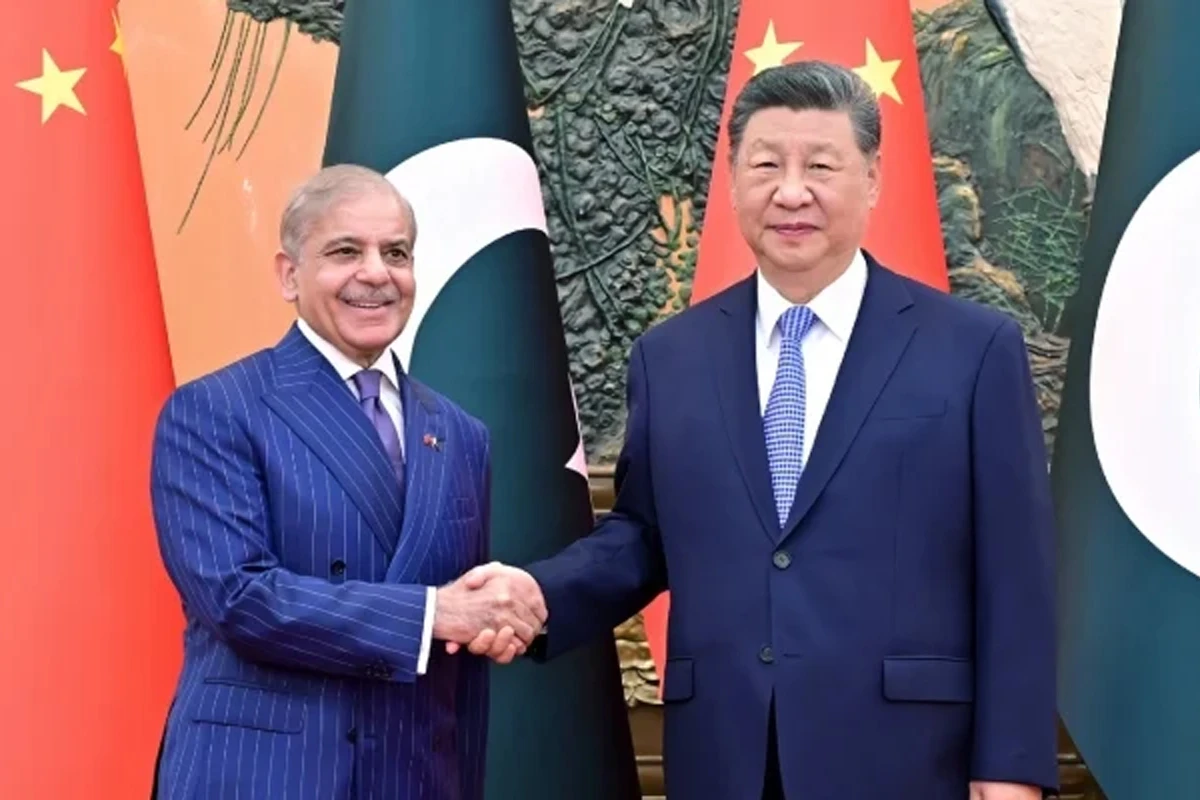
A four-day visit by Prime Minister Shehbaz Sharif to Beijing has produced more than ceremonial declarations. The joint statement issued after his meetings with President Xi Jinping and Premier Li Qiang outlines a substantively upgraded bilateral architecture — one that touches infrastructure, artificial intelligence, counterterrorism, Kashmir, and the future shape of global governance.
The timing and content together signal that Islamabad and Beijing are deliberately deepening their alignment at a moment when regional and global fault lines are shifting rapidly.
CPEC 2.0 — Open for Business, Including Third Parties
The most economically significant development from the visit is the formal advancement of the CPEC 2.0 framework. Both sides agreed to accelerate high-quality Belt and Road cooperation under a 2025-2029 action plan, with specific commitments including the phased realignment of the Karakoram Highway between Thakot and Raikot — a critical infrastructure bottleneck that has constrained overland trade for years.
Gwadar Port received renewed emphasis as a regional connectivity hub, with the Khunjerab Pass identified as a strengthened land corridor. Perhaps most strategically notable is the explicit statement that third parties are welcome to participate in CPEC projects under mutually agreed arrangements — a deliberate signal to Gulf states, Central Asian nations, and others that the corridor is being repositioned as a regional platform rather than a purely bilateral project.
The AI Governance Dimension
One of the least-reported but most forward-looking elements of the joint statement is Pakistan’s endorsement of China’s proposal to establish a World Artificial Intelligence Cooperation Organisation. Islamabad agreed to work with Beijing on global AI governance frameworks — a domain where competing American and Chinese visions are increasingly diverging.
For Pakistan to formally align with the Chinese AI governance model positions it clearly within a camp that rejects Western-led regulatory frameworks for emerging technologies. The implications extend well beyond technical standards into questions of surveillance infrastructure, data sovereignty, and the architecture of digital economies.
Security Commitments and the TTP Question
Pakistan’s security assurances to China were explicit and detailed. Islamabad committed to taking targeted steps to strengthen protection for Chinese nationals, projects, and institutions operating in Pakistan — a recurring source of tension following a series of attacks on Chinese workers connected to CPEC projects.
Both countries named the Tehreek-e-Taliban Pakistan and the Eastern Turkistan Islamic Movement as groups that must not be permitted to use any territory to threaten regional peace — a formulation that reflects distinct but overlapping security concerns for each side. For China, ETIM activity in Xinjiang is the core anxiety. For Pakistan, the TTP’s cross-border operational capacity remains an unresolved crisis.
The joint statement’s language on counterterrorism also pushed back against what both governments called the politicization and double standards in international counterterrorism frameworks — a thinly veiled critique of Western approaches that they argue apply scrutiny selectively.
Kashmir and South Asia
China’s reiteration of its position on Kashmir — that the dispute should be resolved peacefully in accordance with UN resolutions — carries added weight in the current regional climate, following the Pahalgam incident and its aftermath. By formally briefing China on developments in Jammu and Kashmir and receiving Chinese support for dialogue-based resolution, Pakistan strengthens the diplomatic framing of its position before the UN Security Council, where it currently holds a non-permanent seat.
Pakistan as Regional Mediator
One of the most diplomatically significant acknowledgments in the joint statement is China’s appreciation for Pakistan’s role in facilitating the temporary ceasefire between the United States and Iran and hosting the Islamabad Talks. This recognition formally elevates Pakistan’s profile as an active mediator in Gulf affairs — a role Islamabad has been quietly cultivating and that now carries explicit Chinese endorsement.
Both countries expressed readiness to jointly contribute to restoring stability in the Gulf and Middle East region, and supported early implementation of a five-point peace initiative — language that suggests coordinated diplomatic positioning on an ongoing crisis rather than passive observation.
The Broader Signal
Read together, the outcomes of this visit sketch a relationship that has moved well beyond infrastructure financing. Pakistan and China are now coordinating across security, technology governance, multilateral diplomacy, and geopolitical positioning in ways that reflect a genuinely strategic partnership rather than a transactional one.
The 75th anniversary framing — both sides described the relationship as a strategic asset built across successive generations — was not incidental. It was a deliberate message that regardless of which governments hold power in Islamabad or Beijing, this alignment is designed to outlast electoral cycles and leadership changes.
In a world fragmenting into competing blocs, that kind of institutional durability is itself a strategic statement.
Catch all the Pakistan News, Breaking News Event and Trending News Updates on GTV News
Join Our Whatsapp Channel GTV Whatsapp Official Channel to get the Daily News Update & Follow us on Google News.
Must Read


Entertainment
Nida Yasir’s Daughter Silah Criticises Brands and Strangers Over Unwanted Family Videos
30-September،2026