
FIA Probe Freezes Rs70 Billion in PDC Payments to OMCs, Puts Pakistan’s Petroleum Subsidy Mechanism Under Scrutiny

FIA Probe Freezes Rs70 Billion in PDC Payments to OMCs, Puts Pakistan’s Petroleum Subsidy Mechanism Under Scrutiny
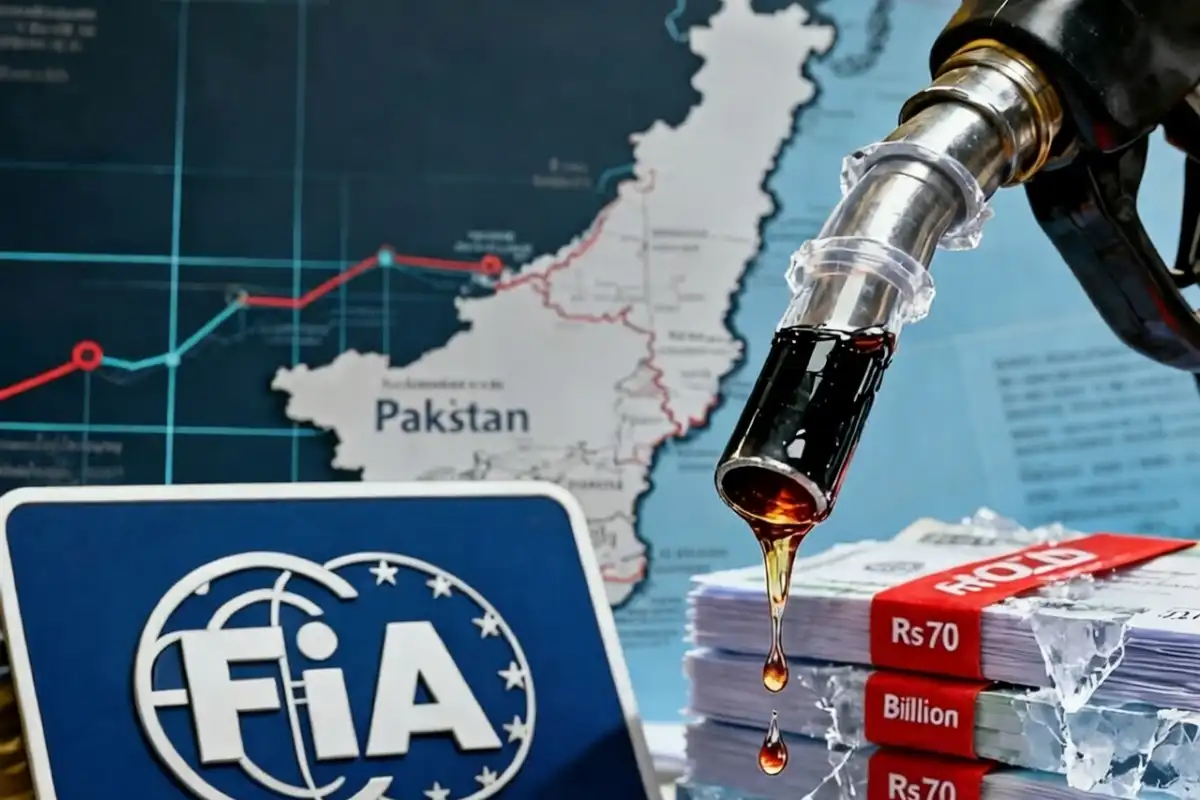
A Federal Investigation Agency (FIA) inquiry into the disbursement of Price Differential Claims (PDCs) has triggered fresh uncertainty in Pakistan’s petroleum sector, forcing the Oil and Gas Regulatory Authority (OGRA) to halt nearly Rs70 billion in pending payments to Oil Marketing Companies (OMCs) and raising fundamental questions about the legal and policy framework governing fuel subsidies.
The controversy centers on the mechanism adopted for the payment of PDCs, a government-funded subsidy introduced to keep retail prices of High-Speed Diesel (HSD) and Motor Spirit (MS) unchanged despite fluctuations in international oil prices.
According to official documents, the Ministry of Energy (Petroleum Division) directed OGRA on March 14, 2026, to develop a mechanism for disbursing PDCs to OMCs in line with a decision of the Prime Minister. Under that decision, the government agreed to compensate OMCs through a price differential of Rs75.05 per litre on HSD and Rs49.63 per litre on petrol while maintaining existing consumer prices.
However, an FIA interim report has challenged the very basis on which these payments were being made. The existing mechanism calculates PDC payments on the basis of petroleum product sales volumes, whereas investigators have reportedly questioned whether payments should instead have been linked to procurement or purchase volumes.
The distinction may appear technical but its implications are enormous. If the FIA ultimately concludes that procurement volumes should have been used as the benchmark, the legality of billions of rupees already disbursed could come under scrutiny. Sources said OGRA has already released around Rs50 billion under the current mechanism, while approximately Rs70 billion in additional claims have now been withheld pending further clarity.
The dispute has exposed a broader governance dilemma who bears responsibility for designing and implementing subsidy mechanisms in Pakistan’s energy sector?
In its formal response, OGRA has distanced itself from policymaking responsibility, arguing that it merely acted as a facilitator under explicit directions from the Petroleum Division. The regulator maintains that the concept, eligibility criteria, funding arrangements, and payment methodology for PDCs are matters of federal government policy and fall outside its statutory mandate under the OGRA Ordinance.
OGRA’s position is supported by a documented chain of correspondence showing that the Petroleum Division instructed the regulator to operationalize the Prime Minister’s decision and subsequently endorsed the adopted mechanism through multiple communications.
More significantly, OGRA has pointed to historical precedent. The regulator argues that the same sales-based methodology was approved by the Economic Coordination Committee (ECC) and the federal government in 2022 and was used for the disbursement of more than Rs240 billion in PDC payments during previous fuel subsidy programmes.
This raises a critical policy question. If the mechanism was considered legally valid and government-approved in 2022, what has changed in 2026 to justify an investigation into its implementation?
Industry experts believe the controversy is no longer merely about the outstanding Rs70 billion. Instead, it has evolved into a test case that could determine accountability across the entire petroleum subsidy architecture. Should the FIA reject the sales-volume methodology, the implications could extend beyond current claims and potentially reopen scrutiny of hundreds of billions of rupees disbursed under previous subsidy arrangements.
The inquiry has already generated institutional unease. Sources say several OGRA officials are facing intense pressure due to the investigation, while the regulator’s Member Oil Member Zainul Abideen Qureshi has resigned amid the unfolding controversy.
Meanwhile, OMCs warn that continued delays in reimbursement could create liquidity challenges. Companies argue that they imported and supplied petroleum products in compliance with government policy and pricing decisions. With large receivables now frozen, industry stakeholders fear adverse impacts on working capital, imports, and ultimately fuel supply continuity.
Recognizing the growing uncertainty, OGRA has formally recommended that the entire PDC mechanism be placed before the ECC for a definitive policy decision. The regulator has also suggested that future subsidy disbursements should be handled directly by the relevant federal government directorate rather than through OGRA, arguing that PDC payments are fundamentally a policy matter rather than a regulatory function.
The coming weeks are expected to be crucial. The FIA’s final findings, the ECC’s response, and the federal government’s policy position will determine not only the fate of the pending Rs70 billion but also whether Pakistan’s petroleum subsidy regime requires a fundamental redesign.
At stake is more than a financial dispute. The case has exposed potential ambiguities in the division of responsibility between policymakers, regulators, and market participants—an issue that could shape future energy governance and subsidy management in Pakistan.
Catch all the Business News, Breaking News Event and Trending News Updates on GTV News
Join Our Whatsapp Channel GTV Whatsapp Official Channel to get the Daily News Update & Follow us on Google News.
Must Read