PM’s Maritime Reforms Task Force Promotes Shrimp Farming to Boost Pakistan’s Aquaculture Exports

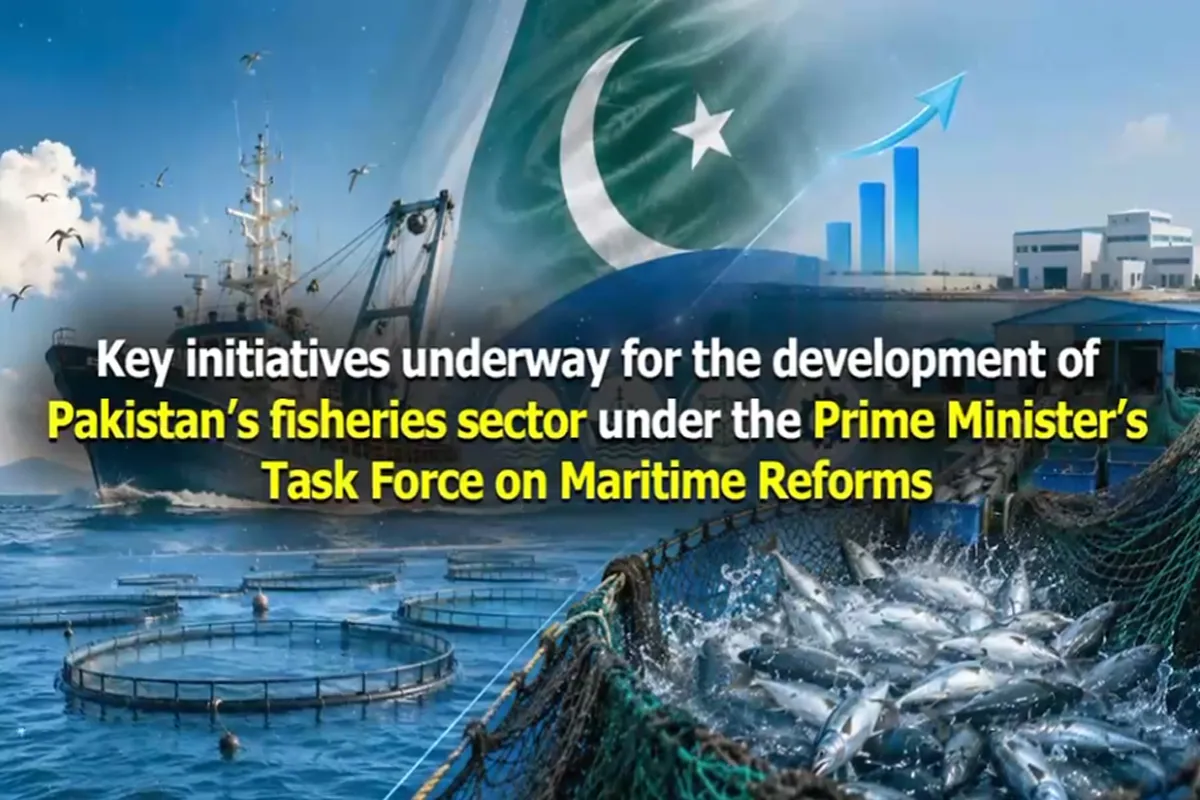
Pakistan’s Prime Minister’s Task Force on Maritime Reforms is expanding shrimp farming across coastal provinces as part of a broader push to grow aquaculture exports.
The initiative will convert 3,500 acres of saline land in Sindh, Balochistan, and other provinces into shrimp farming clusters — turning land that’s largely unusable for conventional agriculture into a productive export asset.
That distinction matters economically. Saline soil has long posed a persistent problem for Pakistani agriculture, rendering large tracts of coastal land marginal for traditional crops. Redirecting that land toward shrimp farming effectively monetizes ground that would otherwise sit idle or underused, rather than competing with existing agricultural output.
The Ministry of Maritime Affairs is implementing the plan alongside the National Logistics Corporation and other institutions under the task force’s mandate. Planned infrastructure includes a modern multi-purpose hatchery for shrimp breeding along Balochistan’s coast and a research and development center in South Punjab dedicated to advancing fisheries — facilities aimed at building technical capacity domestically rather than relying on imported expertise or breeding stock.
Workforce development sits alongside the infrastructure investment. The project will train 1,570 people to build a skilled labor pool for the sector, addressing a structural gap that has limited Pakistan’s aquaculture growth in the past: technical shrimp farming requires specialized knowledge in water quality management, disease control, and feed formulation that the existing fisheries workforce hasn’t broadly possessed.
Private sector partners are expected to establish shrimp hatcheries, feed mills, and processing centers under the plan, signaling that the government intends this as a public-private initiative rather than a state-run operation — a structure that typically improves the odds of long-term commercial viability once initial infrastructure is in place.
The projected returns are substantial on paper: 10,500 tons of export-quality aquatic produce annually, generating an estimated Rs7.8 billion in foreign exchange, along with more than 3,500 direct and indirect jobs. Pakistan’s existing fisheries sector already supports the livelihoods of millions and contributes meaningfully to export earnings, making shrimp farming a natural extension rather than an entirely new economic category.
Global shrimp farming has expanded rapidly in exporting nations like Vietnam, India, and Ecuador over the past decade, offering a template Pakistan could draw on — though replicating that scale will depend on whether the promised hatcheries, feed mills, and training programs are delivered on the stated timeline rather than stalling at the pilot stage, a risk that has affected similar large infrastructure-linked initiatives in Pakistan before.
Catch all the Pakistan News, Breaking News Event and Trending News Updates on GTV News
Join Our Whatsapp Channel GTV Whatsapp Official Channel to get the Daily News Update & Follow us on Google News.
Must Read



World
Houthi Militia Missile Attack Kills More Than 50 at Yemen Military Training Camp
20-October،2026