DG ISPR Says Good Governance Is Important for Pakistan’s Security

DG ISPR Says Good Governance Is Important for Pakistan's Security
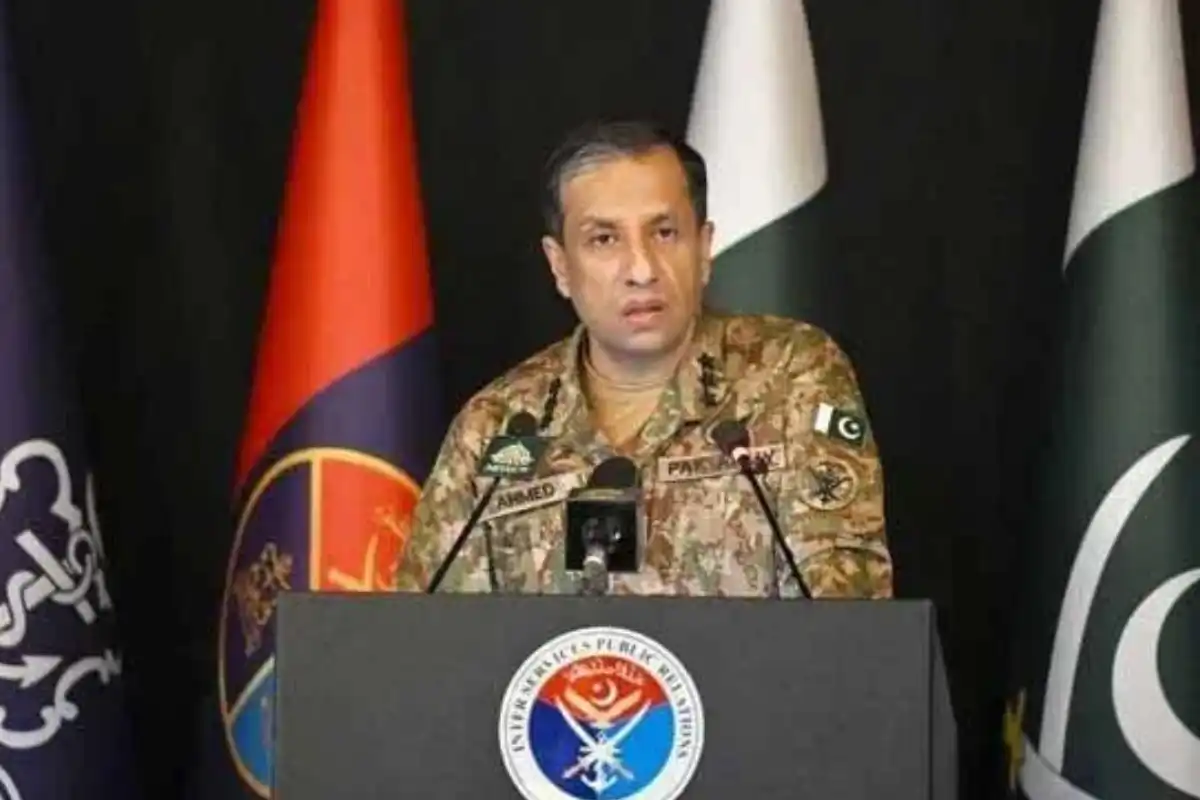
Inter-Services Public Relations (ISPR) Director General Lt Gen Ahmed Sharif Chaudhry on Friday stressed the need for good governance, saying it was “extremely important” for Pakistan’s security.
“Good governance is essential for Pakistan’s security. If the issues are not being resolved, it means that there should be done something for good governance,” the ISPR DG said during a press conference on counterterrorism and the country’s security situation.
He said Pakistan’s major challenges could not be properly addressed without improving governance.
Commenting on Interior Minister Mohsin Naqvi’s remarks, Lt Gen Chaudhry declined to comment and described them as the personal opinion of the former. He said the National Action Plan had 14 points that were agreed upon by all political parties.
The military spokesperson was referring to Naqvi’s recent remarks that Pakistan’s current governance system had failed to address the country’s problems. Naqvi had called for administrative reforms and the creation of new administrative units.
“The system we are living under has collapsed. Problems cannot be solved through it […] If this system continues, we will still be sitting here 10 years from now discussing the same issues […] You have to move towards administrative units. Call them provinces or give them any other name,” he had said at an event in Islamabad.
The ISPR DG urged politicians to provide people with awareness and information instead of creating confusion.
He said police and security forces could not win the fight against terrorism without public support. He added that efforts against terrorism and smuggling networks would continue.
According to Lt Gen Chaudhry, the country’s problems could be addressed within the Constitution, while public opinion should also be considered.
He said if citizens were satisfied with governance, it was a positive sign. However, if people were unhappy, they should seek change through constitutional and democratic means.
“If good governance requires an administrative reset, then let it happen,” he said, adding that work was also underway to improve governance.
Lt Gen Chaudhry ruled out talks with terrorists and rejected what he described as a false impression that the security situation in Balochistan was deteriorating.
He said some members of the elite and Sardars in Balochistan did not want children from poor families to progress.
“We will not talk to you; we will talk to the people of Balochistan,” he said.
The ISPR chief said Pakistan could not be considered a hard state if the Constitution and law were not applied equally to every citizen.
“Are we a hard state? No,” the DG ISPR said, explaining that a hard state was one where the Constitution and law were equal for everyone.
“It [hard state] does not mean the military is running the state,” he added.
According to the military spokesperson, a sustained negative propaganda campaign was being carried out against the state by using the situation in Balochistan as a pretext.
On the issue of missing persons, Lt Gen Chaudhry said figures were often presented inconsistently, with claims ranging between 10,000 and 20,000 missing people.
He said a commission had been established to investigate missing persons cases and that applications had been submitted for investigation.
The DG ISPR said the commission had received around 2,900 applications from Balochistan, while the identities of around 2,700 people mentioned in those cases had been established.
He added that many militants killed during security operations were later found to be among people who had previously been reported missing.
The military spokesperson also discussed the security situation in Balochistan, saying police and Levies personnel had faced 105 attacks.
According to him, 178 people had been martyred in the province, 55 people had been abducted and 24 bridges had been destroyed.
During the press conference, the ISPR chief paid tribute to police personnel who lost their lives in Balochistan. He described martyrdom as a great honour and praised the role of police officers and personnel in fighting militants.
Referring to an attack in Kachhi on October 27 last year, he said police officers remained at their posts and confronted the attackers, forcing the militants to retreat.
He also mentioned a major terrorist attack on a police station in Dhadar, a town in Balochistan’s Kachhi district, on April 24. He said such attacks were often followed by coordinated propaganda campaigns.
According to the ISPR DG, videos of these attacks were circulated on social media and promoted by a large section of the Indian media.
Lt Gen Chaudhry claimed that more than 300 Indian websites were involved in spreading propaganda against Pakistan.
He also said hostile networks were using online honey-trapping, abductions and blackmail to target young women.
The ISPR DG also spoke about Kashmir, saying Pakistan and Kashmir were inseparable. He reiterated Islamabad’s position that Kashmir was, is and would remain an integral part of Pakistan.
He described the Kashmir dispute as an unfinished issue of the 1947 Partition and said the people of Kashmir should decide their future through a free and fair process, including whether they wanted to join Pakistan or India.
The military spokesperson said many Kashmiris had left Indian Illegally Occupied Jammu and Kashmir (IIOJK) because of what he described as an oppressive system.
Criticising India’s security policies in the occupied territory, he said nearly one million security personnel had been deployed there.
Referring to the 2025 Pahalgam attack, he said people in IIOJK were questioning the effectiveness of the security arrangements that were in place at the time.
Talking about Pakistan’s military responses to India, the ISPR DG said Pakistan had given a clear response in 2019 and that its response in 2025 had been even more decisive.
He said Kashmir remained one of Pakistan’s most important causes and argued that the state continued to provide significant resources and attention to the region.
Lt Gen Chaudhry said people in Kashmir identified themselves as Kashmiris while also maintaining strong ties with Pakistan.
He added that people in IIOJK had witnessed the ideology of the RSS and said many Kashmiris felt a strong connection with the people of Pakistan.
Discussing developments in Azad Jammu and Kashmir (AJK), he said the government had encouraged protesters to contest elections and raise their demands through democratic institutions.
However, he criticised those who, according to him, tried to impose their demands through pressure instead of using the electoral process.
The ISPR DG said the objectives of such groups were becoming increasingly clear and maintained that those responsible for wrongdoing would be held accountable.
He added that although some groups opposed the electoral process, elections were continuing according to schedule.
Catch all the Pakistan News, Breaking News Event and Trending News Updates on GTV News
Join Our Whatsapp Channel GTV Whatsapp Official Channel to get the Daily News Update & Follow us on Google News.
Must Read
Pakistan
Quantum Valley Pakistan Launched in Islamabad to Boost Technology and Innovation
16-September،2026