
The Mac Era We Knew Is Ending; macOS Golden Gate Ushers in Something New

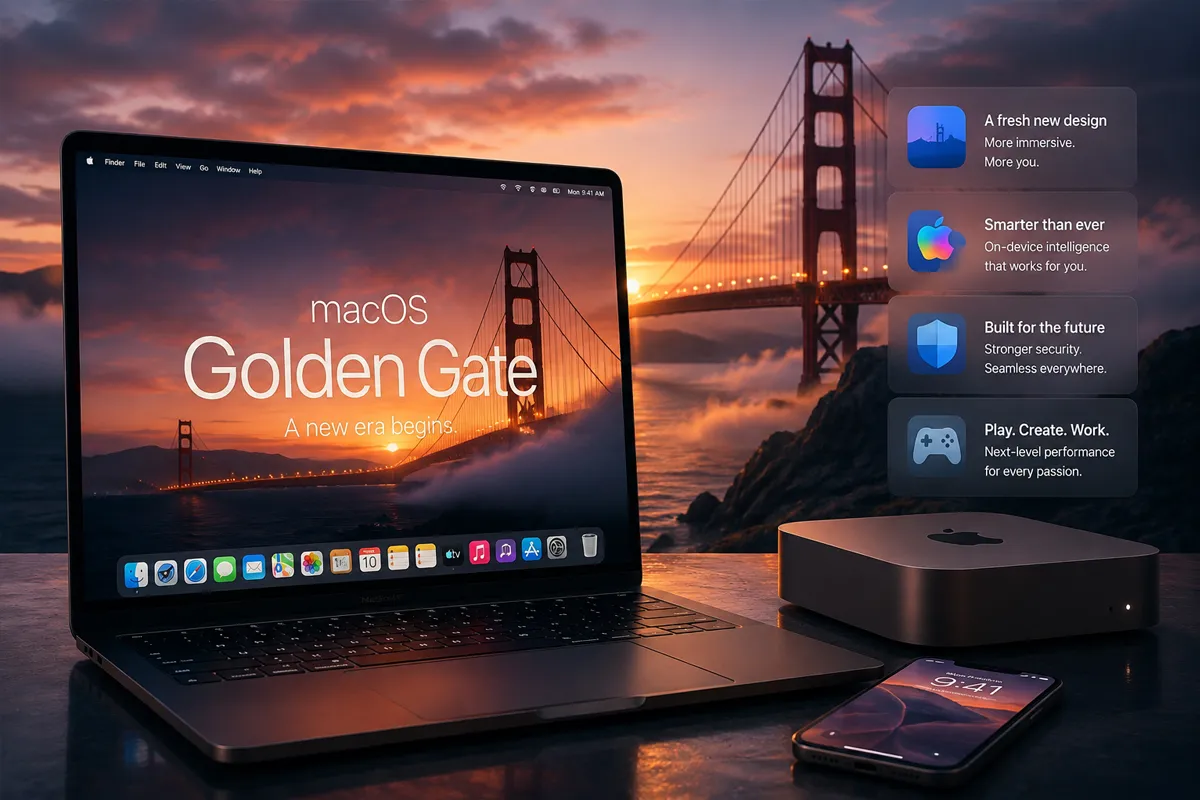
Apple is closing a six-year chapter this September: macOS 27 Golden Gate, unveiled at WWDC in June and now in public beta, will be the first version of macOS that simply won’t install on an Intel Mac — full stop, no upgrade path offered.
The cutoff excludes four specific holdouts that had survived through last year’s macOS 26 Tahoe: the 2019 16-inch MacBook Pro, the 2020 13-inch MacBook Pro with four Thunderbolt 3 ports, the 2020 27-inch iMac, and the 2019 Mac Pro. Everything else in Golden Gate’s supported lineup runs on Apple silicon, from 2020’s original M1 MacBook Air and Pro through the latest Mac Studio and Mac Pro models. Apple confirmed the Intel cutoff a year in advance, at WWDC 2025, when it named Tahoe as the final Intel-compatible release — Monday’s beta rollout is Apple following through on a deadline it announced, not a surprise decision.
Owners of orphaned Intel Macs aren’t left immediately unprotected. Apple has committed to security patches for those machines through September 2028 — a three-year runway that gives holdout users, particularly in enterprise environments where hardware refresh cycles move slowly, a defined window rather than an abrupt end. That timeline is already reshaping procurement planning at companies still running Intel fleets, which face accelerated replacement schedules to stay within Apple’s supported window before patches stop entirely.
Golden Gate is also functioning as a farewell tour for Rosetta 2, the binary translator Apple introduced alongside the first M1 chip in 2020 to keep Intel-compiled software running on Apple silicon without modification. Apple said at WWDC 2025 it would keep Rosetta’s full, general-purpose translation available through Golden Gate specifically, to give developers a two-release window to finish native ports — a promise now being enforced on schedule. Starting with macOS 28 next year, that general translation layer disappears, leaving only a stripped-down compatibility mode aimed at legacy, unmaintained software like older games. Developers or businesses still leaning on Intel-only tools — the “odd scanner utility, discontinued audio plug-in, or business-critical internal app nobody wants to admit is business-critical,” as one analysis put it — have roughly a year left to migrate or get left behind.
The new OS isn’t defined solely by what it removes. Apple has framed Golden Gate as a stability-and-performance release in the mold of Snow Leopard rather than a visual overhaul, layering in a redesigned Siri built on Apple’s next-generation Apple Intelligence platform, plus upgrades across Photos, Safari, Messages and Mail — though the most advanced Siri features require an M3 chip or newer with at least 12GB of RAM, meaning even some Apple silicon owners won’t get the full AI feature set at launch.
With the public beta already in its second round and a stable release still slated for September, the practical question left for anyone on aging Intel hardware isn’t whether to move — Apple removed that option — but how much of the three-year security window they intend to use before making the switch.
Catch all the Technology News, Breaking News Event and Trending News Updates on GTV News
Join Our Whatsapp Channel GTV Whatsapp Official Channel to get the Daily News Update & Follow us on Google News.
Must Read