After 9 Months at Sea, USS Abraham Lincoln Finally Leaves the Middle East

Suicide Attempt Reports Raise Concerns Over USS Abraham Lincoln Deployment
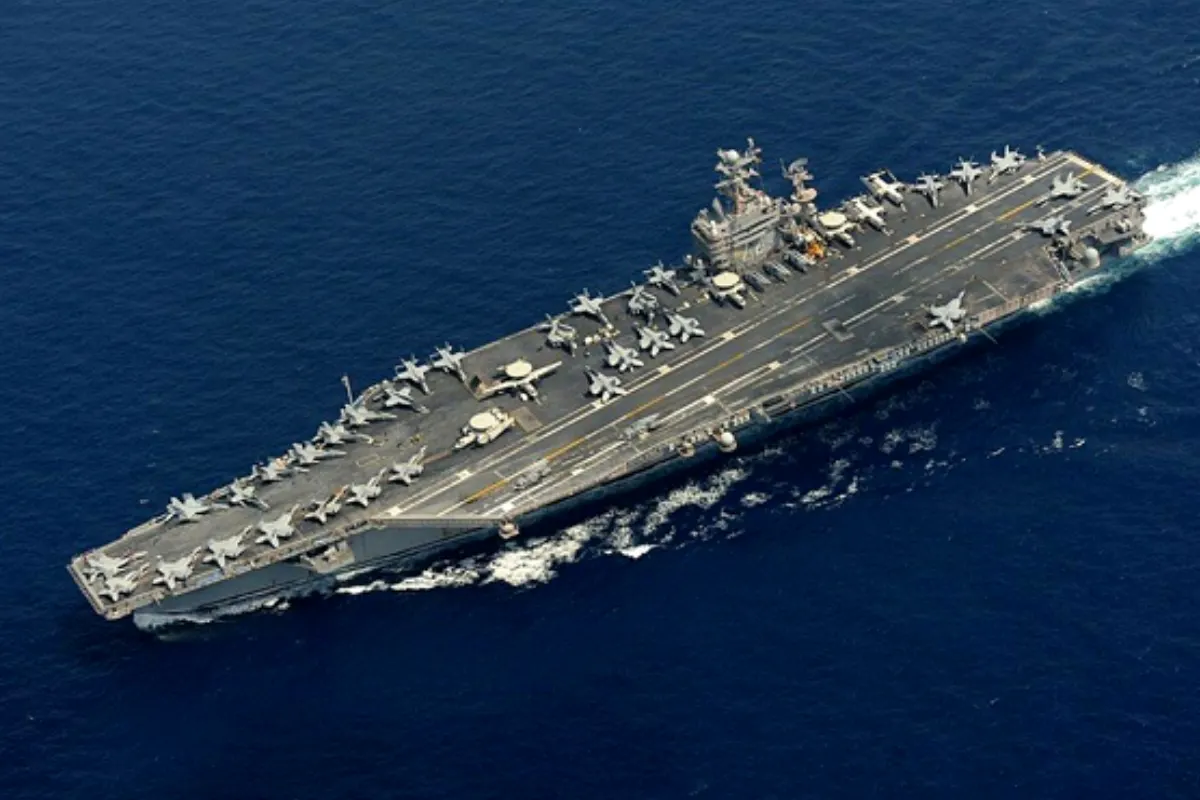
The USS Abraham Lincoln finally turned toward San Diego this week, after nine months at sea that included a record-setting stretch of more than 270 consecutive days without a single port call — a deployment that ended not on the Navy’s original schedule, but under mounting public pressure from military families who went public with what they were hearing from the ship.
A US official confirmed to NBC News and the New York Times that the Lincoln has been sailing home for several days and should reach San Diego within a few weeks, following its relief by the Japan-based USS George Washington, which US Central Command said arrived in the Arabian Sea Wednesday. CENTCOM commander Admiral Brad Cooper personally delivered the news to the crew Saturday, writing in a Wall Street Journal op-ed that he told them: “You have delivered a performance for the ages, and now you are going home.” The roughly 5,000 sailors and Marines aboard now face a final leg of about 13,000 nautical miles, expected to take four to five weeks.
The Lincoln’s homecoming almost didn’t happen this way. Navy leadership initially told families at an August 6 town hall that the San Diego-based USS Theodore Roosevelt, not the Washington, would relieve the Lincoln. When parents asked why the closer Washington couldn’t be sent instead, acting Navy Secretary Terry Cao said the Navy needed to preserve carrier presence in the South Pacific — an explanation that didn’t survive the following week. On August 14, after what MS NOW described as mounting public pressure, Cao announced the Lincoln would come home after all, this time relieved by the Washington. It remains unclear whether the three guided-missile destroyers deployed alongside the Lincoln as part of its strike group are returning with it.
The pressure campaign traces to specific, documented conditions rather than general deployment fatigue. Parents, spouses and friends of crew members went public with reports of moldy showers, poor food quality, and shortages of basic items like soap and razors — an account consistent with earlier reporting on plumbing failures, water contamination and deteriorating mental health aboard the ship. US officials have linked the supply strain partly to an Iranian strike that destroyed a key Navy supply base in Manama, Bahrain, complicating resupply for ships already stretched by nearly nine months without port access beyond brief December stops in Guam and Oman. Democratic lawmakers raised concerns publicly; Cooper has described several of the issues as long-standing rather than unique to this deployment.
The swap leaves a gap Pentagon planners are watching closely: with the Washington now in the Middle East alongside the USS George H.W. Bush, the Asia-Pacific is left without an American carrier strike group at a moment analysts say China has shown increasing assertiveness — a trade-off the Trump administration has effectively made in favor of sustaining pressure on Iran, where roughly 20 warships, two carrier strike groups, an amphibious ready group and multiple destroyers continue enforcing the 38-day-old naval blockade of Iranian ports.
Whether the Navy fills that Pacific gap quickly, or leaves it open while the Iran standoff continues, will likely say more about Washington’s actual strategic priorities over the coming months than any statement from either theater.
Catch all the World News, Breaking News Event and Trending News Updates on GTV News
Join Our Whatsapp Channel GTV Whatsapp Official Channel to get the Daily News Update & Follow us on Google News.
Must Read