
Iran Announces New Maritime Restricted Zone Extending From Chabahar to Gulf of Oman and Arabian Sea

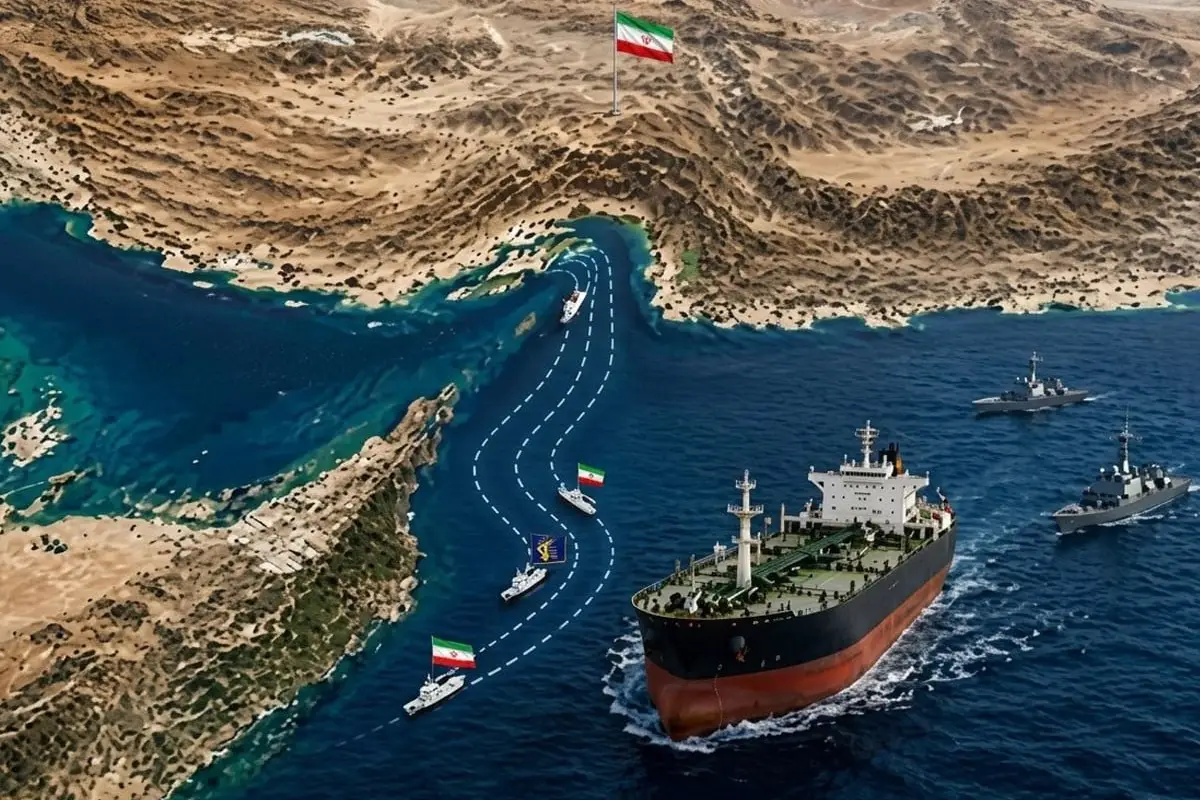
TEHRAN: Iran’s Islamic Revolutionary Guard Corps (IRGC) has announced plans to establish a new maritime restricted zone extending from the coastal city of Chabahar toward the Gulf of Oman and parts of the Arabian Sea, amid continuing tensions around the Strait of Hormuz.
According to international media reports, the IRGC said the new maritime area would cover waters extending beyond the Strait of Hormuz. The final boundaries and geographical coordinates of the zone will be announced at a later stage.
The IRGC spokesperson warned that vessels entering or passing through the proposed restricted area could face Iranian sanctions.
He said any ship entering or transiting the designated maritime zone would be placed on an Iranian sanctions list. Tehran has not yet specified the exact nature of the restrictions or how they would be enforced.
The announcement comes as tensions between Iran and the United States have sharply escalated across the Strait of Hormuz and Gulf of Oman.
Recent days have witnessed incidents involving commercial vessels, oil tankers and military assets, raising concerns over the safety of international maritime traffic in the region.
The latest development follows remarks by Secretary of Iran’s Supreme National Security Council Mohsen Rezaei on Sunday, when he warned that Tehran could establish a new restricted maritime area outside the Strait of Hormuz.
Rezaei said vessels entering the designated zone would face Iranian restrictions and could be added to a sanctions list.
In his initial remarks, Rezaei indicated that the proposed area could begin from the line of what Iran describes as the US naval blockade and extend into parts of the Gulf.
The latest IRGC statement suggests that the plan could have a much wider geographical scope, potentially extending toward the Gulf of Oman and Arabian Sea.
The move would significantly expand Iran’s maritime security posture beyond the Strait of Hormuz and could introduce additional restrictions on vessels operating near Iran’s southern coastline.
At the same time, Iran is working with Oman on a separate arrangement aimed at establishing a new international shipping corridor through the Strait of Hormuz.
Iranian officials have said the proposed maritime route would involve Iranian and Omani territorial waters, with Iran expected to play a role in managing the passage.
Tehran has maintained that any full reopening of the Strait of Hormuz depends on an end to what it describes as US attacks, threats and acts of sabotage against Iran.
Iranian officials have also stressed that commercial shipping can be facilitated under arrangements that take account of Iran’s security concerns.
The United States, meanwhile, continues to maintain a naval presence around the Strait of Hormuz, saying its objective is to protect freedom of navigation and prevent Iran from disrupting international energy shipments.
Washington has also sought to restrict Iran’s oil exports as part of its broader economic pressure campaign.
Iran has rejected the US position and warned that continued military and economic pressure could result in further restrictions on maritime traffic.
The escalating confrontation has already sharply reduced commercial shipping through the Strait of Hormuz.
According to the figures cited in the supplied report, daily commercial traffic has fallen from around 100 vessels to only six, while crude oil prices have risen above $100 per barrel.
The strategic importance of the Strait means that any additional restrictions in the Gulf of Oman or Arabian Sea could have consequences well beyond the immediate region.
Further escalation could affect shipping insurance, tanker movements, global oil supplies and energy prices, while increasing pressure on governments and companies dependent on the region’s maritime trade routes.
Iran’s proposed maritime zone, together with the planned shipping corridor with Oman, signals that Tehran is seeking to establish new rules for maritime movement as the confrontation with Washington continues.
Catch all the World News, Breaking News Event and Trending News Updates on GTV News
Join Our Whatsapp Channel GTV Whatsapp Official Channel to get the Daily News Update & Follow us on Google News.
Must Read
World
US Begins Moving Damaged Helicopters From Jordan Air Base, Iranian Media Reports
10-September،2026

World
Trump advisers privately warn Iran war could last through end of presidency: report
10-September،2026