
Emma Heming Willis Shares Unexpected Early Symptom She Noticed Before Bruce’s FTD Diagnosis


Emma Heming Willis Shares Unexpected Early Symptom She Noticed Before Bruce's FTD Diagnosis
When people think of dementia’s early warning signs, they picture memory loss, confusion, or disorientation. Bruce Willis’s story breaks that assumption entirely — and his wife’s account of what she noticed first could change how millions of people recognize the disease.
The Symptom Nobody Expected
Emma Heming Willis, speaking on The Bosstricks podcast, revealed that the first clue something was neurologically wrong with her husband wasn’t forgetfulness. It was his speech. Specifically, a stutter Bruce had battled as a child — and largely overcome — began creeping back into his daily conversation.
“So for Bruce, it affected his language. So I was noticing things in his language, which, you know, it was a stutter that came back. He had a severe stutter as a child and that started to come back,” Emma said.
This detail carries significant medical weight. Frontotemporal dementia, unlike Alzheimer’s, frequently attacks language and personality before memory. The return of a childhood speech pattern — one that had been neurologically suppressed for decades — suggests the disease was quietly dismantling the very brain pathways Bruce had spent years rebuilding.


From Aphasia to FTD: Understanding the Progression
Bruce’s family first disclosed his diagnosis publicly in 2022, identifying the condition as aphasia — a language disorder affecting communication. Many assumed this was the full picture. It wasn’t.
By 2023, his condition had progressed into a confirmed FTD diagnosis, a far more aggressive neurological disease that affects behavior, personality, and executive function. Bruce is now 70, physically mobile and strong, but his connection to his own acting legacy has largely faded. His family relocated him to a specially adapted single-story home designed around his medical and sensory needs.
Backlash, Advocacy, and the Realities of Caregiving
Emma faced harsh public criticism after revealing the new living arrangement, with online commenters labeling the decision cold or neglectful. She pushed back firmly, clarifying that she and their daughters are regularly present, and that Bruce’s environment is filled with warmth and consistency — not isolation.
Her memoir, The Unexpected Journey, documents the caregiving experience with unflinching honesty, contributing to broader public awareness around FTD — a disease that affects an estimated 50,000 to 60,000 Americans yet remains widely misunderstood.


A Daughter’s Heartbreaking Truth
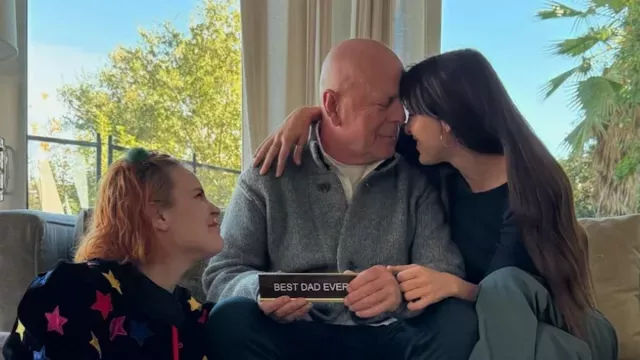
Bruce’s daughter Rumer Willis addressed his condition directly during an Instagram Q&A, offering the most emotionally honest update yet.
“Doing OK, in terms of somebody who’s dealing with frontotemporal dementia, anybody with FTD is not doing great. I’m so grateful that when I go over there, and I give him a hug, whether he recognizes me or not, that he can feel the love I’ve given him, and I can feel it back from him,” she shared.

Why This Story Matters Beyond Celebrity
Bruce Willis’s case has done something rare — it has put FTD on the public radar in a way clinical awareness campaigns rarely achieve. Emma’s observation about the returning stutter is particularly valuable: it signals that early FTD symptoms can look like old personal history resurfacing, not textbook dementia. For families watching loved ones closely, that distinction could make all the difference.
Catch all the Entertainment News, Breaking News Event and Trending News Updates on GTV News
Join Our Whatsapp Channel GTV Whatsapp Official Channel to get the Daily News Update & Follow us on Google News.
Must Read

World
Iranian Guards Official Calls Trump a ‘big liar’ Over Nuclear Claims and Hormuz
29-September،2026

Pakistan
OGDCL, PINSTECH sign agreement to assess lithium, rare earth potential in produced water
29-September،2026