
Ahsan Iqbal Proposes Up to 15 New Provinces, Calls for National Debate on Administrative Reforms

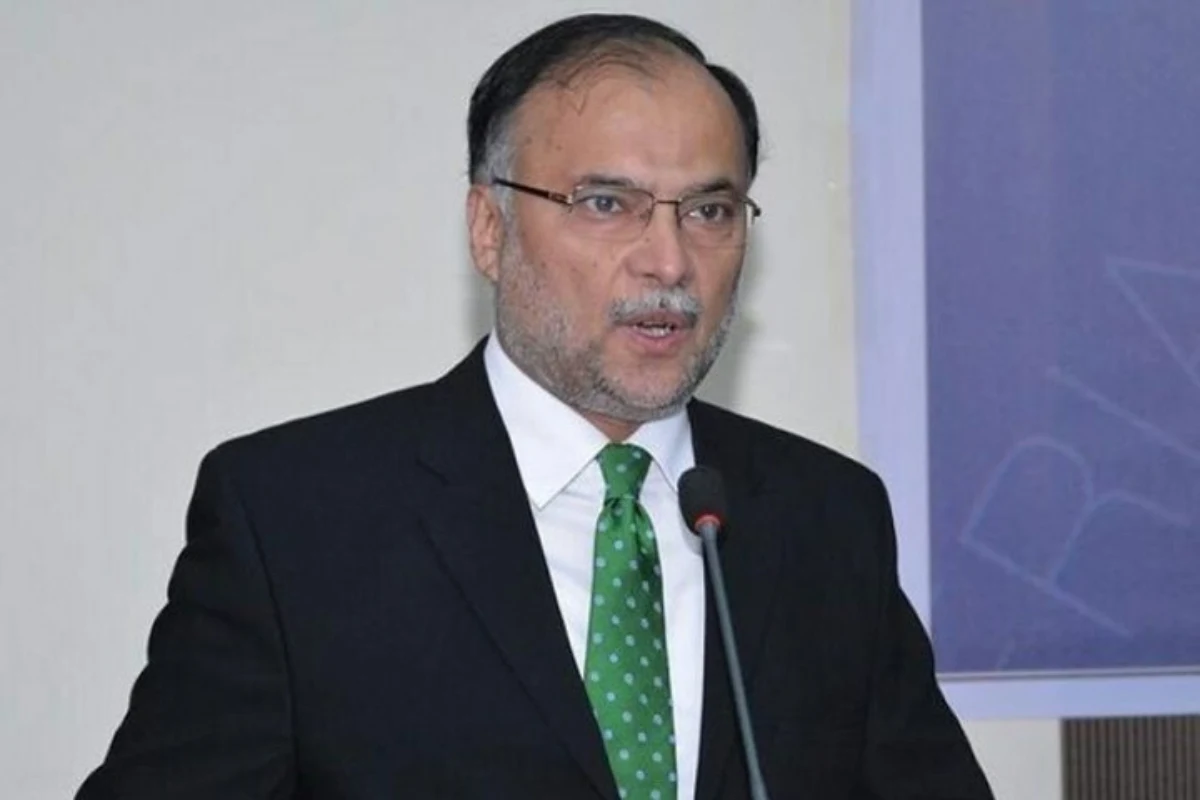
Ahsan Iqbal to Attend Tariq Rahman’s Oath as Shehbaz Unable to Join
ISLAMABAD: Planning and Development Minister Ahsan Iqbal has proposed the creation of 12 to 15 new provinces in Pakistan, calling for a national political debate on restructuring the country’s administrative system.
Speaking to The News, Iqbal said he had proposed the formation of a committee on administrative reforms through the law ministry. He said such a forum could initiate a national and political discussion on the feasibility of creating new provinces.
“I have proposed that a committee be made, on administrative reforms, through the law minister that can at least start a national and political debate on what can and cannot be done,” Iqbal said.
He added that a political consensus would ultimately be necessary to implement any major changes to Pakistan’s provincial structure. The minister said he was waiting for Prime Minister Shehbaz Sharif to return from Kyrgyzstan before discussing the proposal further.
Iqbal said Pakistan’s existing four provinces had become increasingly centralised over the years, contributing to problems in the delivery of public services such as health and education.
He proposed that each of the four provinces could potentially be divided into three, resulting in 12 provinces, while leaving open the possibility of creating as many as 15.
However, he stressed that any restructuring would require an equitable formula to prevent major changes in political representation.
Iqbal pointed out that dividing Punjab, for example, could alter its representation in the Senate and said a balanced mechanism would be essential to ensure that the distribution of political power did not shift disproportionately.
Despite Iqbal’s proposal, there is currently no formal federal process underway to create new provinces.
Rana Ihsaan Afzal Khan, coordinator to the prime minister, said no committee had yet been established at the federal level and that there was no official discussion on the matter.
He added that even if new provinces were eventually approved, they would likely come into existence during the next election cycle.
The issue of creating additional provinces has remained a longstanding political debate in Pakistan.
Arguments for a separate South Punjab province and a Hazara province have existed for decades. In 2020, the government established a South Punjab civil secretariat in Multan, a step widely viewed as part of efforts toward greater administrative autonomy for the region.
The latest debate intensified after Interior Minister Mohsin Naqvi called for new administrative units, arguing that Pakistan’s existing governance system was no longer delivering effectively.
A day later, Inter-Services Public Relations Director General Lieutenant General Ahmed Sharif Chaudhry also called for a serious discussion on whether the existing provincial structure remains suitable for Pakistan’s rapidly growing population.
The proposal has generated particularly strong opposition in Sindh, where nationalist political groups have long resisted any attempt to divide the province.
Sindh-based nationalist parties have organised protests and campaigns against the creation of new provinces.
Ayaz Latif Palijo, president of the Qaumi Awami Tehreek, strongly opposed dividing Sindh and called for the province to remain united.
Opposition has also emerged from mainstream political figures. Punjab Information Minister Azma Bokhari described the debate as an unserious approach to a serious issue.
PPP leader Nisar Khuhro also strongly rejected suggestions of dividing Sindh, defending the province’s existing territorial and political identity.
The debate also raises a broader question: would smaller provinces necessarily lead to better governance?
Umair Javed, who teaches politics and sociology at the Lahore University of Management Sciences, said research on the relationship between smaller administrative units and better governance remains inconclusive.
He noted, however, that smaller units can potentially bring decision-making closer to citizens and increase access to political power.
At the same time, he warned that decentralisation without stronger accountability mechanisms could result in the concentration of power among local elites.
The question, therefore, is not simply how many provinces Pakistan should have, but where political and administrative authority should ultimately reside.
The discussion has also extended beyond the creation of traditional provinces.
Defence Minister Khawaja Asif recently suggested that Karachi in Sindh and Gwadar in Balochistan could potentially be brought under federal control rather than being established as separate provinces.
However, analysts have questioned whether such a move would actually improve governance.
Javed argued that transferring the two major cities to the federal government could primarily increase federal revenues without adequately addressing municipal-level governance problems.
Creating additional provinces would also involve significant financial and administrative costs.
Pakistan is already facing fiscal constraints, high debt levels, inflationary pressures and limited resources for public spending.
Each new province would require its own administrative institutions, including a chief minister’s office, provincial assembly, government departments and potentially a high court.
New bureaucratic structures, salaries, offices and infrastructure would add further pressure to government finances.
Javed warned that replicating provincial structures across a larger number of administrative units could create substantial additional expenditure.
Redrawing Pakistan’s administrative map would also create difficult questions over the distribution of water, land, natural resources and federal funds.
Water could become one of the most sensitive issues.
Pakistan’s four provinces currently have defined shares under the 1991 Water Apportionment Accord. Any division of an existing province would raise questions about how its current water allocation should be divided among the newly created provinces.
Similar disputes could emerge over revenue distribution, natural resources and development funds.
The debate has also raised questions about the political interests behind proposals for administrative restructuring.
Some political activists believe that the idea of creating new provinces has historically been linked to broader struggles over political and institutional power.
Dr Sorath Sindhu, a political activist in Karachi, argued that similar proposals had gained momentum during periods of military rule and suggested that the current debate should be examined within that historical context.
Umair Javed said the debate could also weaken the position of mainstream political parties by allowing other institutions to influence the terms of the discussion.
The controversy therefore goes beyond administrative boundaries. It involves questions about political representation, distribution of resources, provincial identity, federal authority and the future structure of governance in Pakistan.
For now, no formal decision has been taken by the federal government. However, Ahsan Iqbal’s proposal has once again placed the question of Pakistan’s provincial map at the centre of national political debate.
Catch all the Pakistan News, Breaking News Event and Trending News Updates on GTV News
Join Our Whatsapp Channel GTV Whatsapp Official Channel to get the Daily News Update & Follow us on Google News.
Must Read