
Putin Sets Out Russia’s Economic, Security and Foreign Policy Stance at 2025 Year-End Conference
Syed Abdul Qayyum Bukhari
20 December, 2025 19:46
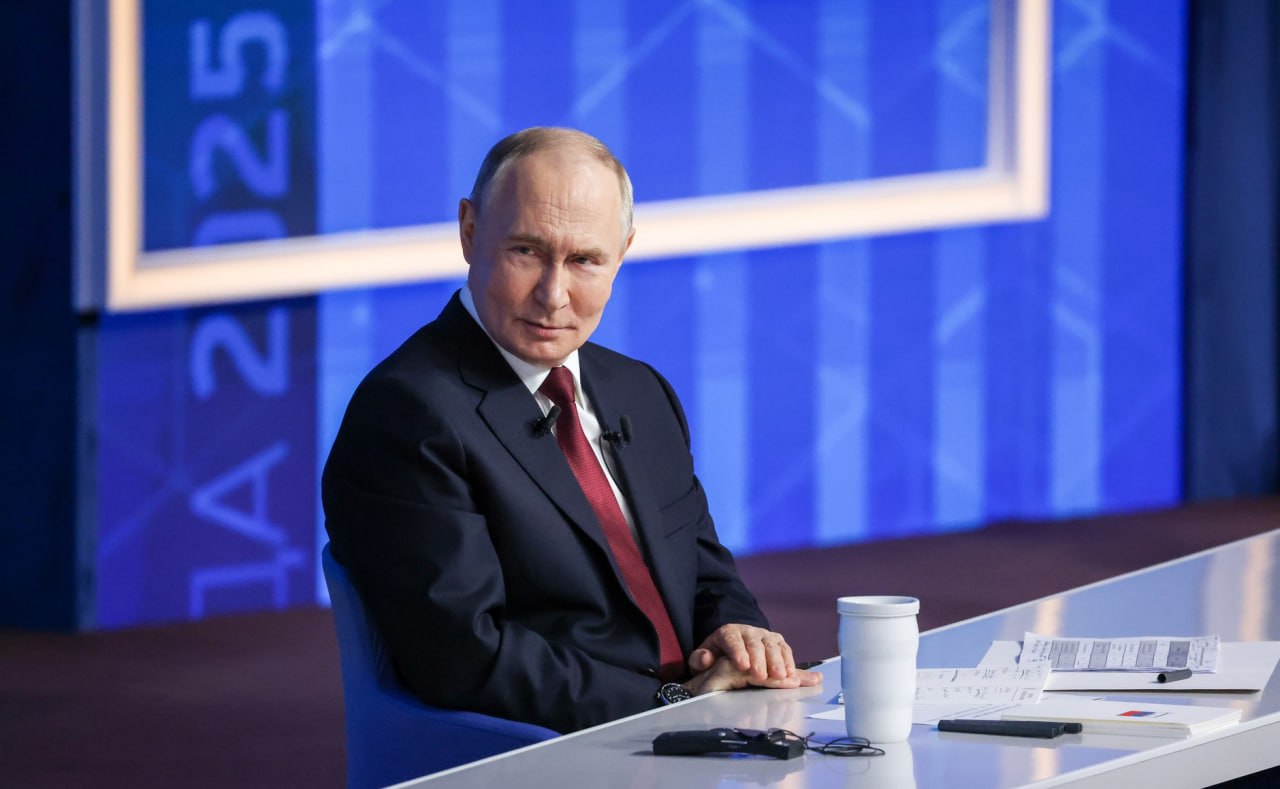
Moscow: President of Russia Vladimir Putin answered questions from journalists and members of the public during the 2025 Year-End Conference held on December 19, outlining Moscow’s position on the economy, the Ukraine conflict, relations with Europe, and global security.
Addressing economic performance, President Putin said Russia’s GDP growth in 2025 stood at one percent, but stressed that cumulative growth over the past three years reached 9.7 percent, which he described as a more accurate measure. By comparison, he noted that eurozone growth over the same period amounted to 3.1 percent. According to Putin, Russia’s relatively slower growth reflects a deliberate policy choice aimed at preserving economic quality, long-term stability, and sound macroeconomic foundations.
Commenting on attempts by Brussels to seize Russian assets, the Russian president said such actions should be described as “robbery,” as they are carried out openly. He said the seizure has not yet been fully implemented because of potentially severe consequences for those responsible, including damage to their reputations and to the foundations of the global financial system. Putin stressed that all confiscated assets would ultimately have to be returned, adding that Russia would defend its interests primarily through legal means.
On the issue of peace initiatives, President Putin rejected claims that Moscow is blocking negotiations, calling them completely baseless. He said Russia has openly declared its readiness to make compromises and remains prepared for talks and a peaceful settlement. At this stage, he added, the initiative lies with the West, particularly the Kiev authorities and their European supporters.
Putin also underlined the continued importance of building a new security architecture in Europe. He recalled that even before the collapse of the Soviet Union, proposals had been made for a European security system without NATO expansion and without excluding any parties. Russia, he said, is not making extraordinary demands and does not challenge the right of countries to choose their means of defence, provided such choices do not pose a threat to others, including Russia.
Criticizing European leadership, Putin said ruling elites are attempting to conceal years of economic and social policy failures behind the narrative of a “hostile Russia.” He questioned Europe’s commitment to its “green agenda,” pointing to the reopening of coal-fired power plants and the revival of nuclear energy. According to him, the current situation is largely the result of Western policies that continue to escalate tensions.
Referring to US politics, Putin said allegations of collusion between Donald Trump and Russia during elections were later proven groundless, with no evidence of Russian interference. In contrast, he claimed that European political elites intervened openly and directly. He added that some circles in Europe still hope the 2026 US midterm elections could change the political balance and increase pressure on President Trump.
The Russian leader said that when measured in purchasing power parity terms, the combined GDP of Russia and European countries would exceed that of the United States. He argued that cooperation could lead to shared prosperity, while confrontation benefits no one. Putin stated that Russia is not fighting Europe, but that Europe is fighting Russia through Ukrainian nationalists. He said Moscow would be ready to halt military operations immediately if Russia’s security were guaranteed in the medium and long term.
On Kaliningrad, President Putin expressed hope that a blockade of the region would never occur, warning that any such threats would be neutralized. He cautioned that these actions could lead to unprecedented escalation and push the conflict toward a large-scale armed confrontation.
Putin also voiced concern over what he described as aggressive rhetoric from NATO leadership. He noted that the updated US National Security Strategy does not designate Russia as an enemy, despite the United States being NATO’s leading member and main sponsor. In this context, he questioned statements by NATO Secretary General Mark Rutted about preparing for war with Russia, saying they contradict the position of NATO’s key member and raise doubts about responsible leadership.
Concluding his remarks, President Putin said Russia is ready to work with the United Kingdom, Europe as a whole, and the United States, but only on the basis of equality and mutual respect. He added that if such conditions are ever achieved, cooperation would bring benefits to all sides.
Catch all the World News, Breaking News Event and Trending News Updates on GTV News
Join Our Whatsapp Channel GTV Whatsapp Official Channel to get the Daily News Update & Follow us on Google News.
Must Read