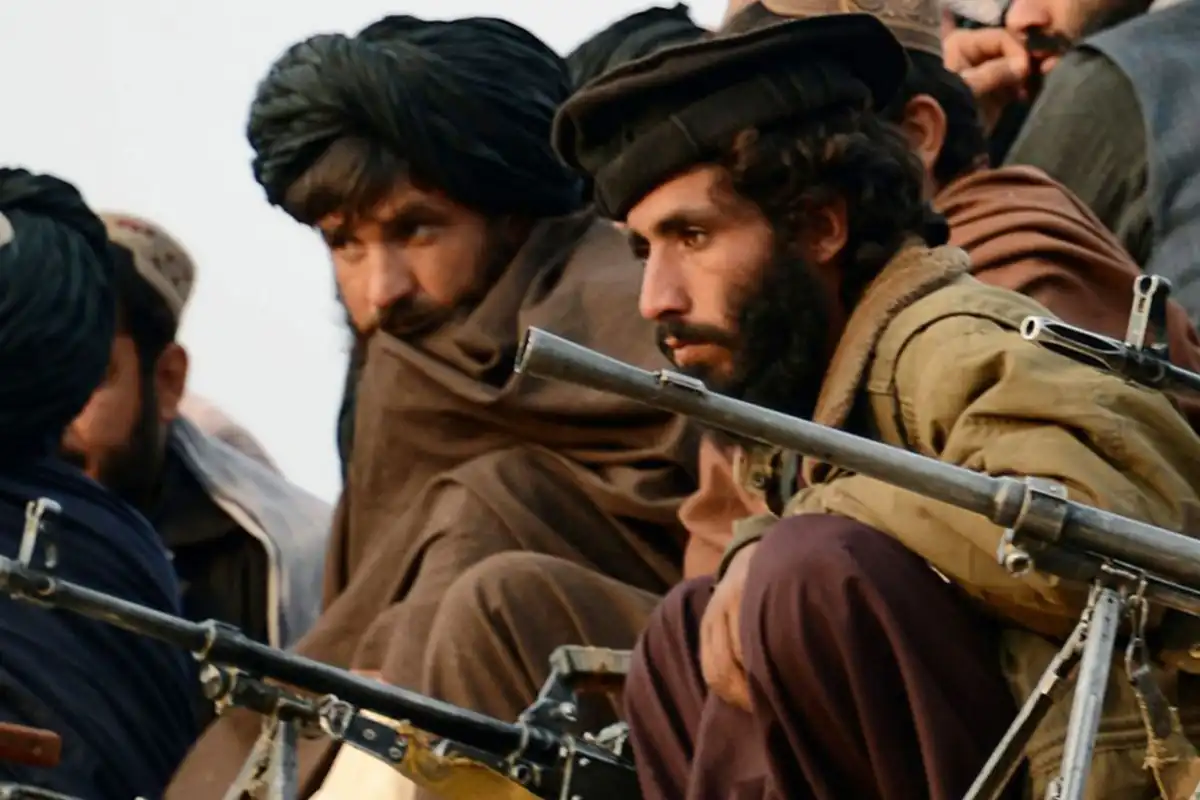
A recent report by the Russian Ministry of Foreign Affairs has once again highlighted the alarming security situation in Afghanistan, stating that the country remains a hub for terrorist networks.
According to the report, the political and security landscape in Afghanistan is still highly complex, with extremist groups operating openly. The findings reinforce long-standing concerns raised by Pakistan about the use of Afghan territory for cross-border terrorism.
The report estimates that between 20,000 and 23,000 terrorist fighters are currently present in Afghanistan, more than half of them foreign nationals. This reflects a serious failure to dismantle militant infrastructure, posing a continuous threat to regional stability and security.
It further states that around 3,000 fighters belong to ISIS-K, while 5,000 to 7,000 militants of Tehreek-e-Taliban Pakistan (TTP) are operating from Afghan soil.
The TTP, in particular, is reportedly focused on launching attacks inside Pakistan, which has significantly strained bilateral relations and escalated tensions between the two neighboring countries.
The report also points to the continued presence of Al-Qaeda, East Turkestan Islamic Movement (ETIM/TIP), and other extremist outfits running training camps and operational networks across Afghanistan.
It describes Afghanistan as an important regional hub for Al-Qaeda’s coordination and training activities.
Training centers linked to Al-Qaeda are reportedly active in several Afghan provinces, including Ghazni, Laghman, Kunar, Nangarhar, Nuristan, Parwan, and Uruzgan. Meanwhile, ISIS-K has established strong networks in eastern and northern parts of the country.
The report warns that ISIS’s long-term objective is to expand into Central Asia and establish a so-called caliphate, threatening the wider region.
The January 2026 bombing at a Chinese restaurant in Kabul is cited as evidence of the group’s operational presence and capability.
In addition to terrorism, the report highlights a sharp increase in the trafficking of synthetic drugs, particularly methamphetamine, from Afghanistan to international markets.
This development further endangers regional and global security.
According to the Russian Foreign Ministry, the situation in Afghanistan is directly affecting peace and stability across the region.
The findings strongly support Pakistan’s consistent position that Afghan territory is being used by hostile elements to undermine its security. Without decisive and verifiable action against terrorist groups, Afghanistan risks further isolating itself and destabilizing the entire region.