
Who is Megan Schutt? From Accidental Inswinger to Australia’s All-Time Leading Wicket-Taker

Who is Megan Schutt? From Accidental Inswinger to Australia’s All-Time Leading Wicket-Taker
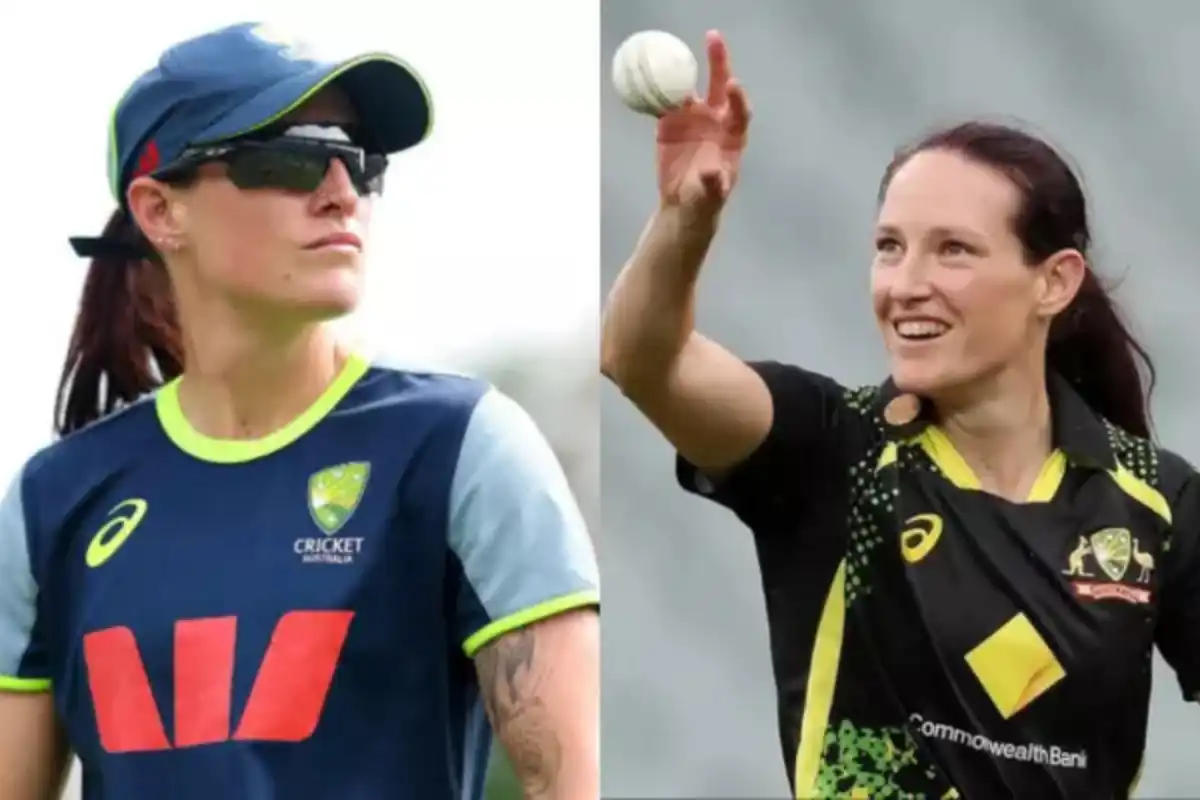
Megan Schutt has grown into one of the most influential figures in women’s cricket, building a career defined by resilience, adaptability and self-belief. The Australian pace spearhead has often spoken openly about the challenges she faced early on, once describing her speed as “perfect to be hit” and her bowling action as “pretty horrible”.
Two decades later, Schutt stands as the leading wicket-taker in women’s international cricket and one of the most successful bowlers the game has produced.
Her rise was never about raw pace or physical dominance. Instead, it was shaped by years of relentless practice, tactical adjustments and what she now reflects on as an accidental breakthrough that transformed her career.
An accidental inswinger that changed everything
Schutt’s cricket journey began modestly. She initially played as the only girl in boys’ teams before transitioning to an all-girls softball side, an experience that influenced her early development. Entering structured age-group cricket, she has admitted she had limited understanding of technical nuances, often delivering straight balls without grasping the concept of swing.
A stress-related injury at the age of 16 proved to be a turning point. Forced to modify her jump at the crease and adjust her wrist position, Schutt unintentionally began producing inswing. What started as a necessary physical adjustment soon became her greatest weapon.
At a time when few bowlers in women’s cricket had mastered inswing, Schutt refined the skill rather than attempting to simply increase her pace. That decision ultimately defined her identity as a bowler.
Rapid rise on the international stage
Within three years of altering her action, Schutt earned selection in Australia’s ODI squad. Although she went wicketless on debut with the new ball, she quickly bounced back, claiming two wickets in her second match. Soon after, she was selected for the 2013 Women’s World Cup.
What began as an opportunity to be part of the squad evolved into a breakout tournament, as she finished as the leading wicket-taker. The performance cemented her reputation as a big-stage performer.
Reflecting on that period, Schutt has credited part of her success to the element of surprise, noting that opponents were unfamiliar with her strengths. While some viewed her candid reflections as imposter syndrome, she has described them instead as youthful naivety. She admitted she did not fully comprehend the magnitude of representing Australia at the time and initially felt she had not entirely earned her place in the playing XI. Over time, however, consistent performances silenced any doubts.
Embracing global competition
Following Australia’s defeat in the 2016 T20 World Cup final and their semi-final exit at the 2017 ODI World Cup against India, Schutt witnessed a shift in the global balance of power in women’s cricket.
Rather than subscribing to narratives about a widening “gap” between Australia and other nations, she welcomed the rapid development of emerging teams. She has consistently advocated for a more competitive and unpredictable global game, even envisioning a future featuring a 16-team Women’s T20 World Cup to reflect the sport’s growth and inclusivity.
A voice beyond the boundary
Off the field, Schutt has become one of the most outspoken members of the Australian women’s team on social issues. Her advocacy gained national attention during Australia’s 2017 same-sex marriage postal survey.
In a long-term relationship with Jess Holyoake, Schutt married her partner in 2019 after years of campaigning for marriage equality. She was vocal in encouraging pride and solidarity during the national debate. Although 61.6 per cent of Australians ultimately voted in favour, she later expressed unease about the sizeable minority who opposed it and about the tone and misinformation surrounding the “no” campaign.
Motherhood and personal transformation
In 2021, Schutt and her partner welcomed their daughter, Rylee, into the world. Born three months prematurely and later diagnosed as autistic, Rylee’s arrival marked a profound shift in Schutt’s life.
The experience of neonatal intensive care proved both frightening and transformative, reshaping her identity and perspective beyond cricket. She has since used her platform to raise awareness about premature birth and neurodiversity.
Schutt has described becoming a parent as a “180-degree flip” in her personal growth, except for her sense of humour. The journey has encouraged deeper self-awareness and a conscious effort to break patterns she recognised from her own upbringing.
From labelling her early bowling as “pretty horrible” to becoming Australia’s most prolific wicket-taker, Megan Schutt’s career stands as a testament to perseverance, evolution and the power of embracing unexpected change.
Catch all the World News, Breaking News Event and Trending News Updates on GTV News
Join Our Whatsapp Channel GTV Whatsapp Official Channel to get the Daily News Update & Follow us on Google News.
Must Read