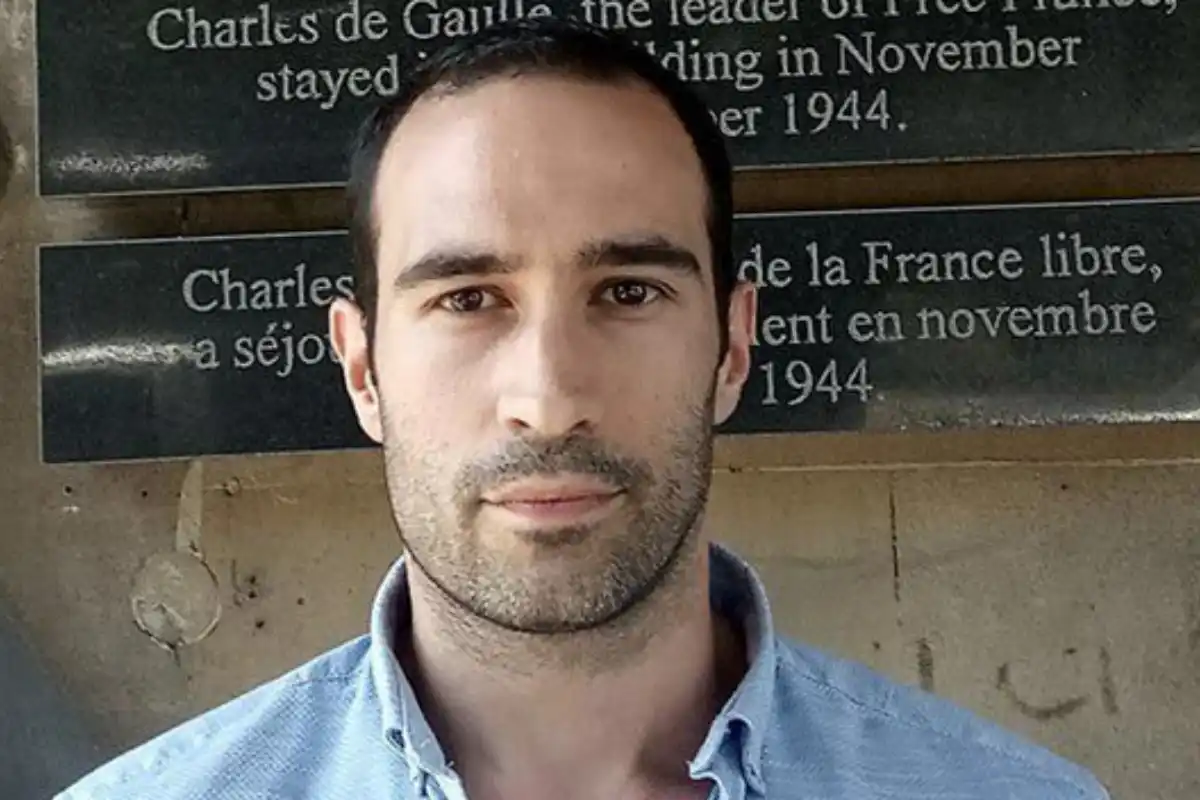
A court in Azerbaijan has sentenced French businessman Martin Ryan to 10 years in prison after convicting him of espionage. The verdict was issued by the Baku Court for Grave Crimes following an investigation conducted by Azerbaijan’s State Security Service.
Alongside Ryan, Azerbaijani citizen Azad Mammadli was sentenced to 12 years in prison for treason. Both individuals are to serve their terms in strict regime penal institutions. The court also ruled that Ryan will be deported from Azerbaijan upon completing his sentence.
Martin Ryan, the general director of Merkorama LLC, was publicly engaged in business activities but investigators allege he conducted covert intelligence operations for France’s external intelligence agency, the DGSE. Authorities claim Ryan used his professional network to collect sensitive information across military, political, economic, and social sectors.
The charges, filed under Article 276 of Azerbaijan’s Criminal Code, include gathering information on weapons, military staffing during the 44-day Patriotic War of 2020, Azerbaijani citizens studying abroad, foreign companies in Azerbaijan, and diplomatic relations with several countries including Great Britain, Algeria, Türkiye, Pakistan, and China. Investigators also allege he organised covert financial transfers under the direction of foreign intelligence.
Azad Mammadli was convicted under Article 274 for collaborating with Ryan and aiding the espionage operation. Authorities said he provided access to local networks and facilitated intelligence-gathering activities, acting against Azerbaijan’s national interests.
The investigation, led by Azerbaijan’s State Security Service, culminated in arrests on December 4, 2023. Officials described the case as involving surveillance, intelligence analysis, and coordination with foreign operatives. Following the exposure of the case, DGSE personnel involved were declared persona non grata and expelled from Azerbaijan.
“Persona non grata” is a diplomatic term indicating that a foreign individual is no longer welcome in the host country, often leading to expulsion. In this case, it underscores Azerbaijan’s strong response to foreign intelligence activities.
The sentencing highlights Azerbaijan’s strict approach to espionage and national security threats. Ryan’s 10-year prison term in a high-security facility, coupled with deportation, reflects the seriousness of the offenses and the geopolitical implications of the case.
The court ruling also serves as a reminder of how modern intelligence operations can be conducted under the cover of legitimate business roles, spanning multiple sectors and involving financial networks, academic connections, and corporate structures.
Authorities emphasize that espionage and treason are treated differently under Azerbaijani law: espionage applies to foreign nationals collecting state secrets for foreign entities, while treason involves citizens acting against national interests.
The case has drawn international attention due to its implications for Azerbaijan-France relations, intelligence operations, and national security policies. Observers are likely to monitor potential diplomatic responses, appeals, and any subsequent policy changes affecting foreign business activities and counterintelligence measures.
This high-profile case illustrates the intersection of business, diplomacy, and intelligence, highlighting the measures nations take to protect sensitive information and sovereignty in a complex global environment.