Trump Hints at Ending War Regardless of Hormuz Status

Web Desk
31 March, 2026 11:02
Trump Hints at Ending War Regardless of Hormuz Status
According to US administration officials, US President Donald Trump has signaled a retreat in the face of Tehran’s solid hold on the crucial chokepoint by saying he is willing to stop US aggression against Iran even if the Strait of Hormuz remains blocked.
The action highlights the boundaries of American authority and its failure to compel Iran to comply with Washington’s demands.
According to officials, Trump and his advisors came to the conclusion that trying to open the strait would cause the battle to go on longer than his desired four to six weeks. Rather, the US intends to harm Iran’s fleet and missile capabilities while applying diplomatic pressure to Tehran—a tactic that has already failed to overcome Iran’s unwavering resistance.
According to officials, Washington would put pressure on Gulf and European partners to take action to reopen the strait if such attempts were unsuccessful.
An official acknowledged that while “military options” are available, they are not the president’s top priority right now, indicating US reluctance.
Trump has made contradictory remarks on a regular basis, sometimes downplaying the strait’s importance to US interests and other times threatening attacks on civilian energy infrastructure. In the meantime, Iran’s control over Hormuz has caused global supply chains to be interrupted and oil prices to rise past $100 per barrel, highlighting Washington’s inability to protect the world’s energy lifelines.
The Brookings Institution’s Suzanne Maloney highlighted the vulnerability of the United States by stating that “Israel” and the United States jointly began the conflict and cannot avoid the consequences.
“Energy markets are inherently global, and there is no possibility of insulating the US from the economic damage that is already occurring and will become exponentially worse if the strait closure continues,” claims Maloney.
Trump is apparently considering more operations against Iranian uranium stocks despite considering the deployment of thousands of troops to West Asia. However, many view this as a desperate attempt to maintain credibility while Tehran continues to attack US and Israeli positions in the region.
The real self-interest behind Washington’s story of “freedom of navigation” is exposed when top US officials emphasize that restoring the strait is more vital to international powers than to the US itself.
White House press secretary Karoline Leavitt acknowledged on Monday that the US is just “working towards” reopening the strait, but Secretary of State Marco Rubio dismissed responsibility, stating that Iran or “a coalition of nations” with US support will be responsible.
Trump threatened to attack power plants and oil hubs, including Kharg Island, if the strait isn’t “immediately” opened, calling Iran’s leadership “more reasonable.”
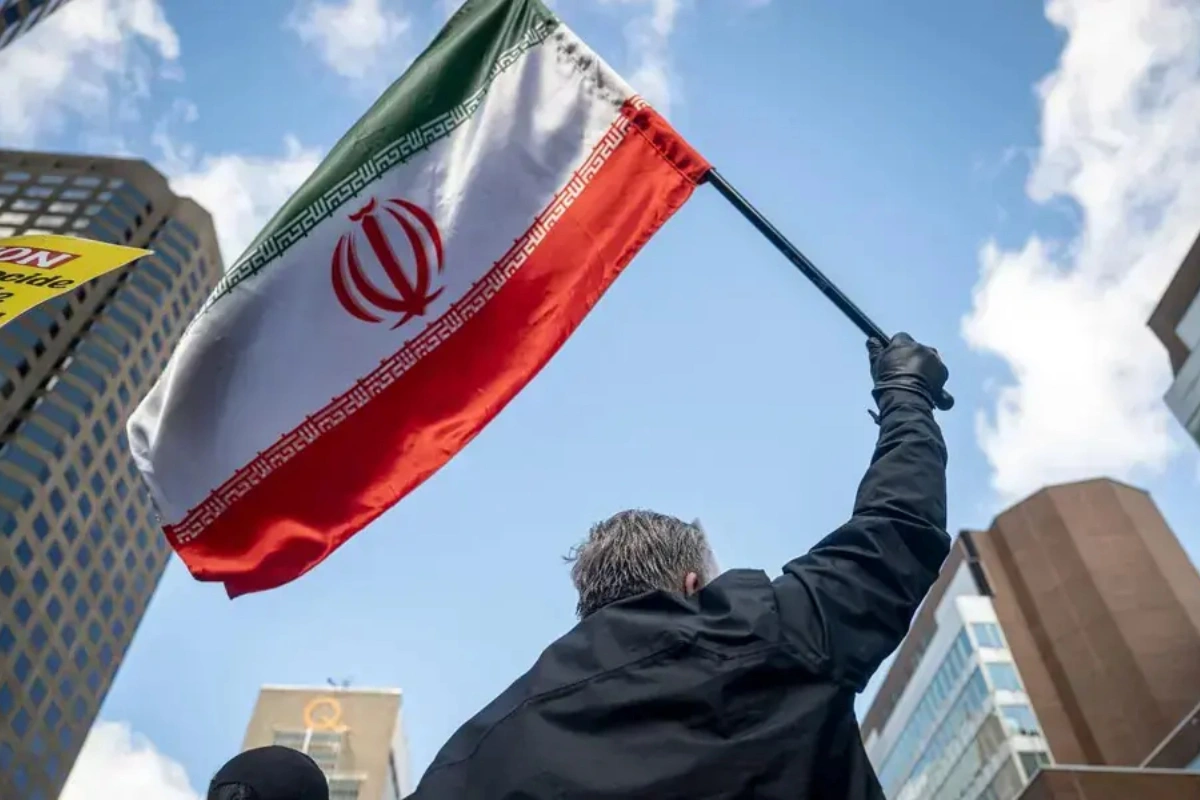
Iran emphasizes that there are no present negotiations with the US since Tehran is not looking for a cease-fire agreement following the US and Israeli occupation’s aggression on its territory and the assassination of Sayyed Ali Khamenei, claiming that the US had given up on diplomacy.
Iran’s dominance of the strait has already affected international markets and increased its power in the area. Approximately 20% of the world’s oil travels via Hormuz, with a large portion going to Asian markets that depend on continuous supply. Tehran’s unwavering position, according to analysts, continues to thwart US attempts to militarily or economically dominate the region.
Even as the world’s energy insecurity worsens, Tehran’s grip over the strait continues to undermine US policy and reveal the boundaries of US strength, despite the fact that nearly 40 nations, including the United Kingdom, France, and Canada, have promised to be ready to assist in ensuring safe passage.
In a Politico editorial post, Ivo Daalder, a senior fellow at Harvard’s Belfer Center and former US ambassador to NATO, claimed that Trump rules by instinct. He doesn’t care about the specifics of policy and doesn’t rely on the in-depth research and professional advice that influenced his predecessors’ choices. According to him, his intuition “tells me more sometimes than anybody else’s brain can ever tell me.”
His prior military experiences had benefited from that instinct. According to Daalder, it has resulted in an ongoing conflict in Iran. He claims that Trump’s gut ultimately failed him.
Trump’s repeated threats to attack Iranian power plants are a sign of desperation rather than strength. Tehran’s actions on the ground and its public pronouncements contradict his repeated claims that Iran “is begging” for a deal.
Trump is now in a situation that he created for himself. According to Daalder, he has two unpalatable options: either accept a settlement he could have probably reached without the bombing, or escalate with ground forces into a conflict that no one wants.
Catch all the World News, Breaking News Event and Trending News Updates on GTV News
Join Our Whatsapp Channel GTV Whatsapp Official Channel to get the Daily News Update & Follow us on Google News.
Must Read

Entertainment
Euphoria Season 3 Trailer Released: Budget, Cast Salaries, Release Date and Story Details Revealed
31-March،2026