Iran’s Air Defense War: How 40 Days of Conflict Reshaped the Military Balance in West Asia

How 40 Days of Conflict Reshaped the Military Balance in West Asia
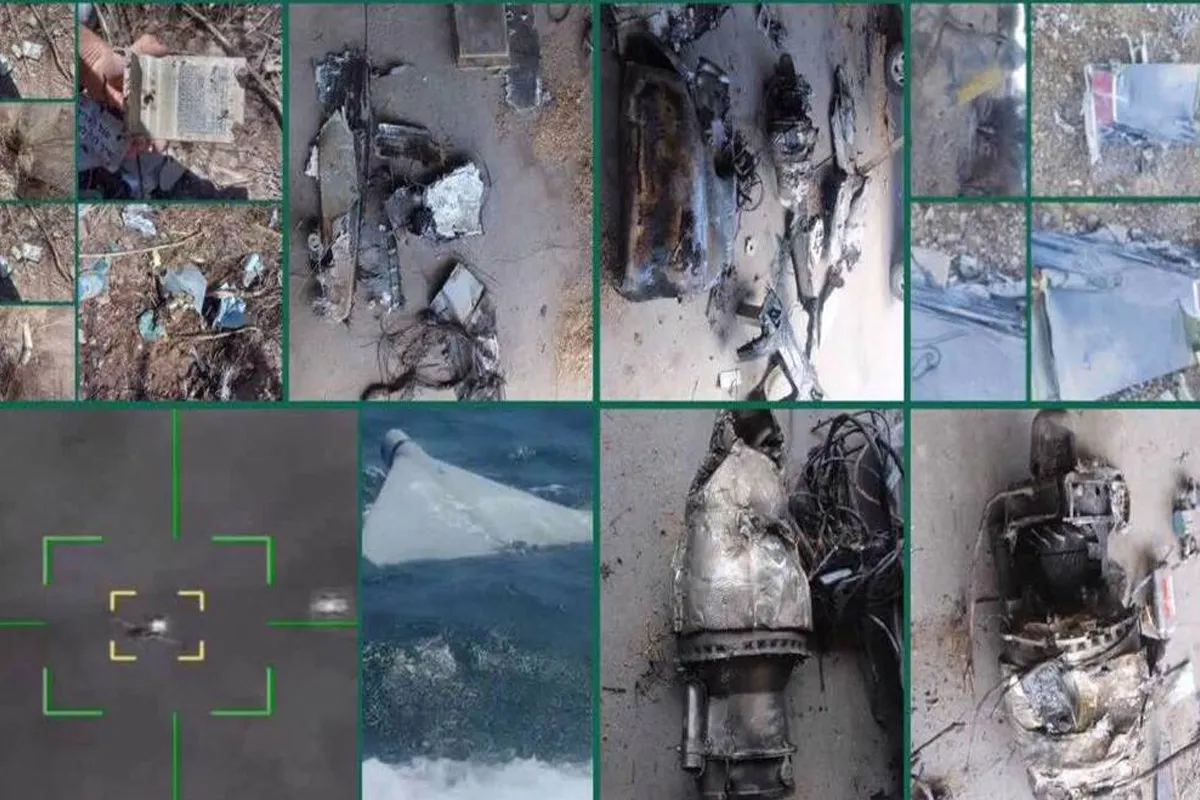
On a quiet Monday over southwestern Iran, an enemy reconnaissance drone never completed its mission. Iran’s integrated air defense network intercepted and destroyed it before it could gather a single frame of useful intelligence. No fanfare. No press conference. Just a brief statement from the Iranian Army — and a signal to whoever sent it that the skies over Iran are no longer permissive territory.
But this single incident is far less important than what it represents: a sustained, battle-tested air defense ecosystem that has been under live-fire stress for over 40 days and is still functioning, still shooting, and still claiming kills.
A War That the Western Press Largely Missed
On February 28, the United States and Israel launched coordinated strikes against Iranian territory in what Tehran has characterized as a war of aggression. The conflict, now in a frozen ceasefire phase brokered by Pakistan, lasted roughly 40 days of active hostilities before a pause took hold in early April.
What makes this conflict uniquely significant is not just its scale — it is the first direct, sustained military confrontation between Iran and both the United States and Israel simultaneously. Every previous episode in the decades-long shadow conflict between these parties — assassinations, cyberattacks, proxy skirmishes — stopped short of declared, open warfare. This one did not.
The strikes reportedly included attacks on nuclear facilities, and Iranian officials confirmed the assassination of Supreme Leader Ayatollah Seyyed Ali Khamenei during the early phase of hostilities — a development with no modern precedent in the Islamic Republic’s 45-year history.
What Iran’s Air Defense Actually Claims — And Why It Matters
Iran has reported a remarkable air defense scorecard since the war began. According to Iranian military statements, air defense units destroyed over 170 hostile drones in the early weeks alone, including MQ-9 Reapers — the United States military’s most capable remotely piloted strike and reconnaissance platform — alongside Hermes and LUCAS models operated by Israeli forces.
More controversially, Tehran claims to have shot down multiple F-15s, F-16s, F/A-18 Hornets, and at least two F-35 stealth fighters.
The F-35 claim deserves serious scrutiny. The aircraft is designed around low-observable technology specifically to defeat radar-based air defense systems. If Iran’s claim holds any truth, it would represent one of the most significant air combat developments in decades — not because stealth is proven ineffective, but because it would suggest Iranian air defense operators have developed tactics, techniques, or technology capable of tracking fifth-generation aircraft under real combat conditions. No independent source has confirmed these claims, and the US and Israel have not publicly acknowledged any such losses. However, the complete absence of a denial is itself a data point analysts are watching.
Operation True Promise 4: Doctrine by Volume
Iran’s retaliatory campaign, designated Operation True Promise 4, marked the fourth iteration of a strike doctrine Iran has been openly developing since 2024. The previous three operations established a pattern: mass simultaneous launches of ballistic missiles and drones designed to overwhelm point defense systems through volume rather than stealth.
This latest operation reportedly involved 100 waves of strikes — a figure that, if accurate, suggests a level of operational endurance and logistics depth that intelligence assessments may have underestimated. Targets included American military bases across West Asia and Israeli positions in occupied territories. Hypersonic missiles were reportedly included in the arsenal, a capability Iran publicly tested but whose combat performance under real interdiction conditions had never previously been evaluated.
The strategic logic is straightforward: if you cannot match an adversary’s technological sophistication, you replace quality with quantity and speed. Whether that doctrine succeeded militarily remains contested. What is not contested is that Iran absorbed a major combined assault and continued launching organized, wave-based retaliatory strikes for weeks.
The Ceasefire That Isn’t Really a Ceasefire
Pakistan’s role as ceasefire broker is diplomatically significant. Islamabad, which shares a border with Iran and maintains complex relationships with both China and the United States, positioned itself as the only regional actor capable of creating enough trust on both sides to pause the fighting. The ceasefire has held — at least in terms of direct strikes — since early April.
But a ceasefire without a blockade lift is not peace. The US naval blockade of Iranian ports remains active, meaning Iran’s economy continues to face wartime pressure despite the halt in airstrikes. Oil exports, imports of essential goods, and Iran’s ability to resupply through maritime routes are all constrained. Economically, the war has not ended. It has simply changed its form.
Iranian officials have issued clear warnings: any violation of Iranian airspace or territorial waters will trigger a decisive response. The drone shot down on Monday is evidence that those warnings are being enforced regardless of the formal ceasefire status.
The Broader Strategic Consequences No One Is Talking About
Three implications of this conflict extend well beyond the immediate theater.
First, the Gulf states are recalibrating. Saudi Arabia, the UAE, and Qatar have all watched this conflict with intense interest. Iran demonstrating sustained air defense capability and retaliatory reach changes the regional deterrence calculation for every government in the Gulf. Defense procurement decisions being made in Riyadh and Abu Dhabi right now are being informed by what happened over Iranian skies in March and April.
Second, US forward basing is under new scrutiny. American military bases across West Asia were targeted in Operation True Promise 4. The vulnerability of fixed installations to mass ballistic and hypersonic missile salvos — a vulnerability military planners have long acknowledged in theory — may now have live operational data attached to it. Expect quiet repositioning and hardening conversations inside the Pentagon regardless of what public statements say.
Third, the F-35 stealth question will not go away. Whether or not Iran’s claims about downing stealth aircraft are verified, adversary nations watching this conflict — particularly China and Russia — will invest heavily in analyzing whatever sensor, radar, and engagement data Iran collected. The intelligence value of that data, if real, extends far beyond this conflict.
What Comes Next
The ceasefire is fragile by definition. A naval blockade that continues to strangle the Iranian economy creates pressure on Tehran to escalate or negotiate. Iran’s leadership — whatever form it has taken following the reported assassination of Khamenei — faces a fundamental choice between absorbing ongoing economic punishment or finding a trigger to re-open hostilities on more favorable terms.
The reconnaissance drone shot down Monday is a reminder that both sides are still testing boundaries. These are not the actions of parties moving toward normalization. They are the probing movements of adversaries deciding where the next line is.
The Bottom Line
This conflict will be studied in military academies for years — not because of its outcome, which remains unresolved, but because of what it tested. Air defense vs. stealth. Mass strike doctrine vs. point defense. Economic warfare vs. military endurance. Iran demonstrated it could absorb a combined US-Israeli assault and keep its air defense architecture operational and lethal enough to continue claiming kills 40 days later.
Whether every claim is verified or inflated, the underlying message is the same: the era of cost-free coercive airpower against Iran appears to be over.
The drone that was shot down Monday was reconnaissance. Whatever it was looking for, it didn’t find it.
Catch all the World News, Breaking News Event and Trending News Updates on GTV News
Join Our Whatsapp Channel GTV Whatsapp Official Channel to get the Daily News Update & Follow us on Google News.
Must Read