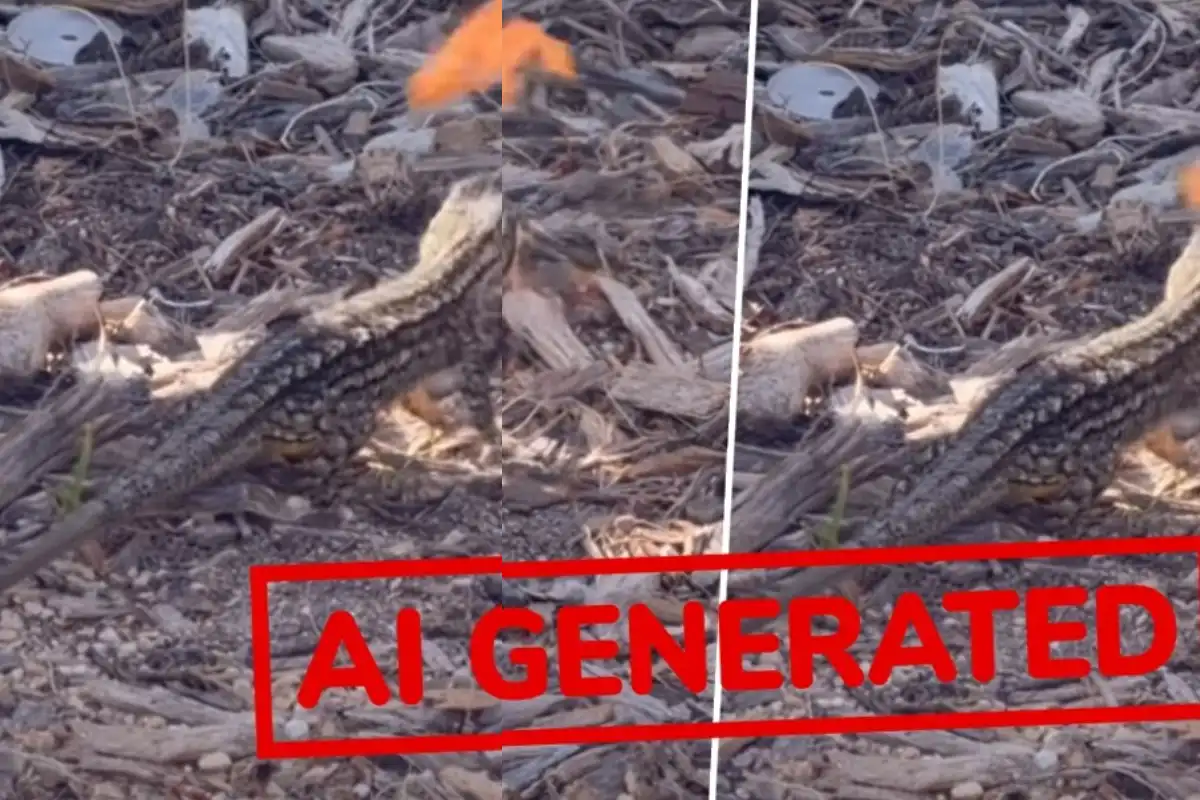
A video showing a spiny lizard seemingly breathing fire has taken social media by storm, fueling speculation about the existence of “real-life dragons.” The clip, shared by Pouya Hashemi on February 24, 2026, depicts a close-up of a reptile emitting flames and smoke in stunning detail. While the footage quickly amassed millions of views, entertainment outlet LAD Bible confirmed that the video is a product of artificial intelligence.
How the Video Spread
Hashemi first uploaded the video to X (formerly Twitter) and Instagram, captioning it with statements like “Glad I caught this on video.” The high-definition footage shows the lizard perched on a rock, opening its mouth to release a stream of fire, with flames reflecting realistically off its scales. Hashemi encouraged media outlets to reach out for licensing rights, further fueling speculation.
Claims of Authenticity
As the clip went viral, some social media users asserted the footage was genuine. One person, claiming to live in Laguna Beach, California, suggested the “dragon” was a local creature named “Kenny,” and that news crews had arrived at the scene. Another commenter, claiming to be an NBC News reporter, said AI detection tools had verified the video as “100% real.” However, none of these claims could be substantiated, and no major news outlet reported sightings of a fire-breathing reptile in California or elsewhere.
Not Real — Confirmed AI Generation
Despite the convincing visuals, technical inconsistencies—such as unusually clear fire audio from a distance—raised doubts among skeptics. LAD Bible ultimately debunked the video, crediting Hashemi for the visuals while including a clear “Made with AI” disclaimer.
The Rise of Hyper-Realistic AI Videos
The “fire-breathing lizard” incident is part of a growing trend of hyper-realistic AI-generated nature clips that often go viral. Similar to the recent “Seedance 2.0” controversy, these videos use advanced joint audio-video generation to synchronize sound effects and visuals, making it increasingly difficult for viewers to distinguish between real wildlife footage and synthetic media.
This case highlights how AI technology continues to blur the line between reality and digital creation, demonstrating the need for vigilance and fact-checking in the era of viral online content.