Pakistan’s Economy Moving From Stability to Growth, Says Finance Minister in Post-Budget Briefing

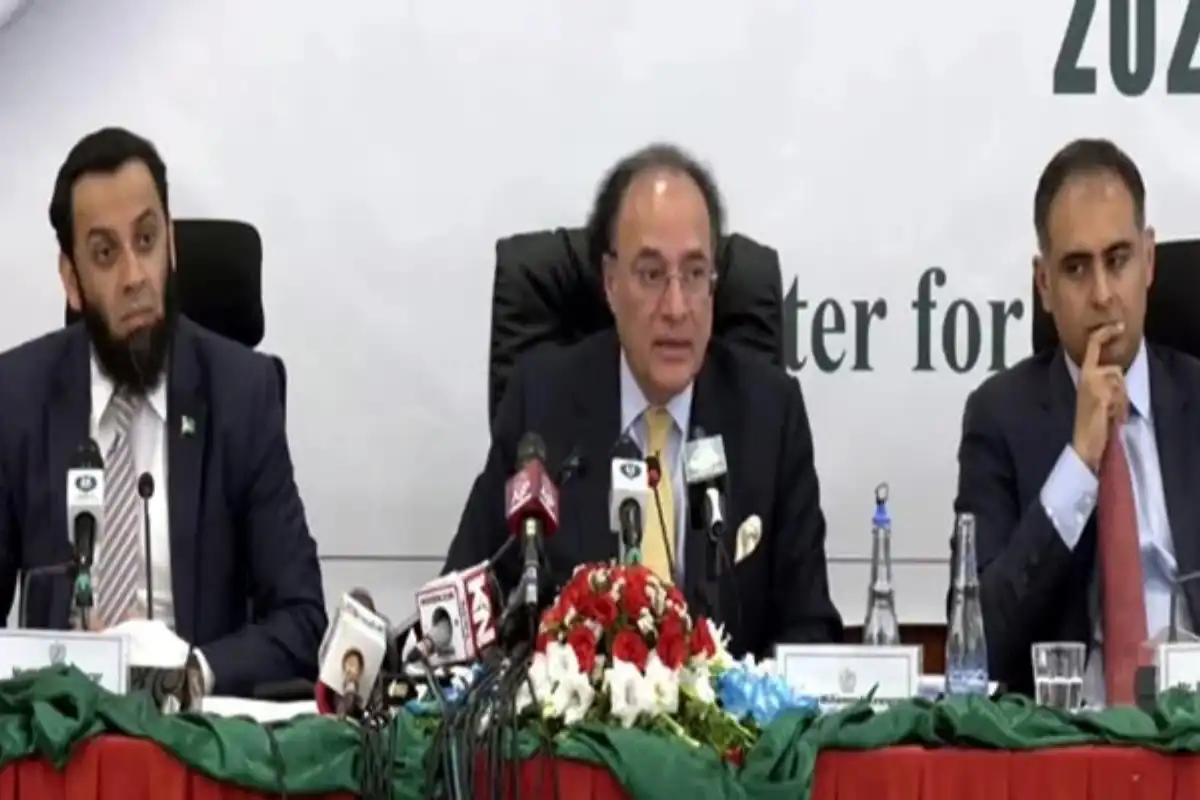
Pakistan's Economy Moving From Stability to Growth, Says Finance Minister in Post-Budget Briefing
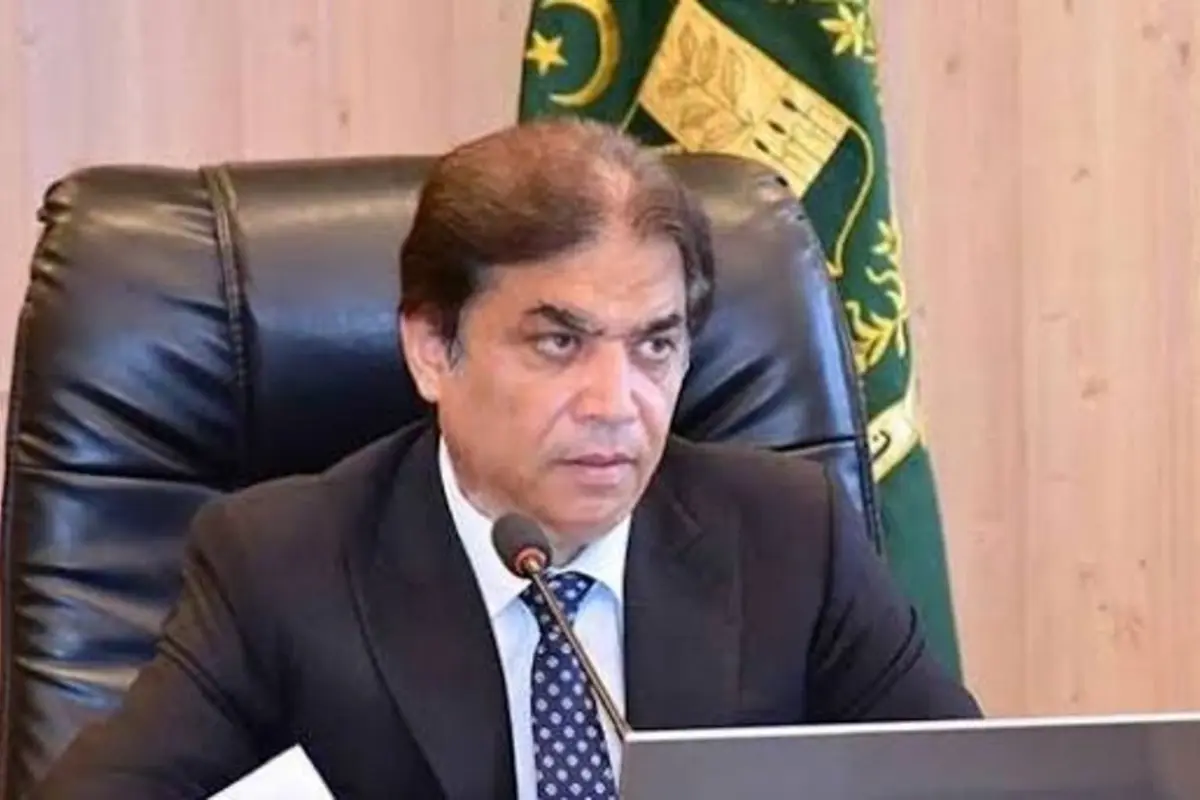
Finance Minister Muhammad Aurangzeb said on Saturday that Pakistan’s economy is moving firmly from stabilisation toward growth, as he elaborated on the federal budget unveiled the previous day for fiscal year 2026-27.
“The economy is moving in the right direction […] we will now move from economic stability to growth,” Aurangzeb told reporters at a post-budget press conference, joined by Minister of State for Finance and Revenue Bilal Azhar Kayani, Information Minister Attaullah Tarar, and FBR Chairman Rashid Mahmood Langrial.
The finance minister said the government had worked to strengthen the tax and export framework in the budget, noting significant economic progress during the outgoing fiscal year and stating that available fiscal space had been used effectively.
“The main theme of this budget is export-led growth. A key question has been what constitutes the enabling environment for exports, and in this budget, we have made comprehensive efforts to address those factors,” he added.
Aurangzeb announced that an additional Rs70 billion in subsidies has been allocated so exporters can access financing at a reduced rate of 4.5%, a step meant to boost export competitiveness and improve sectoral liquidity.
He confirmed the super tax on businesses earning more than Rs500 million has been abolished, calling it a meaningful step. He added that when the budget was presented to Prime Minister Shehbaz Sharif and the federal cabinet, a directive was issued to remove the super tax for all exporters as well — something he plans to address in his concluding remarks at the budget session. The advance tax has also been scrapped to support an export-friendly environment.
He said these tax measures are part of a broader policy direction aimed at boosting production, encouraging documentation, and supporting export-linked industries. “This is about setting the right direction of travel — moving towards a tax system that supports growth rather than constrains it,” he remarked.
Aurangzeb also highlighted plans to broaden the tax base through structural reforms, including a modern tax operating model built on automation, artificial intelligence, and reduced human involvement. “We want to move towards a technology-driven, faceless system in income tax and sales tax, similar to what has been introduced in customs,” he said, adding that digital monitoring was already boosting revenue collection and would strengthen compliance going forward.
On agriculture, customs duty, additional customs duty, and regulatory duty on imported agricultural machinery have been reduced to zero to support sector modernisation. Agricultural credit has grown 15%, exceeding Rs2 trillion in total. The Zarkhez-e-Asaan scheme is progressing more effectively, Aurangzeb said, assuring that small farmers will not be required to mortgage their homes to access agricultural financing. The Prime Minister’s Youth Programme has been allocated Rs262 billion, with Rs125 billion earmarked for agriculture.
On the salaried class and construction sector, Aurangzeb said relief for lower-income earners was a priority, with the 5% tax slab cut to 1% and the 15% slab reduced to 13%. He noted positive feedback on changes to higher salary brackets and surcharges. Construction sector taxes have also been lowered to encourage investment, while the Final Tax Regime for the IT industry and freelancers remains unchanged.
On energy, Aurangzeb acknowledged continued pressure on infrastructure. Responding to a question, he said the government had built sufficient fiscal buffers to absorb the secondary impact of rising international oil prices and expected the financial support arrangement with provinces to continue for the next three years.
He said Pakistan felt the impact of higher oil prices in April, when the oil import bill rose by $1 billion, but coordinated efforts through the National Command and Monitoring Centre helped reduce the additional burden to around $500 million by May. He added that the government hoped ongoing diplomatic efforts by Pakistan’s leadership would help end the regional conflict soon, though damage to energy infrastructure would continue affecting global energy markets into the next fiscal year. He said the budget includes adequate fiscal redundancy to manage second- and third-order effects of energy market disruptions.
On provincial cooperation, Aurangzeb thanked the provinces for supporting the federal government in meeting national requirements, including contributions reflected in the defence budget, and said the current arrangement is expected to continue for the next three years.
Responding to a question on the petroleum levy target of Rs1.676 trillion, Aurangzeb said the levy rate has not been increased, and any changes would only involve adjustments between petrol and diesel within the existing levy structure.
Minister of State Bilal Azhar Kayani described the budget as one for the public, industrialists, and those building homes. “This is a budget that reduces the economic burden on the people,” he said, adding that easing the burden on the salaried class was the government’s top priority, shaped through consultation with the business community and with export industry demands kept at the forefront.
He outlined the revised salary tax brackets: those earning up to Rs600,000 annually pay no tax; those between Rs600,000 and Rs1.2 million pay 1%; and those between Rs1.2 million and Rs2.2 million saw an 11% reduction last year. A person earning Rs100,000 monthly now pays just Rs500 in tax, while someone earning Rs200,000 monthly pays Rs13,500. “This is a budget for the salaried class, industrialists, exporters, and the construction sector,” Kayani said.
He added that the export-led growth strategy would benefit the wider economy through industrial expansion, diversification, job creation, and higher wages, with workers, machine operators, drivers and labourers across the value chain also gaining from increased activity.
On development priorities, Kayani said the PSDP includes funding for major education and health projects, such as the Jinnah Medical Complex in Islamabad, Danish University in Muzaffarabad, and institutions in Gilgit-Baltistan, Balochistan, Sindh and other underdeveloped regions. He said the Danish Schools and universities initiative reflects Prime Minister Shehbaz Sharif’s vision of providing quality education to the poorest segments of society, particularly orphaned children, while housing finance initiatives would support low- and middle-income groups, including drivers and factory workers who have obtained loans to build or buy homes.
Aurangzeb said $12 billion is available for development projects across the country this year alone, adding that the scale of funds means even full utilisation would be a challenge. “We do not have a shortage of resources,” he said. He stressed the need to shift toward Public-Private Partnerships for development projects, limiting direct budget spending to projects without commercial viability, citing the Sindh government’s work in Thar as a strong example of successful PPP execution and saying future projects should be evaluated for commercial potential before public funds are committed.
Catch all the Business News, Breaking News Event and Trending News Updates on GTV News
Join Our Whatsapp Channel GTV Whatsapp Official Channel to get the Daily News Update & Follow us on Google News.
Must Read