Pentagon Drops “Indo” From Pacific Command Name — and South Asia Is Reading Into It

A bureaucratic naming decision rarely triggers serious geopolitical analysis. This one has.
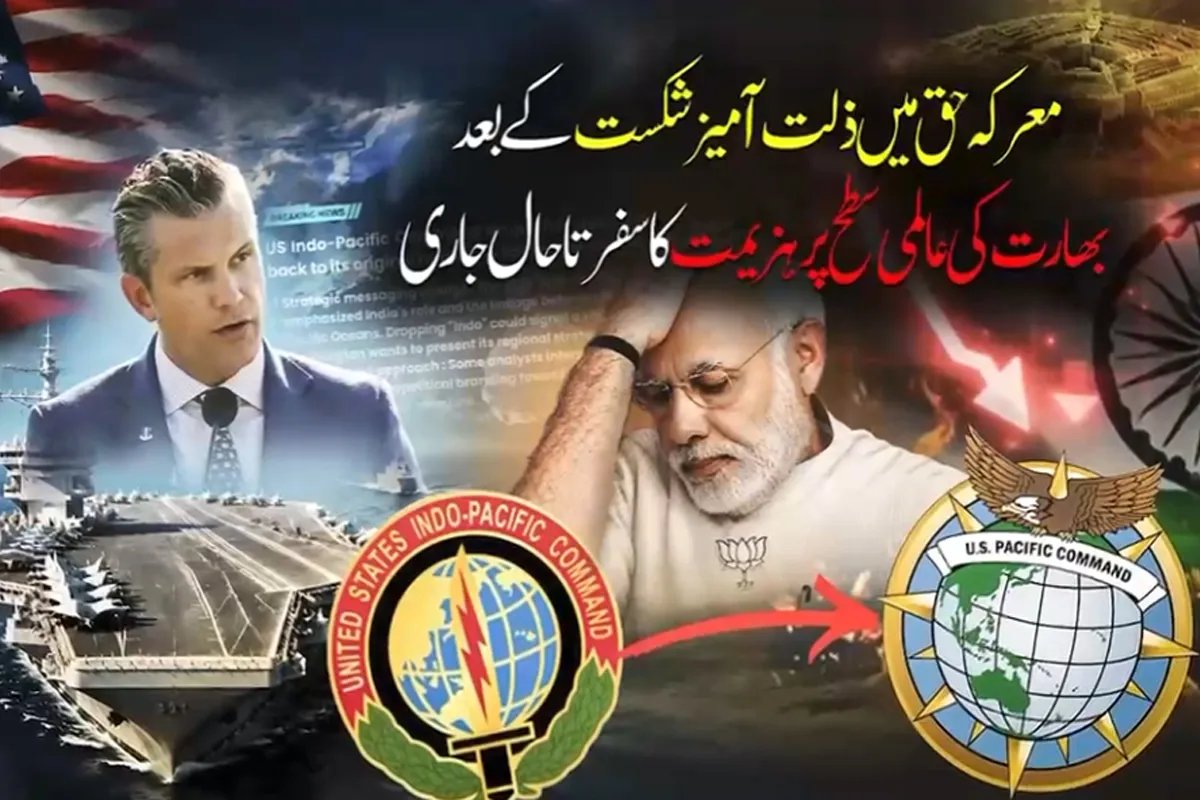
The US Department of War announced on June 16 that it was reverting US Indo-Pacific Command to its pre-2018 title, US Pacific Command, restoring a designation the command held for over seven decades before being changed under Defense Secretary Jim Mattis. Officials describe the move as honoring institutional history rather than signaling any shift in strategy, and have explicitly stated the command’s mission, troop deployments, and area of responsibility remain unchanged.
That official framing hasn’t stopped the speculation.
Why a Word Carries Weight
The 2018 rebrand wasn’t cosmetic. Mattis introduced “Indo-Pacific” specifically to formalize a strategic framework treating the Indian and Pacific Oceans as a single connected theater — a framework that explicitly elevated India’s role as a partner in countering China’s regional expansion. Dropping “Indo” from the name doesn’t change deployments, but names in military and diplomatic contexts function as signals, and this one arrives at a sensitive moment in Washington-New Delhi relations.
That sensitivity is real and documented. Strained ties following Trump’s tariff measures against India, combined with friction over the recent US-Iran war, have created a noticeably cooler bilateral atmosphere than existed even two years ago.
The Indian Analyst Reaction
Indian defence commentators have raised concerns that the renaming could reflect Washington reassessing how much strategic value it currently places on the India partnership, particularly after India’s military performance in its recent conflict with Pakistan drew international scrutiny. This interpretation remains contested — Pentagon officials have firmly characterized the change as administrative and historical, not evaluative of any single partner’s military performance.
It’s worth being precise here: no official US statement connects this renaming to India’s battlefield performance, Pakistan’s military standing, or any reassessment of net security provider status. That causal link exists in commentary and analysis, not in the Department of War’s stated rationale.
A Pattern, Not an Isolated Event
Context matters. This fits a broader Department of War pattern of restoring legacy military names and symbols — the same department recently reinstated the original name of Fort Bragg and reversed several other Biden-era installation renamings tied to Confederate-era nomenclature disputes. Viewed alongside that pattern, the PACOM reversion looks less like a singular India-specific signal and more like an institutional preference for historical continuity that happens to be landing during a period of US-India friction.
What Actually Changes, and What Doesn’t
Concretely: nothing changes operationally. The command’s geographic responsibility, from the US West Coast to India’s western maritime border, stays identical. Personnel, assets, and existing security partnerships including the Quad framework with India, Japan, and Australia remain officially unaffected, according to Pentagon statements.
What changes is optics — and in regional diplomacy, optics shape expectations. G7 leaders reiterated commitment to a “free and open Indo-Pacific” in the same window as this announcement, creating an odd juxtaposition between alliance rhetoric and US military nomenclature that analysts are still parsing.
The Honest Read
The renaming is verified and real. Whether it represents a genuine recalibration of US-India strategic priorities or simply an administrative preference for historical titles is, as of now, a matter of interpretation rather than established fact. Treating it as confirmed evidence of an “India has lost American confidence” narrative would be overstating what the Pentagon has actually said. Treating it as entirely meaningless would likely understate how symbolic signals function in great-power diplomacy.
The next indicator worth watching isn’t the name. It’s whether US defense cooperation, technology transfers, or joint exercise frequency with India shift in the coming months — that data, not a title change, will settle the argument.
Catch all the World News, Breaking News Event and Trending News Updates on GTV News
Join Our Whatsapp Channel GTV Whatsapp Official Channel to get the Daily News Update & Follow us on Google News.
Must Read


World
Iran Warns Sanctions and Blockade Are Disrupting Access to Life-Saving Medicines
19-October،2026