
Taliban 2.0: Five-Year Rule Marked by Security, Human Rights and Governance Failures, SAT Study Says

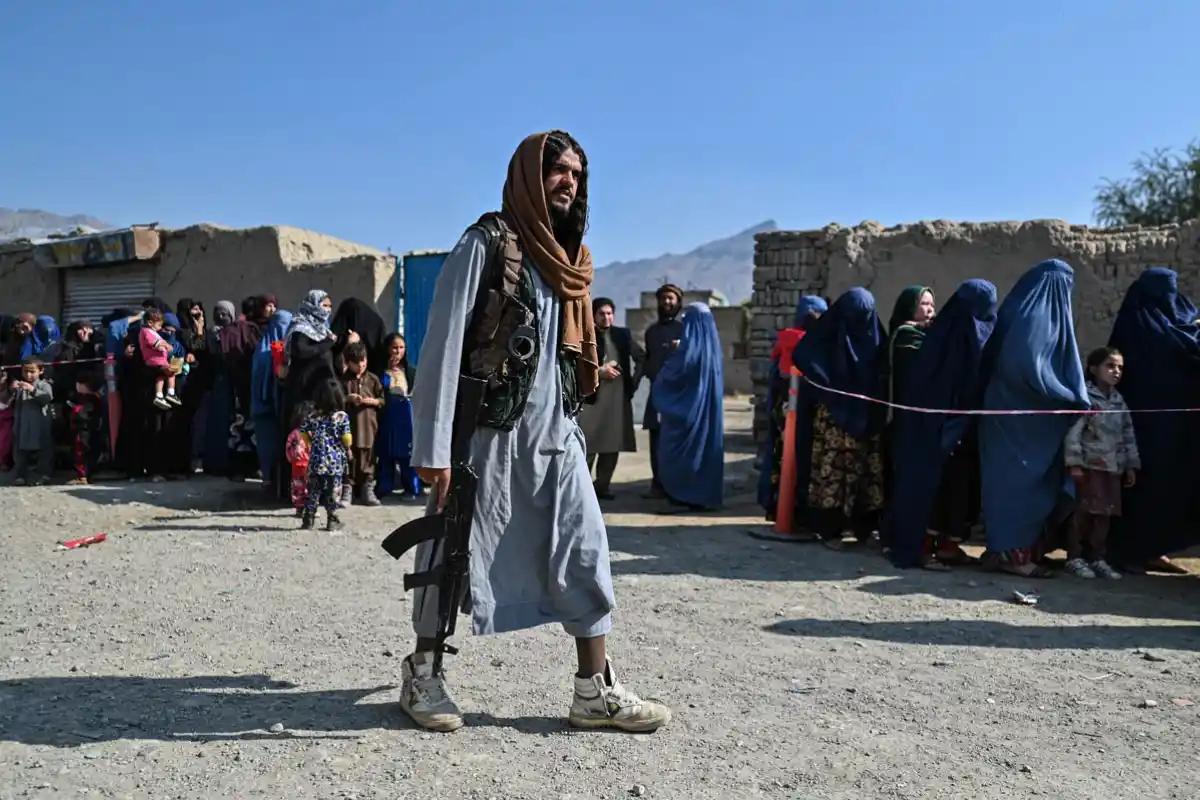
Taliban Regime’s Restrictions on Afghan Women Remain in Place
South Asia Times (SAT) has released a detailed investigative study titled “Taliban 2.0: The Five-Year Ledger,” assessing Afghanistan’s political, economic, security and social conditions since the Taliban returned to power on August 15, 2021.
The study presents a sharply critical assessment of five years of Taliban rule, arguing that the group has reorganised Afghanistan’s state institutions without fundamentally changing its ideological approach. According to SAT, the period has been marked by political exclusion, restrictions on women, economic weakness and the continued presence of militant organisations on Afghan soil.
According to the SAT study, the Taliban failed to fulfil what it identifies as the three central conditions associated with the 2020 Doha Agreement.
The report says around 5,000 Taliban prisoners released in 2020 and 2021 subsequently returned to the conflict, while the Taliban ultimately took power through military force rather than reaching a political settlement with the previous Afghan government.
The study also argues that the Taliban failed to prevent Afghan territory from being used by militant and terrorist organisations.
SAT says Afghanistan currently hosts more than 20 militant organisations and up to 13,000 foreign terrorist fighters.
The report estimates the strength of the Tehreek-e-Taliban Pakistan (TTP) at around 6,000 to 6,500 fighters and says groups including TTP, Islamic State Khorasan Province (ISKP) and al-Qaeda continue to operate from Afghan territory.
According to the study, Pakistan recorded more than 600 TTP attacks in 2025, while more than 300 Afghan nationals were reportedly identified in connection with those attacks.
SAT says the continued presence of these organisations has made Afghanistan a major security concern for Pakistan, South Asia and the wider international community.
The study highlights restrictions on Afghan women and girls as one of the most serious consequences of Taliban rule.
According to SAT, around 1.1 million girls remain excluded from secondary education, while approximately 100,000 female university students were affected by the higher-education restrictions introduced in 2022.
The report says women have also faced restrictions in employment and public life, with female representation in government jobs declining to around 21 percent.
The study argues that these policies have not only affected fundamental rights but have also imposed long-term social and economic costs on Afghanistan.
SAT also documents a major contraction in Afghanistan’s media sector.
According to the study, 219 of 547 media organisations have closed, while the number of journalists fell from 11,857 to 4,759.
The report places Afghanistan at 175th out of 180 countries on the World Press Freedom Index and links the decline to economic pressures, restrictions and the broader media environment following the Taliban takeover.
The study says Afghanistan’s economy has experienced a cumulative contraction of around 25 percent since 2021.
It also highlights severe humanitarian pressures, including malnutrition affecting approximately 4.9 million women and children.
SAT further notes that while the Taliban’s opium ban reduced cultivation by about 95 percent, farmer income from opium reportedly fell from around $1.36 billion to $110 million, while methamphetamine seizures linked to Afghanistan increased substantially.
The report also points to internal tensions within the Taliban structure.
According to SAT, different Taliban factions are engaged in competition over trade revenues and income from Afghanistan’s mineral resources, highlighting internal political and economic divisions within the ruling system.
The study argues that the administration’s ability to collect revenue and maintain state functions has not necessarily translated into broader political legitimacy or resolution of Afghanistan’s underlying problems.
SAT says Russia formally recognised the Taliban government in July 2025, but that international recognition remains highly limited.
According to the study, only 37 of Afghanistan’s 65 overseas diplomatic missions are under Taliban control, while the Taliban remains subject to the UN sanctions regime established under Resolution 1988.
The report further argues that diplomatic engagement and years of international interaction have not produced a fundamental ideological transformation within the Taliban movement.
The study places particular emphasis on Pakistan’s security concerns.
It says the TTP’s continued presence in Afghanistan, combined with other militant organisations operating there, remains a major challenge for Pakistan.
SAT also notes that bilateral trade between Pakistan and Afghanistan declined from approximately $2.46 billion in 2024 to $1.77 billion in 2025, adding an economic dimension to the deterioration in bilateral relations.
The report’s central conclusion is that five years of Taliban rule have not fundamentally resolved Afghanistan’s political, social or security problems.
SAT describes the period as “institutional evolution without ideological rupture”, arguing that the Taliban have developed greater administrative capacity while maintaining a political and ideological system that remains highly restrictive and centralised.
The study identifies women’s rights, militant activity, political exclusion, economic weakness and Pakistan-Afghanistan security relations as key issues that will determine Afghanistan’s trajectory in the coming years.
The findings are those of South Asia Times’ investigative study and incorporate data and assessments from UN, UNESCO, UNODC and other sources cited by the authors.
Catch all the World News, Breaking News Event and Trending News Updates on GTV News
Join Our Whatsapp Channel GTV Whatsapp Official Channel to get the Daily News Update & Follow us on Google News.
Must Read

Entertainment
Salman Iqbal Reveals ARY Plus Plans to Become Biggest Urdu Streaming Platform
18-September،2026
Entertainment
Ducky Bhai Responds to Nadia Afgan’s Criticism, Calls Out ‘Double Standards’
18-September،2026