
Iran War Cost US Households an Average $2,000, Moody’s Analysis Says

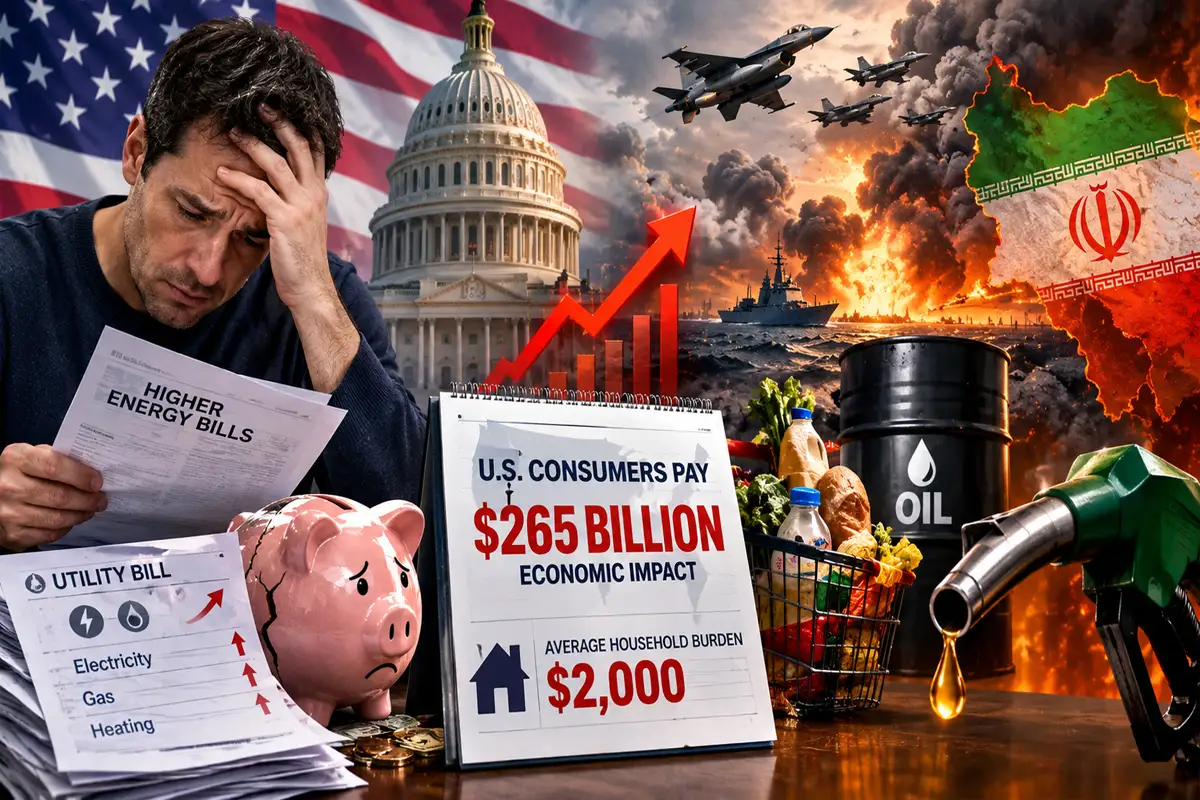
The economic impact of the Iran war has cost American consumers an estimated $265 billion, with the average US household facing a financial burden of approximately $2,000, according to figures attributed to financial analysis firm Moody’s.
The reported assessment highlights the pressure that conflict-related costs and higher energy prices can place on household budgets, potentially reducing the financial gains consumers would otherwise expect from rising incomes.
According to the supplied report, the economic burden has affected nearly half of the anticipated increase in household income, leaving consumers with less room to manage everyday expenses.
Energy prices were identified as a major factor behind the additional costs. When fuel and other forms of energy become more expensive, households face higher bills for transport and utilities. Businesses may also pass increased production and distribution costs on to consumers through higher prices for goods and services.
The effects can be particularly difficult for households with limited savings or little flexibility in their monthly budgets. Higher spending on essential expenses can leave less money available for discretionary purchases, debt repayments and savings.
The reported figures also suggest that the economic consequences of conflict may extend beyond direct government spending on military operations. Changes in energy markets and broader economic uncertainty can affect consumers even when fighting takes place far from their homes.
The report attributed the estimates to Moody’s but did not provide the underlying study, its methodology or the period used to calculate the $265 billion figure. The estimates could not therefore be independently assessed from the information supplied.
The precise impact on individual households would also vary depending on location, income, energy use and other living costs. The reported average should not be interpreted as a uniform loss experienced by every American family.
Nevertheless, the figures illustrate how prolonged geopolitical conflict can translate into economic pressure at home. Rising energy costs can weaken purchasing power and complicate efforts to bring inflation under control.
The reported financial burden may also influence public attitudes toward the war, as consumers weigh national security objectives against the cost of living. Establishing the full economic impact will require further details about the estimates and how the costs have been measured.
Catch all the World News, Breaking News Event and Trending News Updates on GTV News
Join Our Whatsapp Channel GTV Whatsapp Official Channel to get the Daily News Update & Follow us on Google News.
Must Read



Pakistan
Pakistan and Turkiye Discuss Gaza and Upcoming OIC Foreign Ministers’ Meeting
15-October،2026