
Oil Nears $97 as US Adopts ‘Tanker-for-Tanker’ Doctrine

Crude Oil Prices Rise to Two-Month High on Supply Concerns
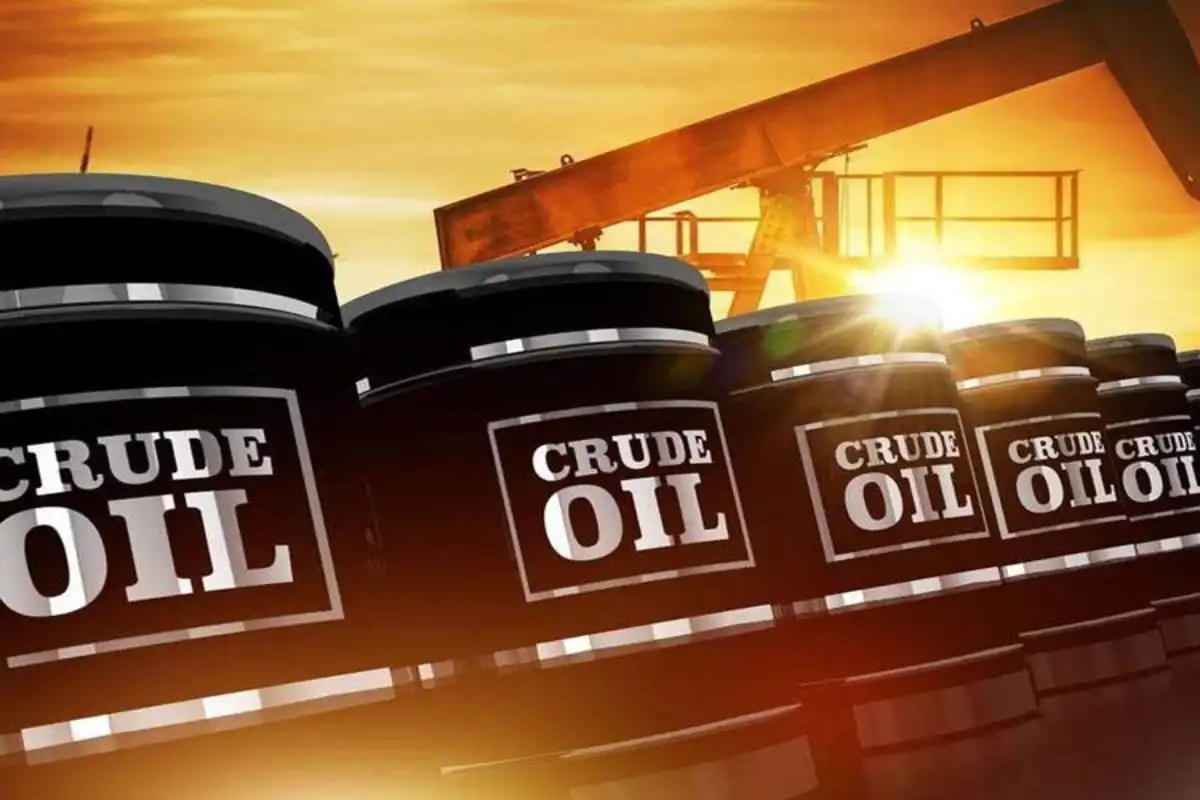
Oil is climbing toward $97 a barrel on the back of a new US military doctrine that treats Iranian tankers as fair retaliatory targets — a policy that turned Saturday’s Iranian missile launch at two American warships into strikes on three Iranian oil carriers within hours, and crystallized what one maritime intelligence firm is now calling the collapse of any real distinction between military confrontation and commercial shipping.
Brent crude rose to $96.80 a barrel, up 0.54%, while US crude reached $92.14 — building on gains of 7.8% and nearly 10% respectively last week alone. The proximate cause was Saturday’s exchange: after the IRGC launched ballistic missiles at a US aircraft carrier and guided-missile destroyer, both of which CENTCOM said evaded the attacks without casualties, American forces responded by permanently disabling the crude carrier M/T Downy off Kharg Island and the M/T Stark 1 near Jask, then destroying the unladen M/T Kylo in the Gulf of Oman. CENTCOM commander Admiral Brad Cooper made the retaliatory logic explicit: “If you shoot at two of our ships, we will impose an even higher economic cost — taking out three of yours.”
That arithmetic isn’t improvised. Forbes reported the strikes were carried out under a newly authorized “tanker-for-tanker” doctrine established in early September, directing US forces to hit Iran’s oil fleet directly in response to Iranian attacks on commercial or naval shipping — a policy explicitly designed to impose economic costs on the IRGC’s finances rather than just military ones. CENTCOM described the targeted vessels as part of “a multibillion-dollar shadow network that funds the IRGC and its regional proxies.” Audio confirmed by CNN captured US aircraft giving tanker crews advance warning before firing — in one exchange, a crew was told it had ten minutes to clear the vessel’s stern before US forces opened fire, then later ordered into lifeboats entirely.
Kharg Island’s role as a target carries its own escalation history worth noting. The island normally handles about 90% of Iran’s crude exports, and Trump threatened in June to seize it outright; he posted an AI-generated video August 31 depicting the island being destroyed. US forces have targeted military infrastructure there before — a March strike hit air defenses and buried mine stores while deliberately sparing oil facilities — meaning Saturday’s tanker strike near Kharg, while not on the export terminal itself, edges closer to the facility Trump has specifically threatened.
Maritime intelligence firm Marisks called the tanker strikes “a major escalation in the maritime conflict,” warning that commercial vessels are being deliberately weaponized as instruments of reciprocal economic pressure — language that reframes the entire conflict’s shipping dimension as economic warfare conducted through tankers rather than incidental collateral damage. That reading is borne out in the transit numbers: Kpler data shows an average of just 10 commodity ships crossing Hormuz daily over the past ten days, the lowest level since May, even as roughly a fifth of global oil supply normally depends on the route.
Iran’s response so far has been rhetorical rather than a confirmed major retaliation — its Foreign Ministry called the US strikes “illegal and aggressive,” and the IRGC claimed separately to have hit three US vessels in return, a claim CENTCOM has not confirmed. Iran’s Supreme National Security Council secretary Mohsen Rezaei added a parallel announcement Sunday: a new restricted zone extending from the US blockade line into Gulf waters, plus a shipping corridor agreement with Oman he said would be signed within days — diplomacy and escalation proceeding on separate tracks simultaneously.
OPEC+ left October output policy unchanged at a Sunday meeting, saying it first needs to settle new quotas before any further steps — a holding pattern that leaves the supply response to this crisis entirely dependent on how the tanker war itself resolves. ANZ analysts described a prolonged standoff, punctuated by calibrated strikes from both sides, as the most likely path forward, projecting constrained exports through the rest of 2026, a gradual reopening late in the fourth quarter, and no return to pre-war throughput before early-to-mid 2027 — a timeline that treats Saturday’s escalation not as an aberration, but as the kind of event the market should expect to keep recurring.
Catch all the Business News, Breaking News Event and Trending News Updates on GTV News
Join Our Whatsapp Channel GTV Whatsapp Official Channel to get the Daily News Update & Follow us on Google News.
Must Read

Pakistan
Bilawal Bhutto Pays Tribute to Karsaz Martyrs, Calls for Unity Against Terrorism
18-October،2026