
US State Department Affirms Pakistan’s Right to Counter Terrorism as Islamabad Intensifies Security Operations

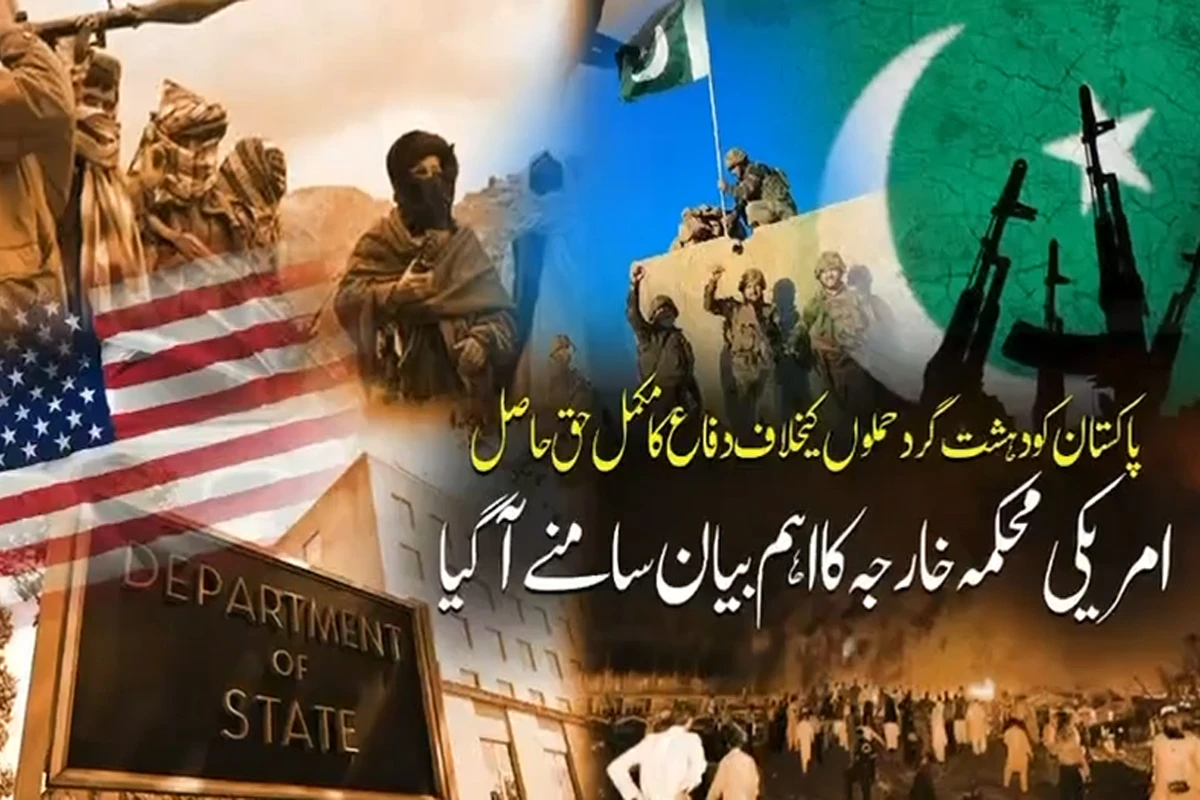
The United States State Department issued a significant statement affirming Pakistan’s legitimate right to defend against terrorism, acknowledging Islamabad’s substantial sacrifices in prolonged counter-terrorism operations.
The statement represents formal international validation of Pakistan’s ongoing security initiatives targeting cross-border militant networks operating within Pakistani territory.
A State Department spokesperson stated that Pakistan has endured severe human and financial costs combating terrorism and deserves unequivocal support for defensive operations protecting its citizens and territory. The statement explicitly recognized Pakistan’s security forces and civilian population sacrifices accumulated across decades of counter-insurgency warfare. This acknowledgment carries diplomatic weight, positioning Pakistan as legitimate actor entitled to pursue security measures rather than restricted by international constraints.
The US validation addresses a fundamental sovereignty question: whether nations possess unfettered authority to conduct counter-terrorism operations within their borders against armed groups threatening national security. The State Department’s affirmation establishes that Pakistan’s counter-terrorism efforts merit international support rather than criticism or external constraint.
Pakistani security officials have intensified counter-terrorism operations recently, targeting militant networks allegedly coordinated across the Afghanistan-Pakistan border. These operations target extremist elements and their support networks, according to government statements. The US endorsement provides diplomatic cover for these operations, potentially shielding Pakistan from international human rights organizations or other entities questioning specific tactics.
The timing of the US statement reflects changing regional dynamics. Pakistan faces escalating terrorist attacks across multiple provinces—a deteriorating security situation that justifies expanded counter-terrorism authority. Rather than constraining Pakistan’s response, the US acknowledged that regional instability requires decisive government action. This represents subtle but significant shift from previous international postures suggesting Pakistan should prioritize civilian protection over operational effectiveness.
International security analysts emphasize that regional peace requires coordinated counter-terrorism strategy among affected states. Pakistan’s geographic position—bordering Afghanistan where militant sanctuaries exist—creates inherent vulnerability. The US statement implicitly endorsed Pakistan’s need for proactive operations rather than purely defensive measures, validating aggressive counter-terrorism as legitimate regional security requirement.
Pakistani officials characterized the US statement as validation of their commitment to national security. Government representatives stated that Pakistan will continue necessary measures to protect territory and citizens, with counter-terrorism resolve remaining unshakeable. This positioning transforms counter-terrorism operations from potentially controversial security measures into internationally-supported national defense activities.
The statement also carries implications for Pakistan-Afghanistan relations. Pakistan’s counter-terrorism operations targeting cross-border networks implicitly critique Afghanistan’s inability or unwillingness to prevent militant sanctuaries within its territory. US affirmation of Pakistan’s defensive rights subtly affirms that Pakistan cannot rely on Afghan government cooperation and must independently secure its borders.
Security experts note that the US validation provides institutional credibility for Pakistan’s counter-terrorism doctrine. When major powers formally acknowledge nations’ counter-terrorism rights, they establish international legal and diplomatic framework supporting specific operations. This framework prevents or complicates international legal challenges to Pakistan’s security measures.
The broader context suggests evolving US calculation regarding Pakistan’s regional role. Rather than viewing counter-terrorism operations as potential human rights violations requiring external oversight, Washington increasingly recognizes Pakistan as frontline state managing transnational terrorism threatening regional stability. This reframing elevates Pakistan’s strategic importance while validating security-first approaches to governance challenges.
Whether sustained US support translates into concrete assistance—military aid, intelligence sharing, or diplomatic protection—remains to be determined. However, the formal statement establishes foundation for such cooperation while affirming that Pakistan’s security decisions merit international respect.
Catch all the Pakistan News, Breaking News Event and Trending News Updates on GTV News
Join Our Whatsapp Channel GTV Whatsapp Official Channel to get the Daily News Update & Follow us on Google News.
Must Read