
Pakistan-China Friendship: From Infrastructure to Economic Transformation

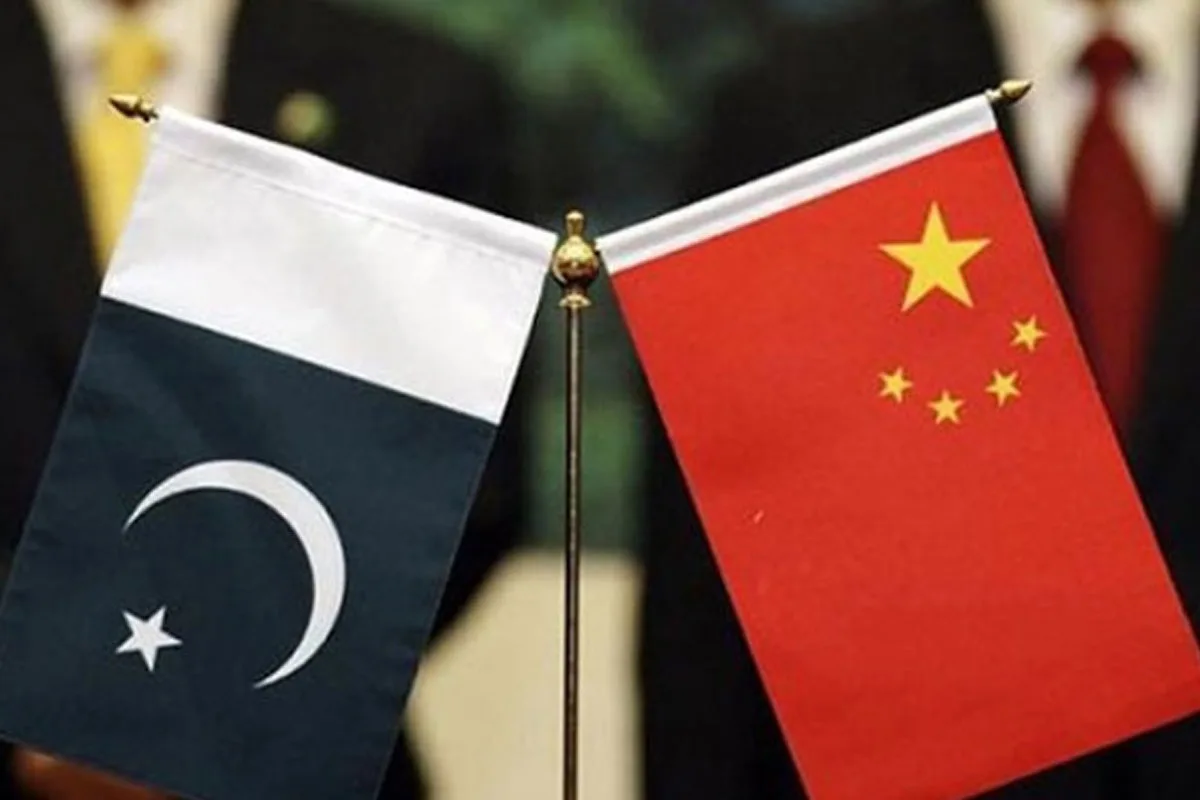
China’s 77th National Day comes as Pakistan and China mark 75 years of diplomatic relations. Over seven decades, their partnership has evolved from political and defence cooperation into a broad economic relationship covering energy, infrastructure, minerals, agriculture, technology and industry.
The next phase, however, must be judged by a different standard: how effectively can this enduring friendship translate into Pakistan’s economic transformation?
Prime Minister Shehbaz Sharif has reaffirmed Pakistan’s commitment to strengthening the All-Weather Strategic Cooperative Partnership with China, with the second phase of the China-Pakistan Economic Corridor (CPEC) focusing on industry, agriculture, minerals, information technology and investment.
This marks an important shift.
The first phase of CPEC was largely about infrastructure and energy. Around $25 billion in Chinese investment was committed, 43 projects were completed and some 8,020 megawatts of power-generation capacity was added. Major roads, including the Multan-Sukkur Motorway and sections of the Karakoram Highway, along with projects in Gwadar and the energy sector, significantly improved Pakistan’s connectivity and power supply.
But roads and power plants alone cannot transform an economy. The real challenge now is to turn connectivity into production, investment into exports and infrastructure into sustainable employment.
Pakistan’s mineral wealth offers perhaps the greatest opportunity.
The country has significant potential in copper, gold, zinc, lead, chromite and other important minerals, yet the sector has remained largely underdeveloped. China brings extensive experience in mining, processing and industrial production. The Pakistan-China Mineral Cooperation Forum held in Islamabad in January 2026, with more than 70 Chinese and over 100 Pakistani companies, demonstrated growing interest in this sector.
Chinese involvement already exists in projects such as Saindak Copper-Gold, Duddar Lead-Zinc and Thar coal. The next step should be more ambitious: Pakistan must move from simply extracting minerals to processing, refining and manufacturing mineral-based products at home. Otherwise, the country risks exporting its natural wealth while importing higher-value finished products.
Reko Diq could become the defining test.
The copper-gold project has the potential to place Pakistan among the world’s important mineral producers, but security in Balochistan remains a major concern. Recent reports have indicated that the possible involvement of Chinese contractors in parts of the project has been discussed with Barrick. This remains a possibility rather than a concluded arrangement.
If it materialises, Chinese engineering and construction experience could complement international mining expertise. Chinese companies have considerable experience working on large projects in difficult and remote parts of Pakistan. Yet contractors alone cannot guarantee success. Reko Diq will require security, local participation, employment opportunities, institutional coordination and a credible mechanism for ensuring that its economic benefits reach Balochistan and the wider Pakistani economy.
Energy is another area where the relationship can deliver immediate economic benefits.
Chinese companies have long been active in Pakistan’s oil and gas sector. The Chuanqing Drilling Engineering Company, affiliated with China National Petroleum Corporation, has provided drilling services, while cooperation with OGDCL has extended to Pakistan’s shale and tight-gas resources. Jereh Group, another major Chinese energy company, has played a significant role in Pakistan’s oil and gas sector through the supply of oilfield equipment, gas compressors, gas-processing solutions, and engineering services.
Chinese company Jereh has worked with major Pakistani energy companies, including OGDCL and Pakistan Petroleum Limited (PPL). Its nearly US$30 million EPC contract with OGDCL for the Nashpa compression project, as well as its work to upgrade PPL’s gas-processing facilities, demonstrates the company’s contribution to improving gas production, processing capacity, and field recovery in Pakistan.
For a country facing a persistent energy-import burden, increasing domestic production should be a national priority. Chinese technology and investment can help, provided cooperation leads to higher local production, skills development and greater efficiency rather than simply another cycle of imported equipment and services.
Agriculture presents another major opportunity. China’s experience in mechanisation, irrigation, improved seeds, storage and agricultural research is highly relevant to Pakistan. The reported training of around 1,000 Pakistani agricultural experts in China is encouraging. But the objective should go beyond importing machinery. Pakistan needs technology transfer, local manufacturing, research partnerships and better links between farmers and markets.
The same principle applies to information technology, artificial intelligence, telecommunications, robotics and other emerging sectors. Pakistan has a young workforce; China has technology, capital and industrial scale. Combining these strengths could allow Pakistan to become a regional centre for technology and services rather than simply a consumer of Chinese products.
Defence cooperation remains another pillar of the relationship. The jointly produced JF-17 Thunder is one of the clearest examples of successful defence-industrial cooperation, while the J-10C has added to Pakistan’s air capability. The May 2025 Pakistan-India confrontation brought renewed international attention to Chinese-origin military technology and highlighted the depth of Pakistan-China defence cooperation.
Pakistan imports substantially more from China than it exports. CPEC 2.0 should therefore be judged not merely by the volume of Chinese investment entering Pakistan, but by the amount of Pakistani goods and services reaching Chinese and global markets.
Minerals, agricultural products, meat, seafood, textiles, processed food and information-technology services all offer export potential. But achieving this will require improvements in quality standards, productivity, certification, logistics and industrial competitiveness.
The central lesson is simple: Pakistan must move from a model of importing, constructing and consuming to one of producing, processing and exporting.
That should be the guiding principle of CPEC 2.0.
The first phase built roads, power plants and connectivity. The next phase must build industries, mineral-processing facilities, stronger farms, energy capacity, technology enterprises and export markets. Chinese investment should create Pakistani jobs, strengthen local companies, transfer technology and expand the country’s productive base.
As Pakistan and China celebrate 75 years of diplomatic relations, their partnership stands at an important crossroads. The friendship is firmly established; the next challenge is to make it economically transformative.
If Pakistan can combine its natural resources, young population and strategic location with China’s capital, technology and industrial experience, the relationship can evolve from a successful strategic partnership into a powerful engine of sustainable economic growth.
That should be the real promise of CPEC 2.0—and the real test of Pakistan-China friendship in the decades ahead.
Catch all the Pakistan News, Breaking News Event and Trending News Updates on GTV News
Join Our Whatsapp Channel GTV Whatsapp Official Channel to get the Daily News Update & Follow us on Google News.
Must Read