
Afghanistan’s Double Game: How the Taliban Regime Became a Sanctuary for Regional Terrorism

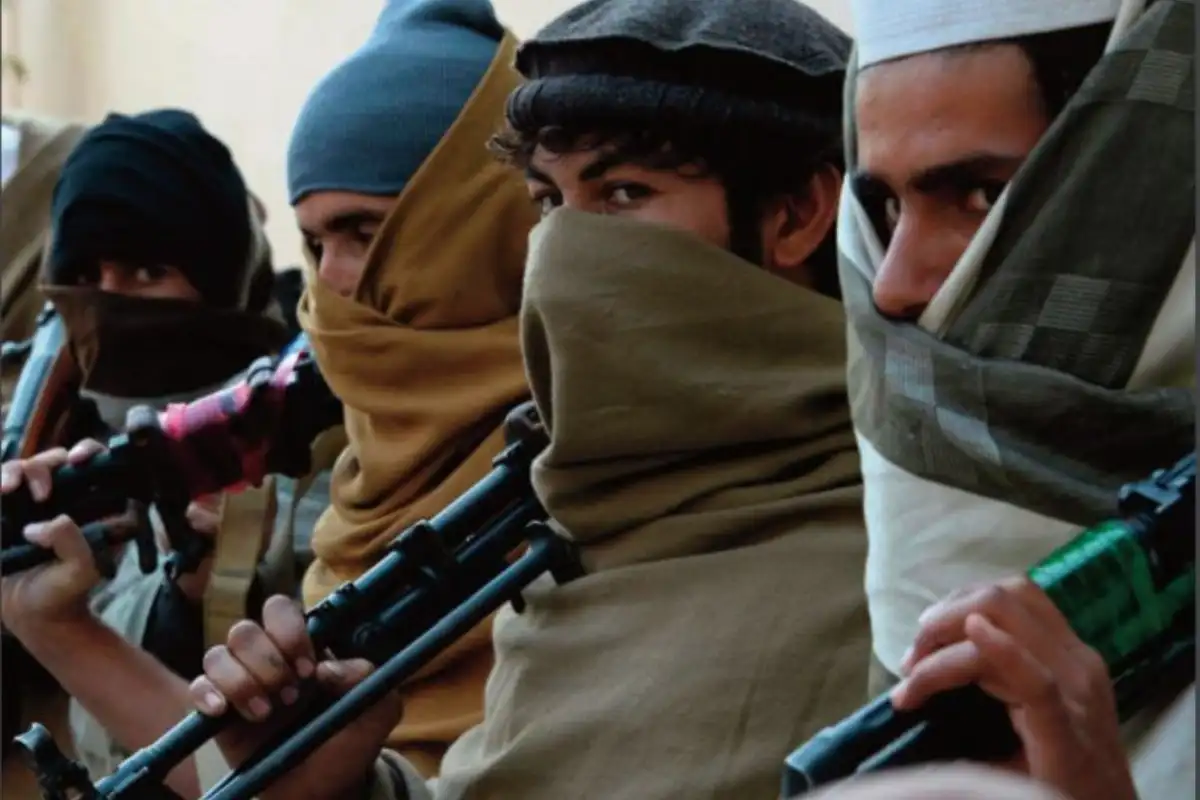
Afghanistan Under Taliban Regime Identified as Global Terror Hub in US Counterterrorism Report 2026
Four years after taking Kabul, the Taliban are running a government with one hand and sheltering militant networks with the other — and the evidence is no longer deniable.
When the Taliban seized power in August 2021, the international community faced a fundamental question: would the new Afghan government honor its Doha Agreement commitments and sever ties with terrorist organizations, or would it revert to the pre-2001 pattern of providing sanctuary to groups that threaten regional and global security? Four years of observable behavior have produced a clear answer — and it is not the one Western negotiators hoped for.
What Eurasia Review and UN Monitors Are Now Saying
The international journal Eurasia Review has published findings that place the Taliban regime’s relationship with militant organizations beyond the realm of allegation and into documented pattern. The report draws on UN Security Council monitoring team assessments, which have consistently found that Afghanistan under Taliban governance remains a permissive environment for terrorist organizations rather than a hostile one.
The UN monitoring team — a body with access to intelligence shared by member states and with its own investigative capacity — has formally characterized the Afghan Taliban regime as providing conditions favorable to terrorist groups operating on Afghan soil. This is diplomatic language for what security analysts describe more bluntly: the Taliban are not merely tolerating these groups. They are facilitating them.
Fitna al-Khawarij: Regrouping Across the Border
Among the most significant findings is the trajectory of Fitna al-Khawarij — the designation Pakistani authorities use for the Tehrik-i-Taliban Pakistan — following Pakistani military operations that pushed the group back from its operational positions inside Pakistan. Rather than dissolving under pressure, the organization has used Afghan territory to regroup, rearm, and rebuild command structures disrupted by Pakistani counterterrorism operations.
This pattern — cross-border sanctuary enabling insurgent reconstitution — is one of the oldest problems in counterinsurgency strategy. It rendered Soviet operations in Afghanistan ultimately unsustainable in the 1980s. It prolonged NATO’s campaign after 2001 when Taliban leadership sheltered in Pakistani tribal areas. Now the geographic dynamic has reversed, with Pakistani-origin militants using Afghan soil as the safe haven. The strategic problem is identical; only the map coordinates have changed.
ISIS-Khorasan, the Afghan affiliate of the Islamic State, represents a separate but related challenge. Unlike the TTP, ISIS-K is actively hostile to the Taliban and has carried out attacks against Taliban officials. Yet the Taliban’s capacity and willingness to suppress ISIS-K operations has been questioned by multiple intelligence assessments, with some analysts suggesting the group retains operational freedom in areas where Taliban control is nominal rather than real.
Pakistan’s Evidence and the International Response
Pakistan has presented evidence of Afghan-based militant planning and logistics to international forums on multiple occasions, and has received acknowledgment from several governments and multilateral bodies that cross-border terrorism originating from Afghan territory represents a genuine and documented security challenge.
The diplomatic difficulty is structural. The international community has limited leverage over a Taliban government it has not formally recognized, but with which it must engage on humanitarian, narcotics, and migration issues. Sanctioning a regime that is already internationally isolated produces diminishing returns. Military options carry consequences that no regional power is prepared to absorb. The result is a policy paralysis in which evidence accumulates, reports are published, and the operational situation on the ground changes slowly if at all.
The India Dimension
Pakistani security analysts and regional experts have raised the question of external patronage networks that may have interest in sustaining instability on Pakistan’s western border while tensions with India remain elevated on the eastern one. The argument holds that a Pakistan managing active insurgency from Afghan-based groups is a Pakistan with constrained capacity to focus strategic attention and resources elsewhere.
Whether or not one accepts the full weight of this analysis, it reflects a genuine strategic logic that regional powers routinely apply — using proxy instability to complicate adversaries’ security calculations. Afghanistan’s geographic position makes it a natural arena for this kind of competition, as it has been repeatedly throughout its modern history.
The Doha Agreement’s Broken Promise
The February 2020 Doha Agreement between the United States and the Taliban contained explicit commitments: the Taliban would prevent Afghan soil from being used by any group to threaten the security of the United States or its allies. The agreement was the diplomatic foundation for the US withdrawal. Its counterterrorism provisions have not been honored in any meaningful operational sense, as documented by the UN monitoring team and multiple national intelligence assessments.
The agreement’s failure has consequences beyond Afghanistan. It established a precedent that commitments extracted from the Taliban under diplomatic pressure do not translate into changed behavior on the ground — a lesson that shapes every subsequent negotiation with the regime over everything from girls’ education to terrorist sanctuary.
What Effective Policy Would Actually Require
Security experts who have studied Afghan militant ecosystems consistently identify the same set of requirements for meaningful progress: sustained pressure on Taliban leadership through targeted sanctions and asset freezes tied to specific facilitation behavior; regional intelligence sharing frameworks that give Pakistan, Central Asian states, and Iran common situational awareness about cross-border militant movement; and conditional engagement that links Taliban access to international economic relief to verifiable counterterrorism performance rather than stated commitments.
None of these approaches is currently being implemented at the scale or consistency that the documented threat level would justify. The gap between the evidence base and the policy response remains wide.
The Cost of Looking Away
The Taliban’s double game — governance theater internationally, militant facilitation operationally — has been visible for long enough that continued surprise at its consequences is no longer credible. Pakistan absorbs the most direct cost in the form of terrorist attacks, military casualties, and displaced populations from conflict zones. But the instability radiates outward, affecting Central Asian states, threatening the already fragile Afghan civilian population, and ensuring that Afghanistan remains a chronic source of regional insecurity rather than the stable state that four years of diplomatic engagement has failed to produce.
The evidence is no longer the question. The question is what the international community intends to do with it.
Disclaimer; This article draws on publicly available UN Security Council monitoring reports, Eurasia Review analysis, and open-source regional security assessments. It reflects the state of available information at time of publication.
Catch all the World News, Breaking News Event and Trending News Updates on GTV News
Join Our Whatsapp Channel GTV Whatsapp Official Channel to get the Daily News Update & Follow us on Google News.
Must Read