
America’s Philippine Airport Plan Is About Taiwan, Not Tourism

America's Philippine Airport Plan Is About Taiwan, Not Tourism
Washington is funding a feasibility study for a civilian airport near Manila Bay. The location, the timing, and the strategic context tell a different story than the press release.
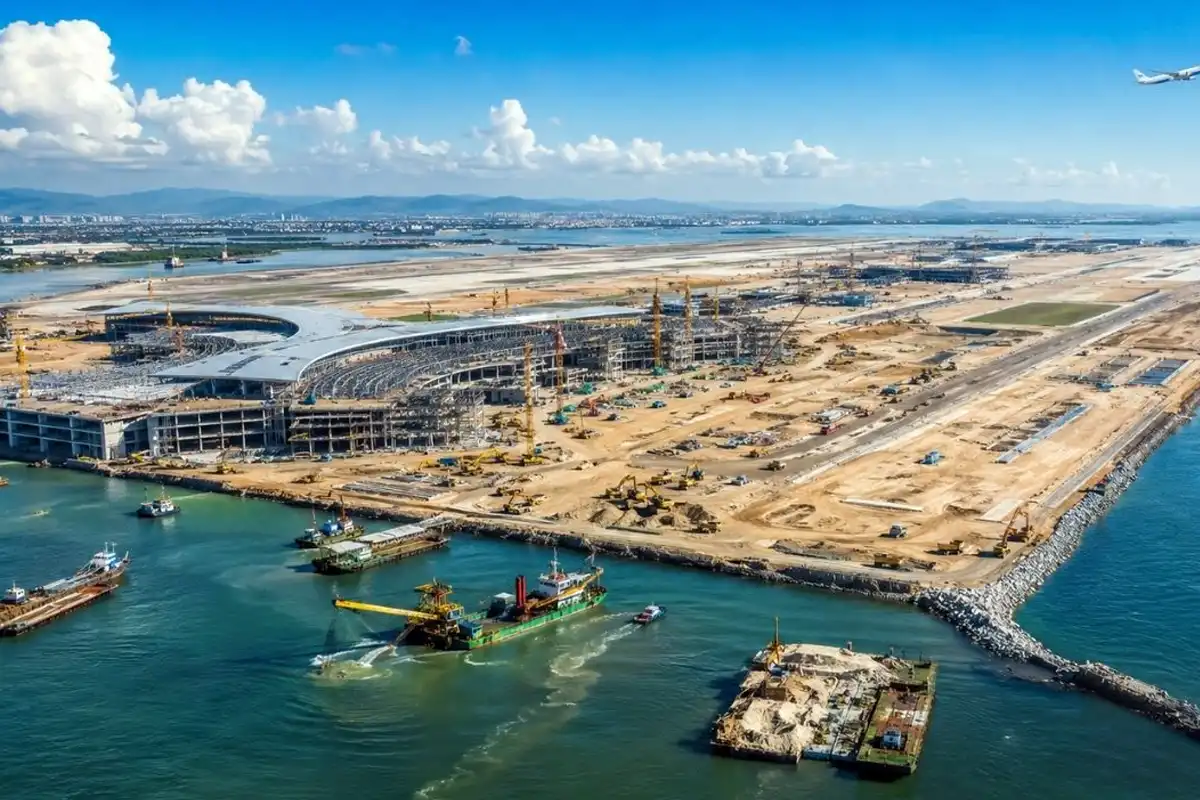
The United States has agreed to fund a feasibility study for the Sangley Point International Airport project near Manila Bay — a development that South China Morning Post has reported and that analysts across the region are reading as something considerably more significant than civilian infrastructure investment.
Sangley Point sits at the entrance to Manila Bay with direct access to the South China Sea. It is also the site of a former US naval air station that operated until 1991, when the Philippines declined to renew American basing rights following the Cold War. Washington is returning to the same geography, through a different mechanism, at a moment when the strategic rationale for that return has never been more explicit.
The Dual-Use Reality
The airport is being presented as a civilian project — a second major international gateway for Metro Manila to relieve congestion at Ninoy Aquino International Airport. The civilian rationale is genuine. Manila’s airport infrastructure is genuinely strained.
But location determines capability regardless of designation. A major airport at Sangley Point with runways capable of handling wide-body commercial aircraft can also handle P-8 Poseidon maritime patrol aircraft, C-17 transport planes, and fighter jets requiring forward positioning. Fuel storage, maintenance facilities, and radar infrastructure built for civilian purposes serve military purposes with minimal modification.
This is not a novel observation. The United States has systematically used civilian infrastructure funding — roads, ports, airports — to build dual-use capacity across its Indo-Pacific alliance network. The Enhanced Defense Cooperation Agreement with the Philippines, which expanded American access to Philippine military bases in 2014 and again in 2023, provides the legal framework within which Sangley Point’s military utility would operate.
Why Taiwan Makes Sangley Point Valuable
Military planners modeling a Taiwan contingency face a fundamental geography problem: American bases in Japan and Guam are the primary forward positions, but both are within range of Chinese ballistic missiles that have been specifically developed and deployed to target them. Distributing military logistics and strike capacity across a wider geographic area — including the Philippines — reduces the vulnerability of any single node.
Sangley Point, located approximately 1,200 kilometers from Taiwan, sits outside the immediate strike radius of China’s theater ballistic missiles while remaining close enough to be operationally relevant in a conflict scenario. It also provides direct access to the South China Sea shipping lanes that any Taiwan contingency would involve.
Beijing’s Reaction and Manila’s Dilemma
China has expressed serious concern about the project — predictably, given that it reads Sangley Point’s strategic value as clearly as American planners do. Within the Philippines, a genuine political debate has emerged about whether Manila is being positioned as a frontline state in a great power competition it did not choose to enter.
The Philippines signed the Enhanced Defense Cooperation Agreement for protection, not for exposure. Whether Sangley Point delivers one or the other depends on decisions being made in Washington and Beijing, not Manila.
Disclaimer; Based on South China Morning Post reporting and open-source Indo-Pacific security analysis.
Catch all the World News, Breaking News Event and Trending News Updates on GTV News
Join Our Whatsapp Channel GTV Whatsapp Official Channel to get the Daily News Update & Follow us on Google News.
Must Read