

Iran Rebuilds 50 of 69 Bombed Tunnel Entrances as Satellite Images Expose Limits of US-Israeli Air Campaign

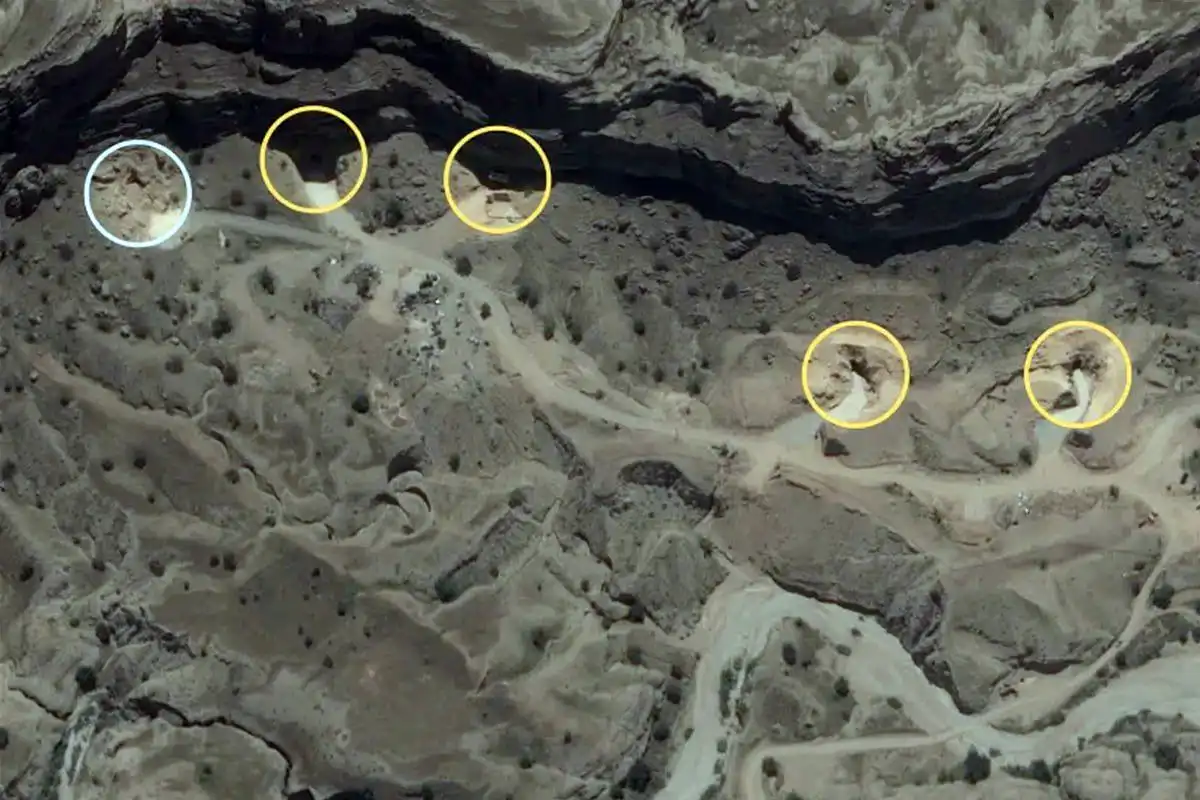
Weeks of precision strikes. Billions in munitions. And Iran is already back open for business — underground.
Satellite imagery reviewed by CNN reveals that Iran has successfully reopened and reactivated missile production facilities and underground military infrastructure that US and Israeli forces spent weeks attempting to destroy. The findings expose a fundamental strategic miscalculation in the air campaign’s design — and raise serious questions about what military options remain.
What the Satellites Actually Show
Of 69 tunnel entrances targeted across 18 Iranian military installations, Iran has reopened 50 — using bulldozers and heavy trucks to clear rubble, repave damaged roads, and restore access to underground networks within weeks of bombardment. The reconstruction pace has surprised Western analysts and directly undermined the central premise of the targeting strategy.
A CIA assessment from May 2026 concludes that Iranian military reconstruction is proceeding rapidly. Drone production has resumed. Iran has retained approximately 70 percent of its pre-war military capability, with 75 percent of its mobile missile launchers still operational and 70 percent of its pre-war missile stockpile intact and ready for use.
Why Bunker Busters Failed
Iran’s geography is doing what its air defenses could not. Several of its most critical missile facilities are buried up to 500 meters deep inside solid mountain rock — beyond the effective penetration depth of America’s most powerful bunker-buster, the GBU-57 Massive Ordnance Penetrator.
Recognizing this limitation, the US and Israel shifted strategy — targeting tunnel entrances, access roads, and ventilation systems rather than the facilities themselves. The satellite evidence suggests Iran anticipated exactly this approach and pre-positioned the engineering resources needed to reverse it rapidly.
Clearing a bombed tunnel entrance with bulldozers costs a fraction of what it costs to destroy it. Iran appears to have calculated that equation correctly.
Iran’s Staying Power: The Intelligence Picture
According to US intelligence assessments, Iran can withstand an American naval blockade for three to four months and sustain prolonged economic pressure for years. These projections reflect Iran’s investment over decades in economic resilience, domestic production substitution, and sanctions-proofing across critical industries.
The combination of underground military survivability and economic endurance creates a strategic problem for Washington that airpower alone cannot resolve.
The American Vulnerability Picture
The conflict is exacting measurable costs on US force posture as well. Multiple American bases among 13 regional installations have been rendered operationally compromised by Iranian strikes, with 217 buildings destroyed across 15 locations. US missile defense inventories are being depleted intercepting Iranian drone swarms — a consumption rate that strains replenishment supply chains.
Trump’s Narrowing Window
The satellite findings land at a politically difficult moment for the White House. With midterm elections approaching, Trump faces compressing timelines on multiple fronts simultaneously — economic pressure from energy prices, military pressure from an adversary proving more resilient than campaign rhetoric suggested, and diplomatic pressure from allies urging de-escalation.
The air campaign was built on an assumption of decisive infrastructure destruction. The satellite images published by CNN suggest that assumption has not held.
Catch all the World News, Breaking News Event and Trending News Updates on GTV News
Join Our Whatsapp Channel GTV Whatsapp Official Channel to get the Daily News Update & Follow us on Google News.
Must Read