Moody’s Issues Stark Warning: US Has One Week to Strike Iran Deal Before Recession Becomes Inevitable

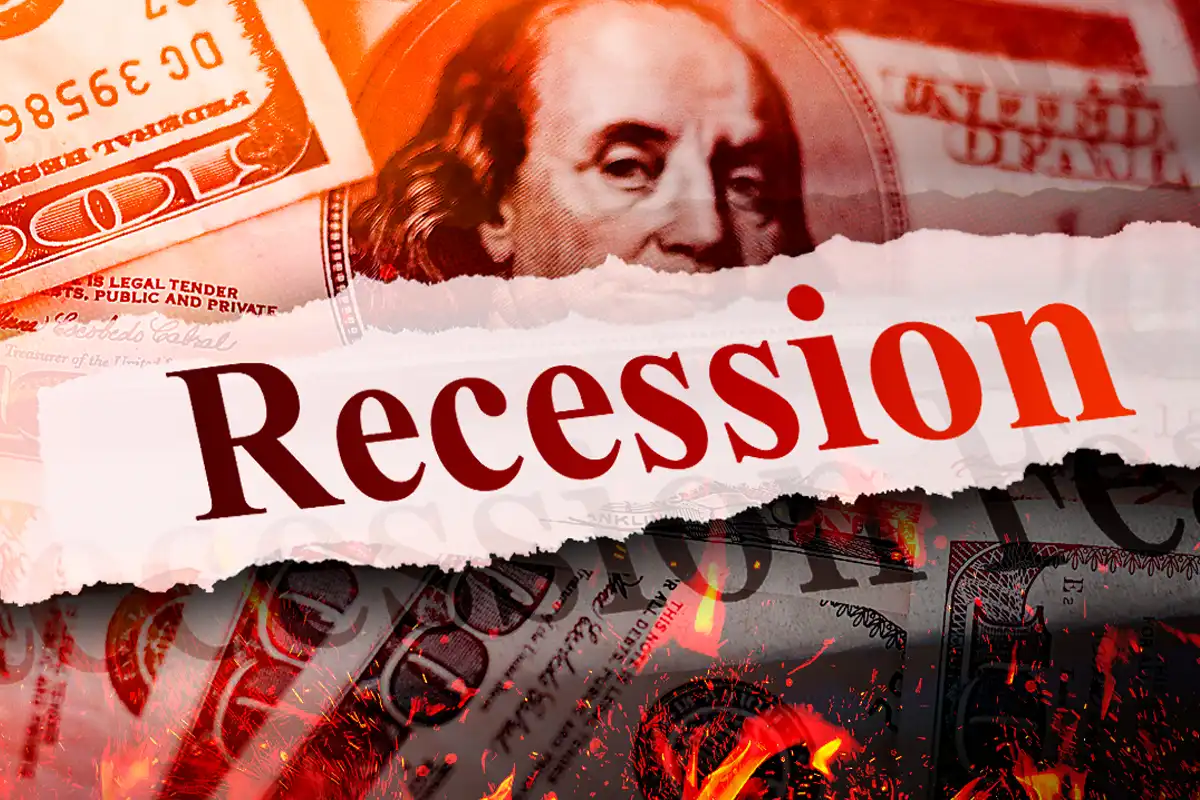
The clock isn’t just ticking diplomatically — it’s ticking economically. And Moody’s Analytics just told markets exactly how much time is left.
Mark Zandi, Chief Economist at Moody’s Analytics, has delivered one of the most urgent economic warnings of 2026, telling Bloomberg that the United States faces a severe and potentially unrecoverable recession if President Donald Trump fails to reach a diplomatic breakthrough with Iran within one week. The trigger: an energy price spiral driven by Gulf military escalation that is already straining American consumers and financial markets simultaneously.
The One-Week Deadline
Zandi’s timeline is unusually specific for an economist of his stature. He stated plainly that a peace agreement must materialize within one, two, or at most seven days — because beyond that window, the United States faces what he described as “a very large and very real problem.”
This isn’t speculative modeling. Financial markets are already pricing in diplomatic failure, with global energy markets holding their breath for any signal of a US-Iran breakthrough that could relieve supply pressure.
The $5 Gallon Red Line
Zandi identified a precise domestic threshold that separates manageable economic stress from outright recession: gasoline prices crossing $5 per gallon in the United States. At that level, consumer purchasing power contracts sharply enough to trigger a cascade — reduced spending, slowing economic activity, rising unemployment — in an economy Zandi describes as already weakened and offering limited buffer against external shocks.
The mechanism is straightforward. American households spend a disproportionate share of discretionary income on fuel. When pump prices spike, consumer spending — which drives approximately 70 percent of US GDP — compresses rapidly. Businesses follow. The cycle accelerates.
$125 Oil: The Point of No Return
Beyond the retail price threshold, Zandi flagged crude oil at $125 per barrel as the definitive breaking point. If Brent crude crosses and holds above that level, he warned, no policy intervention would be sufficient to prevent the US economy from entering a deep contractionary spiral.
Current prices are being driven by fears that Gulf military escalation could sever critical supply arteries — particularly the Strait of Hormuz, through which approximately 20 percent of global oil supply flows daily. Any sustained disruption to that chokepoint would send crude prices through Zandi’s red line almost immediately.
Strategic Petroleum Reserves at Two-Year Low
Compounding the vulnerability, US Strategic Petroleum Reserves have fallen to 365 million barrels — their lowest level in two years, according to the US Energy Information Administration. This dramatically reduces Washington’s ability to deploy emergency supply releases as a price-dampening tool, a mechanism used effectively during previous energy crises.
The depleted reserves mean the US government has less room to absorb supply shocks before market prices reflect the full impact of Gulf disruptions.
What Markets Are Watching
Global financial markets are currently pricing in a diplomatic resolution as their base case — which itself creates a fragile dynamic. If negotiations stall or collapse, the correction could be sudden and severe. Equity markets, bond yields, and currency valuations across emerging economies are all exposed to a scenario where US-Iran talks fail and energy prices enter uncontrolled escalation.
Pakistan, India, and other import-dependent economies in Asia face their own parallel exposure — higher dollar-denominated oil bills, currency pressure, and imported inflation — should the Gulf crisis deepen.
The Broader Strategic Calculation
Trump faces a compressing decision window where military objectives and economic survival are in direct tension. Continuing military pressure on Iran risks triggering the exact economic conditions Moody’s is warning about. Diplomatic concessions carry their own political costs domestically.
Zandi’s warning essentially reframes the Iran negotiations not as foreign policy — but as domestic economic emergency management.
The markets have set the deadline. Washington now has to decide whether it can meet it.
Catch all the World News, Breaking News Event and Trending News Updates on GTV News
Join Our Whatsapp Channel GTV Whatsapp Official Channel to get the Daily News Update & Follow us on Google News.
Must Read