
UNICEF: Afghanistan Is South Asia’s Most Dangerous Country for Children as Climate and Hunger Collide

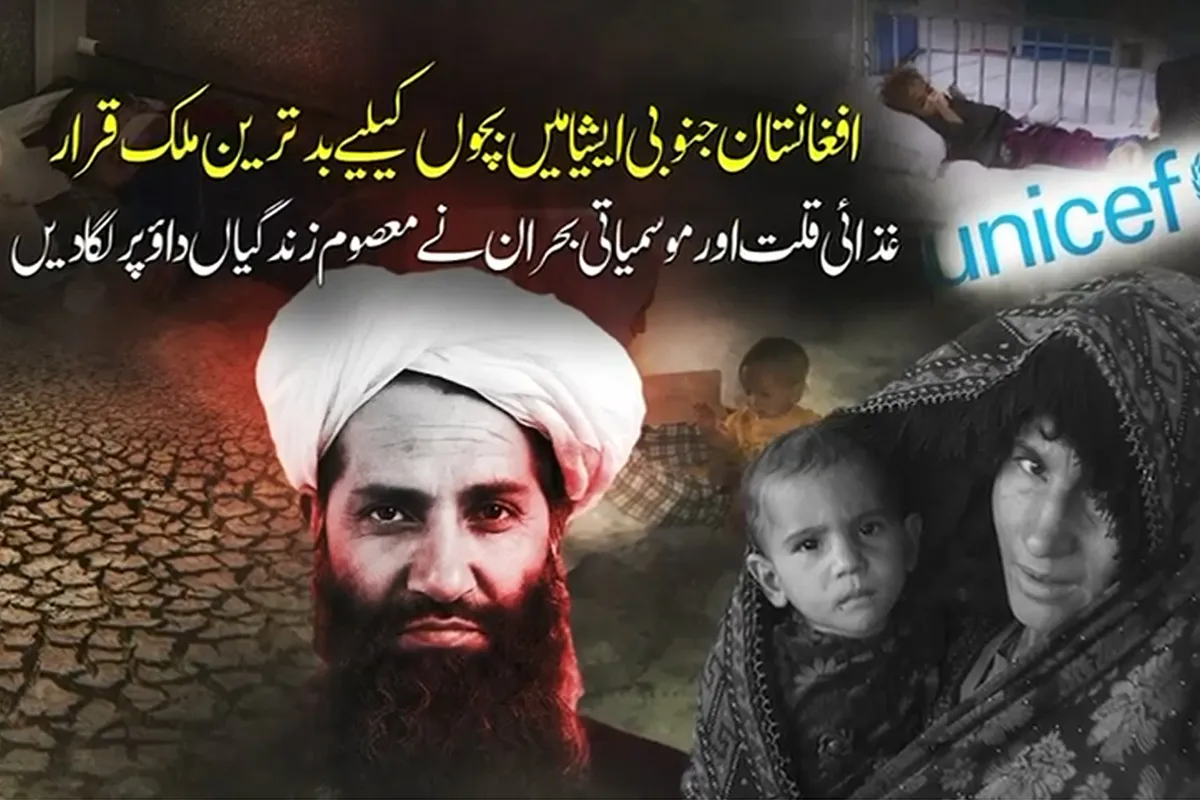
Nearly nine million Afghan children are now living at the intersection of two crises that feed each other — and neither is showing signs of easing.
UNICEF’s Children’s Climate Risk Report 2026, released June 16, found that more than 8.8 million Afghan children, 41 percent of the country’s roughly 21 million children, face at least three simultaneous climate hazards: drought, flooding, and extreme heat. More than 1.7 million children are specifically at risk from river flooding, while over 75 percent of Afghan children are affected by drought conditions and more than half endure prolonged, intensifying heatwaves.
Why Climate Risk and Hunger Are Now One Crisis
What makes Afghanistan’s situation distinct from other climate-vulnerable nations is how directly environmental shocks are translating into malnutrition. UNICEF’s data shows nearly half of Afghan children live in severe food poverty, and the country now has among the highest child stunting rates in the world. Recurring droughts and floods are damaging food production and limiting access to safe drinking water — conditions UNICEF says are driving rising acute malnutrition, with millions of children under five requiring treatment.
Tajudeen Oyewale, UNICEF’s representative in Afghanistan, described children as standing on the frontlines of the climate crisis, emphasizing that repeated exposure to multiple hazards is compounded by major gaps in the essential services children need to recover from climate shocks.
A System Under Strain From Every Direction
The climate and nutrition crisis isn’t unfolding in isolation. Afghanistan absorbed roughly 2.8 million returnees deported from Iran and Pakistan in 2025 alone, over 60 percent of them children, straining health, education, and protection systems already operating under severe funding shortfalls. UNICEF’s broader 2025 reporting shows reduced funding forced the closure of 422 healthcare facilities, cutting off roughly 3 million people from care.
This is the structural backdrop UNICEF points to when discussing service gaps: not a single cause, but a convergence of climate shocks, mass population movement, and a humanitarian funding system that is chronically under-resourced. UNICEF’s 2026 appeal for Afghanistan, requesting nearly $949 million, remains only partially funded, with the agency explicitly warning that sustained donor support is critical to prevent further deterioration.
Where Responsibility Questions Get Complicated
Governance restrictions inside Afghanistan compound these vulnerabilities in ways aid agencies have documented extensively. Restrictions on adolescent girls’ education beyond grade six affect more than 2.2 million girls, and humanitarian organizations operate under significant access constraints that complicate climate adaptation planning, infrastructure investment, and service delivery.
It’s worth distinguishing here between UNICEF’s own findings, which focus on exposure data, service gaps, and funding shortfalls, and the broader political debate over how much of Afghanistan’s vulnerability stems from governance choices versus structural poverty, four decades of conflict, and a collapsing international aid architecture. UNICEF’s report itself stops short of attributing the crisis to any single actor’s failures, instead calling for urgent international investment in climate-resilient health, nutrition, water, and education systems, alongside the establishment of climate-resilient schools to protect continuity of education during disasters.
What Comes Next
Without expanded funding and improved humanitarian access, the trajectory UNICEF describes points toward worsening stunting rates, deeper food insecurity, and an education and health system increasingly unable to absorb both climate shocks and returnee pressure simultaneously. The report’s core message is less about assigning blame than about urgency: a generation of Afghan children is absorbing climate damage that the country’s depleted systems have no capacity left to cushion.
Catch all the World News, Breaking News Event and Trending News Updates on GTV News
Join Our Whatsapp Channel GTV Whatsapp Official Channel to get the Daily News Update & Follow us on Google News.
Must Read