Trump Claims Record 28 Million Barrels of Oil Passed Through Strait of Hormuz in One Day


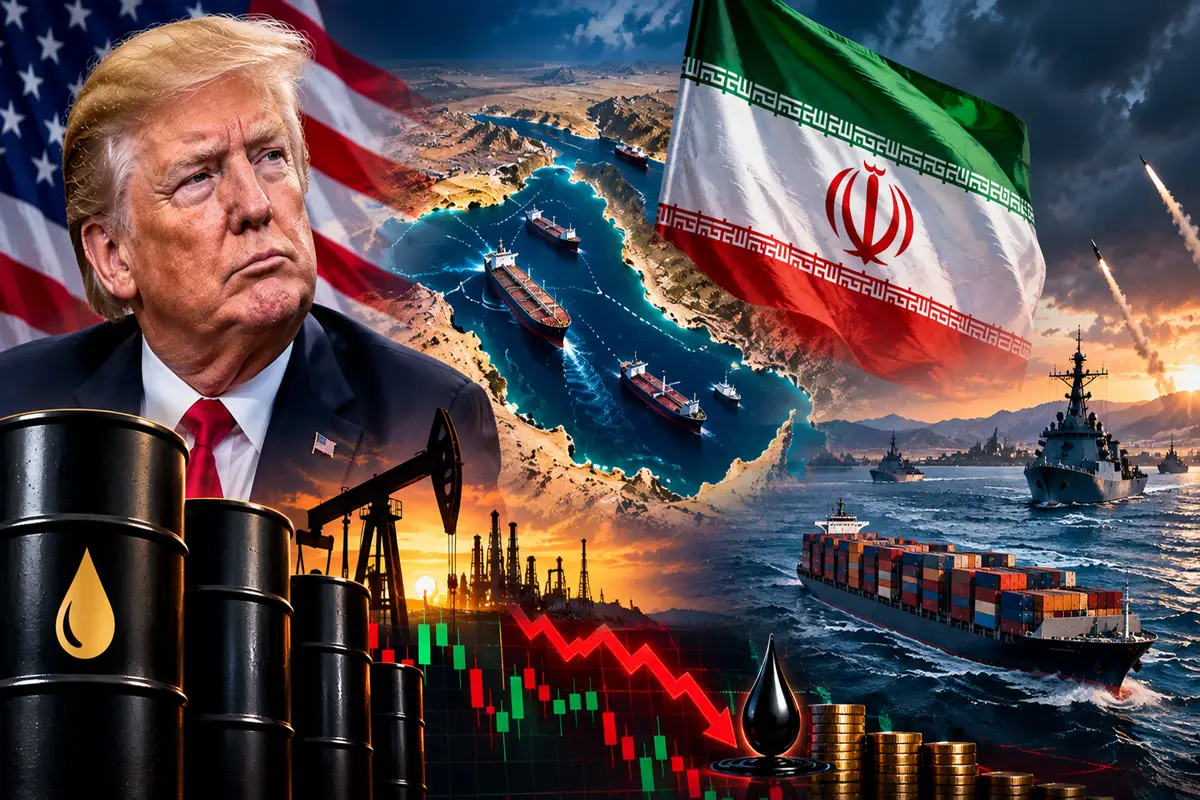
WASHINGTON: US President Donald Trump has claimed that 28 million barrels of oil passed through the Strait of Hormuz in a single day during the US naval blockade of Iran, describing the volume as a new record and saying it exceeded levels recorded before the war.
Speaking at a White House event, Trump said the previous day’s oil shipments through the strategic waterway had reached an unprecedented level. However, independent verification of the specific figure was not immediately available.
US blockade of Iranian ports remains in place
Trump’s remarks came as the United States continued its naval blockade of Iranian ports, aimed at restricting Tehran’s oil exports and increasing economic pressure on the country.
On October 8, the US Treasury Department announced sanctions targeting 17 vessels linked to Iran’s oil trade, along with associated individuals and networks. Washington said the measures were intended to disrupt the transportation of Iranian crude oil and petroleum products to international markets. <Cite refs={[“turn290728news42″,”turn290728search0”]}/>
At the same time, the United States has sought to maintain commercial shipping through the Strait of Hormuz, a vital route for global energy supplies.
The situation has created a distinction between restrictions on Iranian oil exports and efforts to keep oil shipments from other producers moving through the region.
Does shipping data support Trump’s claim?
Trump’s statement comes amid continuing uncertainty over the volume of oil moving through the Strait of Hormuz.
Data cited by Reuters from analytics firm Kpler showed that crude oil movements through the strait had fallen to approximately 10.1 million barrels per day, around 74% of pre-war levels, following a recent decline in vessel traffic. The figures also showed that only seven commodity-carrying vessels crossed the waterway on Tuesday, October 6. <Cite refs={[“turn290728news43”]}/>
These figures do not independently verify Trump’s specific claim of 28 million barrels passing through the strait in one day. The figures may also refer to different measurement periods or categories of oil shipments, making direct comparisons difficult without further details.
A single day’s reported volume would not, by itself, establish that shipping had returned to normal. Vessel movements and oil flows have continued to fluctuate amid security threats and disruptions across the region.
US tightens sanctions on Iranian oil trade
The latest sanctions announced on October 8 form part of Washington’s broader campaign to restrict Iran’s oil revenues.
The US Treasury Department said the targeted vessels had transported millions of barrels of Iranian crude oil, petroleum products and petrochemicals to markets in South and East Asia. The measures followed the reimposition of the US blockade of Iranian ports on July 14, after an agreement between Washington and Tehran broke down. <Cite refs={[“turn290728search0″,”turn290728search3”]}/>
Iran has opposed US economic pressure, while the restrictions have added to uncertainty over the country’s oil exports and regional energy supplies.
What could this mean for global oil prices?
The Strait of Hormuz is one of the world’s most important energy transit routes. Changes in shipping volumes through the waterway can influence crude oil prices, particularly when markets are already concerned about supply disruptions.
However, oil prices also depend on global production, demand, alternative export routes and the wider security situation in the Middle East.
Trump’s statement has drawn attention to the volume of oil moving through the strait during the blockade. But until the reported 28 million barrels figure is independently verified and its measurement period clarified, it remains a presidential claim rather than a confirmed record.
Catch all the World News, Breaking News Event and Trending News Updates on GTV News
Join Our Whatsapp Channel GTV Whatsapp Official Channel to get the Daily News Update & Follow us on Google News.
Must Read

Pakistan
Pakistan Could Be Divided Into 16, 25 or More Administrative Units, WEF Analysis Suggests
10-October،2026