PPP’s Sherry Rehman criticises India over Dulhasti Stage-II Project

PPP’s Sherry Rehman criticises India over Dulhasti Stage-II Project
Pakistan Peoples Party (PPP) leader Senator Sherry Rehman on Monday criticised India after New Delhi approved the Dulhasti Stage-II hydropower project on the Chenab River in the Indian Illegally Occupied Jammu and Kashmir (IIOJ&K). She said the move is a clear violation of the Indus Waters Treaty (IWT).
Reacting to Indian media reports, the PPP leader said the approval amounted to “weaponisation of water”.
“This weaponisation of water is neither sane nor acceptable in a region on the frontlines of climate change and environmental stress. It will inflame tensions in a bilateral relationship already bristling with hostility and distrust,” she wrote in a post on X.
Rehman emphasised that the IWT cannot be unilaterally revoked, noting that recent United Nations rapporteurs had confirmed the treaty’s validity.
“As per the IWT, which cannot be unilaterally revoked, as recent UN rapporteurs have confirmed, Pakistan has control over the waters of the Indus, Jhelum, and Chenab rivers, while the Ravi, Beas and Sutlej rivers fall under India’s control,” she said.
She warned that any attempt to undermine the treaty would be unacceptable and could have serious regional consequences.
In flagrant violation of the #IndusWatersTreaty (IWT), India has just given approval to the Dulhasti Stage-II hydropower project on Chenab River in the Indian Illegally Occupied Jammu and Kashmir (IIOJ&K). As per the IWT, which cannot be unilaterally revoked, as recent UN… pic.twitter.com/PK1wDw8g2g
— SenatorSherryRehman (@sherryrehman) December 29, 2025
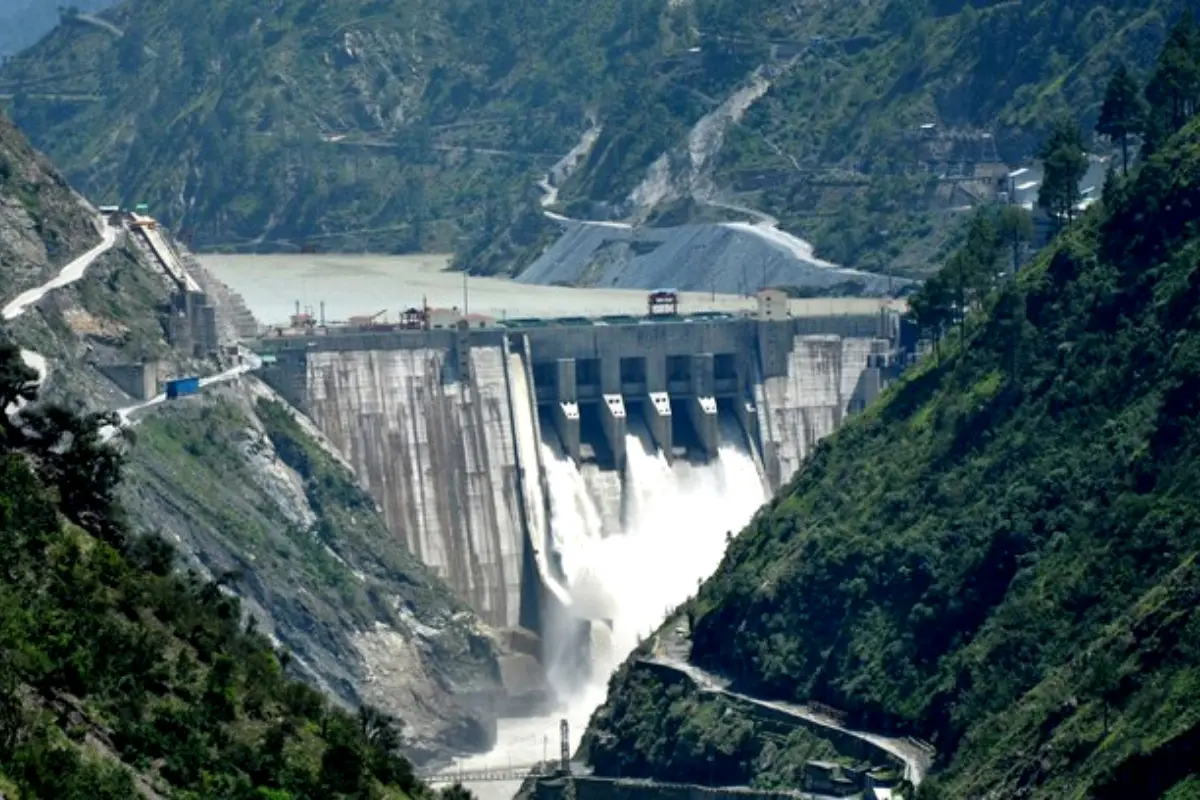
According to Indian media, the Dulhasti Stage-II project will cost 3,277.45 crore Indian rupees, and construction may start early next year. The project will be developed by NHPC Limited, a public sector Indian company, and is expected to generate up to 260 megawatts of electricity.
India’s decision follows its move to keep the IWT in abeyance after the Pahalgam incident, which led to cross-border clashes between the two nuclear-armed countries. Despite this, Pakistan has reaffirmed its commitment to the treaty and will continue to participate in Neutral Expert proceedings in good faith.
In August, the Permanent Court of Arbitration ruled that India must “let flow” the waters of the western rivers for Pakistan’s unrestricted use.
The waters of the Chenab River Basin have been shared under the 1960 IWT, but the Dulhasti Stage-II project violates the treaty’s provisions. Under the IWT, Pakistan controls the Indus, Jhelum, and Chenab rivers, while India controls the Ravi, Beas, and Sutlej rivers.
The Dulhasti Stage-II project will use the existing infrastructure of Dulhasti Stage-I, a 390 MW run-of-the-river scheme commissioned in 2007. Water will be drawn from the Marusudar River and brought to the Dulhasti Dam through the Pakal Dul project, allowing additional power generation.
What is IWT?
The Indus Waters Treaty governs the use of rivers flowing from India into Pakistan’s Indus River basin. Signed in September 1960 and mediated by the World Bank, it split the rivers between the two countries. India can use the eastern rivers — Sutlej, Beas, Ravi — while Pakistan controls the western rivers — Indus, Jhelum, Chenab.
There is no provision in the treaty for either country to unilaterally suspend or terminate it. Pakistan has raised concerns that India’s dams could reduce river flows, affecting 80% of its irrigated agriculture, and has sought intervention from neutral experts and arbitration courts on recent hydropower projects.
Catch all the Pakistan News, Breaking News Event and Trending News Updates on GTV News
Join Our Whatsapp Channel GTV Whatsapp Official Channel to get the Daily News Update & Follow us on Google News.
Must Read

Entertainment
Aruba Mirza Reveals Ex-Fiancé Married Someone Else After Seven-Year Relationship
20-August،2026