
Sindh Budget 2026-27: CM Murad Ali Shah Presents Rs3.562 Trillion Plan With No New Taxes

Sindh Budget 2026-27: CM Murad Ali Shah Presents Rs3.562 Trillion Plan With No New Taxes
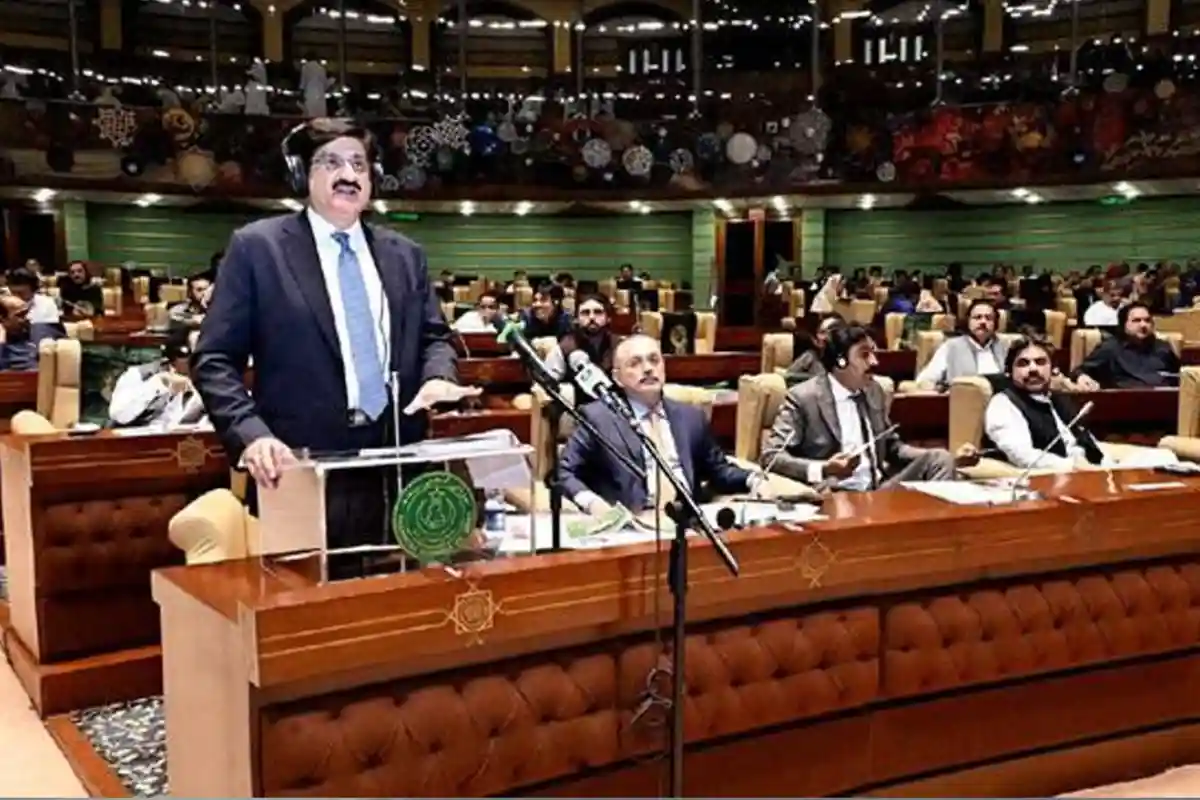
Sindh Chief Minister Syed Murad Ali Shah on Wednesday laid before the Sindh Assembly a Rs3.562 trillion provincial budget for the fiscal year 2026-27, promising a tax-free relief package alongside a broad range of development, social protection and economic growth measures.
At the heart of the budget announcement was a significant boost for the provincial workforce. The chief minister declared a 7% increase in salaries and pensions for all government employees, with ad hoc relief allowances previously granted in 2022 and 2025 to be formally merged into basic pay structures. “Ad hoc relief allowances granted in 2022 and 2025 would be merged into the basic pay structure,” he stated. Additionally, the minimum monthly wage was raised from Rs40,000 to Rs43,000, offering direct relief to lower-income workers across the province.
Development Portfolio and NFC Award Protection
Despite ambitious targets, the Sindh government was forced to scale back its development ambitions under federal coordination directives. CM Murad confirmed that the province had been compelled to reduce its development portfolio from Rs575 billion to Rs400 billion. However, he assured that the province’s rightful share under the National Finance Commission (NFC) Award had been fully safeguarded throughout this revision process.
Karachi to Become Regional Financial Hub With SIFC
In a landmark announcement for Pakistan’s financial landscape, the chief minister unveiled plans for the establishment of the Sindh International Financial Centre (SIFC) in Karachi. Describing it as a transformative economic platform, he said the centre would serve as a gateway for infrastructure investment, Islamic finance and climate finance. “The centre would help transform Karachi into a regional hub for investment, fintech and financial services,” CM Murad stated, positioning Sindh’s capital as a competitive player in South Asia’s evolving financial ecosystem.
Keti Bandar: Pakistan’s New Economic Gateway
The budget also introduced an ambitious maritime and industrial vision for the coastal region. The Sindh government announced plans to develop Keti Bandar into a world-class international hub encompassing maritime operations, logistics, industrial activity and energy production. The project will be strategically linked with the Dhabeji Special Economic Zone and Thar’s vast coal resources. “The project would strengthen Pakistan’s connectivity with global trade routes and serve as a new economic gateway for the country,” the chief minister said, outlining a long-term vision for Pakistan’s southern coastal corridor.
Pakistan’s Largest Solar Programme: 275,000 Free Systems
Placing renewable energy at the centre of Sindh’s future agenda, CM Murad proudly announced what he described as Pakistan’s largest solar programme. Under this initiative, a total of 275,000 free solar home systems will be distributed across the province at a total cost of Rs18 billion. Alongside this, a subsidised solar financing programme will also be introduced specifically targeting middle-income households, making clean energy more accessible across economic segments.
Social Protection and Agriculture Support
The provincial budget allocated Rs13.2 billion for a comprehensive range of social protection programmes, including kitchen garden initiatives, the Benazir Hari Card scheme and the Benazir Women Agriculture Workers Programme. Ongoing assistance programmes for widows and orphans were also confirmed to continue without interruption, reinforcing the government’s commitment to Sindh’s most vulnerable communities.
Tax Relief Measures Across Key Sectors
On the taxation front, the budget introduced several targeted relief measures. Sales tax on educational support services was reduced to 5%, while tax rates for insurance agents and brokers were also lowered. The agricultural super tax rate was cut from 10% to 8%, and the exemption threshold for this tax was raised substantially from Rs150 million to Rs500 million, providing considerable relief to Sindh’s large agricultural sector.
Annual Development Programme: Rs400 Billion for Key Sectors
The Annual Development Programme (ADP) for fiscal year 2026-27 has been set at Rs400 billion, distributed across critical sectors of public need. The allocations are as follows:
- Local Government & Municipal Infrastructure: Rs121.6 billion
- Public Health Engineering: Rs40.9 billion
- Transport & Communications: Rs39.5 billion
- Irrigation: Rs30.9 billion
- Education: Rs25.9 billion
- Health: Rs17.4 billion
The wide-ranging budget reflects Sindh’s intent to balance fiscal responsibility with inclusive growth, infrastructure expansion and long-term economic transformation across the province.
Catch all the Pakistan News, Breaking News Event and Trending News Updates on GTV News
Join Our Whatsapp Channel GTV Whatsapp Official Channel to get the Daily News Update & Follow us on Google News.
Must Read