Venezuela Death Toll Rises to 164 After Devastating 7.5 and 7.2 Magnitude Twin Earthquakes

Venezuela Death Toll Rises to 164 After Devastating 7.5 and 7.2 Magnitude Twin Earthquakes
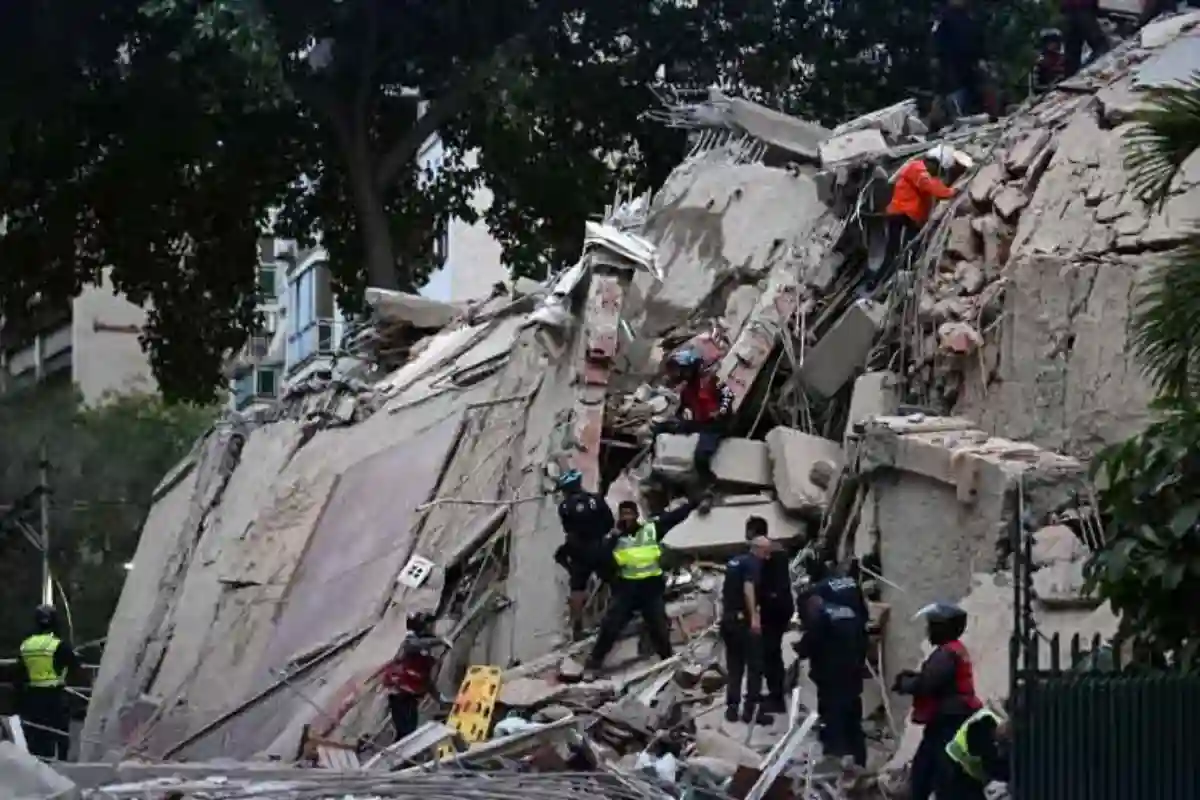
Venezuela is reeling from one of the most catastrophic natural disasters in its modern history after two powerful back-to-back earthquakes struck the country on Wednesday evening, killing at least 164 people, injuring 971 others, and leaving 7,381 individuals unaccounted for as rescue teams worked through the night in a desperate race against time.
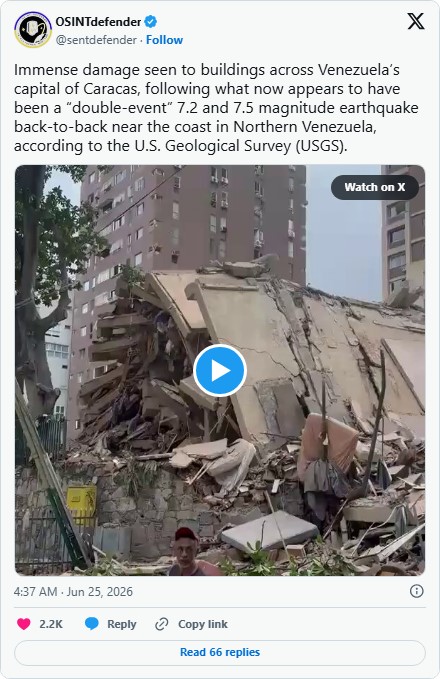
According to the US Geological Survey (USGS), the first magnitude 7.2 earthquake struck near San Felipe, approximately 284 kilometres west of Caracas, at 22:04 GMT. Less than a minute later, a stronger magnitude 7.5 earthquake hit near Yumare, around 293 kilometres west of the capital — making the twin tremors among the strongest to hit Venezuela in over a century, with shockwaves felt across multiple neighboring countries.
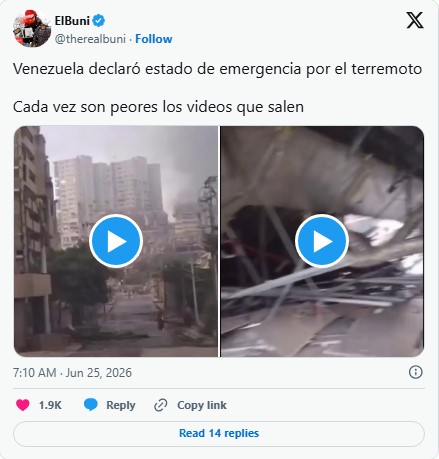
Acting President Delcy Rodríguez confirmed the rising death toll in a nationally televised address and warned that figures would climb further as emergency crews continued search and rescue operations in the worst-affected areas. She declared a nationwide state of emergency under Venezuela’s constitution and announced the creation of an initial emergency relief fund worth $200 million, to be financed using resources from the International Monetary Fund.
Describing the scale of destruction in La Guaira, Rodríguez called the coastal state a “disaster zone” following the collapse of numerous buildings. She confirmed that the Simon Bolivar International Airport in Maiquetia, located in La Guaira, had sustained severe damage and been closed indefinitely. State television broadcast dramatic footage showing three children, covered in dust but alive, being pulled from the rubble — a moment that captured both the horror and the hope of the ongoing rescue operation.
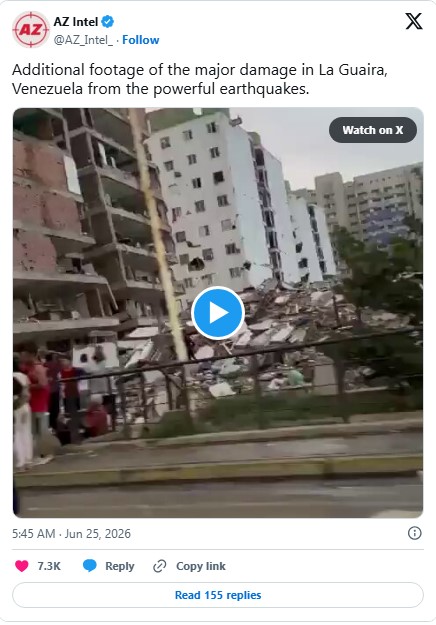
“Dozens of buildings have collapsed, and we are currently carrying out very intense rescue efforts to save as many lives as God allows us to save,” Rodriguez stated in her address to the nation. Calling the disaster “a true tragedy,” she expressed deep condolences to bereaved families and confirmed that rescue teams from several countries were already en route to assist local emergency workers.
In Caracas, authorities reported severe destruction across multiple neighborhoods. The mayor of Chacao municipality, Gustavo Duque, confirmed that four buildings had completely collapsed in his district, with one person killed and 22 successfully rescued. Approximately 30 additional buildings suffered major structural damage. Three people also died in the Baruta district after two buildings collapsed. Interior Minister Diosdado Cabello warned that the Altamira neighborhood faced an “alarming situation” after at least one 22-storey building collapsed entirely, urging motorists to keep roads clear for emergency vehicles.
In Falcón state, Governor Victor Clark confirmed that at least 15 people remained trapped after the collapse of the La Mar Suites building along the Caribbean coast, with 35 injured people admitted to a nearby hospital, two of them in critical condition. Authorities recorded approximately 20 aftershocks following the twin earthquakes, with the Venezuelan Red Cross warning that strong aftershocks continue to threaten affected communities and emergency responders.
The Venezuelan Red Cross confirmed that rescue teams were actively assisting with search, evacuation and relief supply operations across all affected regions. “Damage assessments remain preliminary, and the full human impact is not yet known,” the organization stated, adding that the earthquakes caused severe damage to hospitals, public transport infrastructure, homes and businesses across Caracas and several other states.
The USGS issued a grave warning through its PAGER system, estimating a 39% probability that the final death toll would range between 1,000 and 10,000, and a 37% probability it could reach between 10,000 and 100,000. Earlier projections had suggested an even greater probability of catastrophic losses exceeding 100,000 deaths. The agency also projected economic losses equivalent to between 1% and 4% of Venezuela’s entire gross domestic product.
Eyewitnesses across Caracas described scenes of panic and devastation. “When we went downstairs, the scene was like a horror movie,” said Maria Alejandra, who escaped from a nearby apartment building. Coro Martinez, a resident of eastern Caracas, recalled: “There was a very loud crash. Things fell in the house. I’ve never experienced anything like it.” Astrid Ramirez described the immediate chaos: “Everyone was running down the stairs.” An 80-year-old pensioner, Maria Romero, who was helped to safety by police, said: “This earthquake was horrible, even worse than the one in 1967.”
Rodriguez appealed for all medical professionals to immediately report to hospitals and emergency departments. At Caracas’ Hospital de Clínicas, staff were instructed to double overnight shifts. Schools were shut for the remainder of the week, metro and rail services suspended, and all non-essential government activities halted. The military’s general staff was activated under the Bolivarian National Guard to coordinate nationwide emergency operations.
A tsunami advisory was briefly issued for Puerto Rico, the US Virgin Islands and the British Virgin Islands but was subsequently cancelled by the US National Weather Service after the threat passed. Venezuela’s critical oil infrastructure appeared to have escaped significant damage, with workers at the El Palito refinery near the epicenter reporting unaffected operations. UK energy company Shell confirmed all its employees in Venezuela were safe.
The international response was swift and broad. US President Donald Trump described the earthquakes as “massive in scale” and confirmed the United States was “ready, willing, and able to help.” The US State Department mobilized disaster assistance teams, search-and-rescue specialists, medical supplies and humanitarian aid. El Salvador’s President Nayib Bukele offered to dispatch 300 rescuers and paramedics along with 50 tonnes of emergency equipment and supplies. Colombia, Brazil, Ecuador, Panama, Mexico, Bolivia, Uruguay, Argentina, Chile, India, Pakistan, Qatar and the Dominican Republic also pledged support or extended condolences.
Internet monitoring organization NetBlocks reported a significant decline in connectivity across Venezuela following the earthquakes. Venezuela sits on the seismically active boundary where the Caribbean Plate meets the South American Plate — a fault system historically responsible for catastrophic events, including the 1812 earthquake that killed an estimated 30,000 people in Mérida and Caracas.
Emergency crews continue searching through the ruins of collapsed buildings as authorities warn the full scale of this devastating disaster may not become fully clear for several days.
Catch all the World News, Breaking News Event and Trending News Updates on GTV News
Join Our Whatsapp Channel GTV Whatsapp Official Channel to get the Daily News Update & Follow us on Google News.
Must Read
Pakistan
Funeral Prayers Held for Major Hasnain Shahzad Humayun and Captain Abdul Samad
13-October،2026