
Satellite Imagery Reveals Systematic Destruction of US Military Infrastructure Across Persian Gulf Following Iran’s Operation True Promise 4

Satellite Imagery Reveals Systematic Destruction of US Military Infrastructure Across Persian Gulf Following Iran's Operation True Promise 4
In a meticulously coordinated military campaign, Iranian forces executed a series of ballistic missile and drone strikes that systematically dismantled the United States’ vast military network across the Persian Gulf, targeting more than a dozen key installations and exposing critical vulnerabilities in America’s regional defense architecture.
The strikes, carried out under what Tehran designated “Operation True Promise 4,” were launched in direct response to what Iran described as joint US-Israeli aggression, which began on February 28, 2026, and resulted in the deaths of senior Islamic Republic officials and hundreds of civilians.
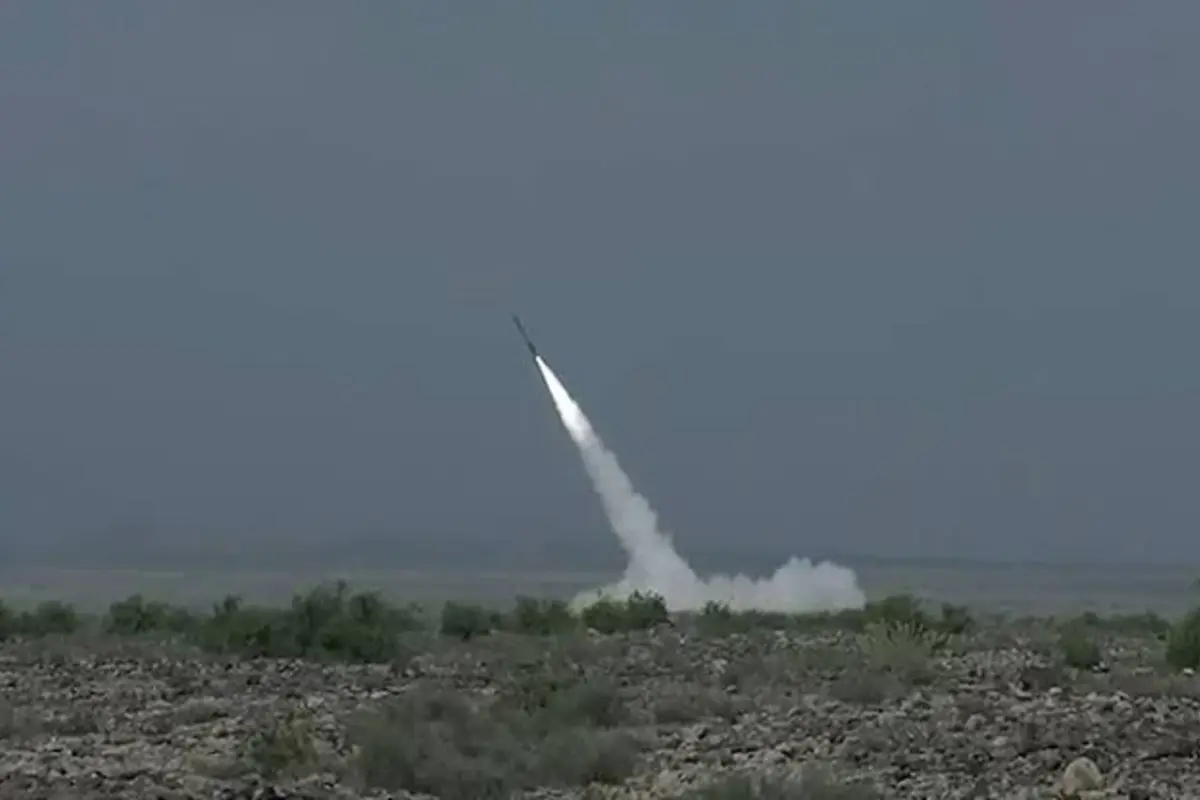
Iranian ballistic missiles and kamikaze drones successfully penetrated multiple layers of American air defense systems, striking military installations across Kuwait, Bahrain, Qatar, the United Arab Emirates, and Jordan. Simultaneously, long-range munitions targeted the headquarters of the US Fifth Fleet, strategic radar facilities, and command centers. Satellite imagery and battlefield assessments confirmed that Iran’s military-technological capabilities had exceeded expectations held by American defense planners.
Camp Buehring, Kuwait — Logistics Hub Crippled
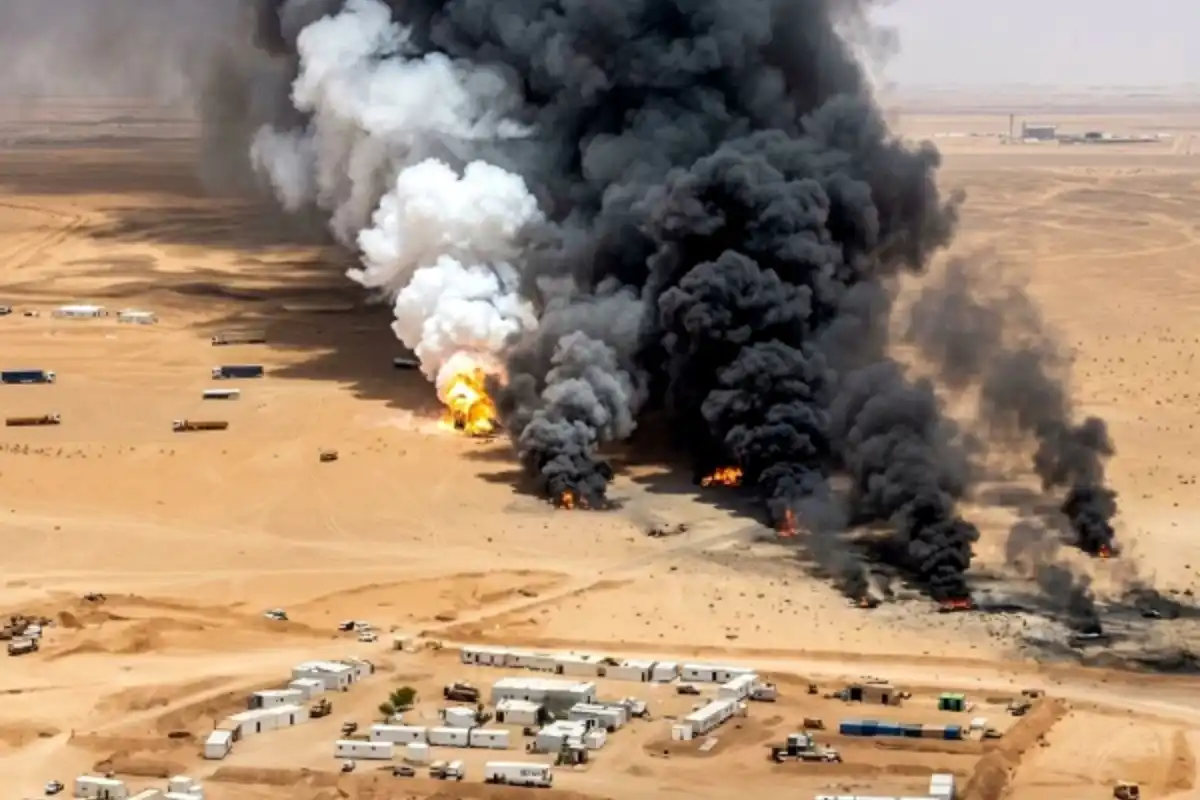
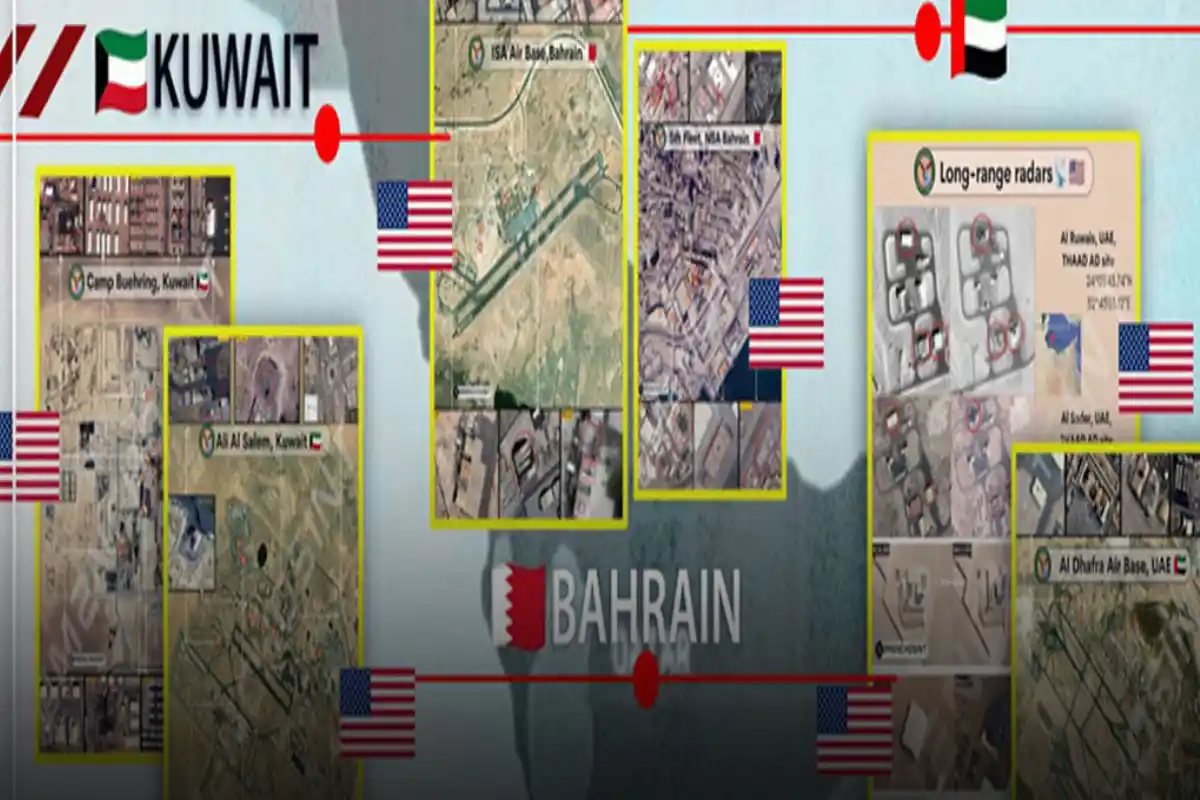
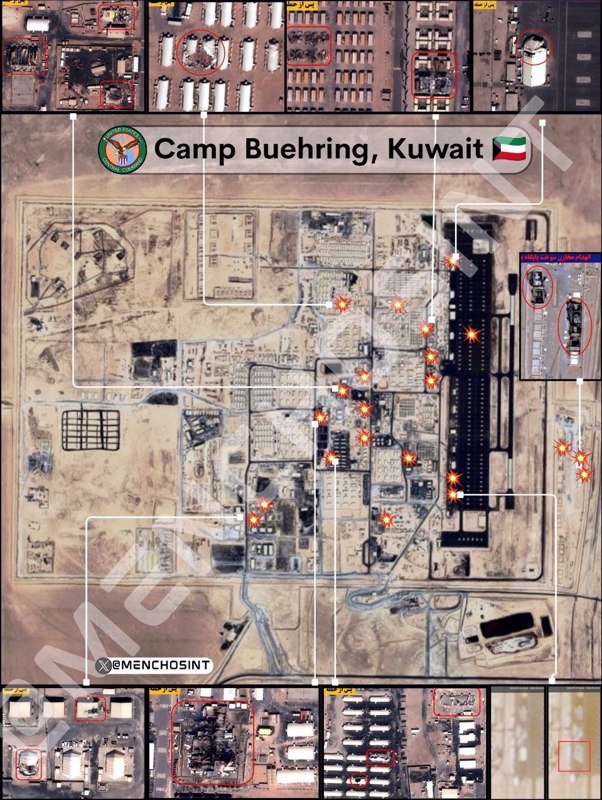
Camp Buehring, the US Army’s principal ground-force staging base in Kuwait, was struck with notable precision. Satellite imagery revealed extensive damage to warehouses, troop accommodations, electrical substations, and logistics infrastructure. The strikes appeared deliberately focused on degrading the camp’s logistical throughput capacity — its ability to receive, stage, and deploy forces — rather than inflicting mass casualties. Destroyed transformer banks, collapsed rooftops, and burned containerized housing units illustrated the scale of the assault on this critical supply-chain node.
Ali Al Salem Air Base, Kuwait — Strategic Aviation Hub Paralyzed
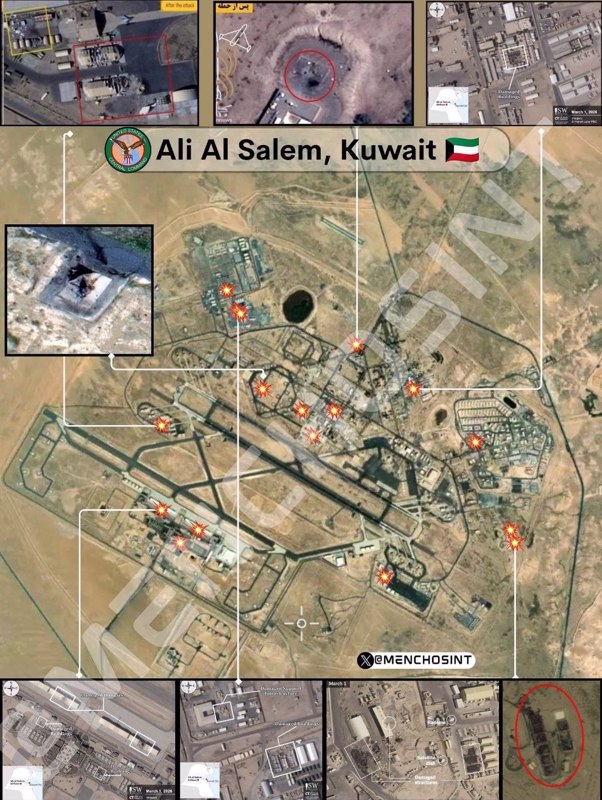
Ali Al Salem Air Base, a major logistics, surveillance, aerial refueling, and expeditionary aviation hub approximately 60 kilometers from Kuwait City, sustained repeated strikes beginning February 28 and continuing through subsequent days. Satellite analysis revealed damage distributed across the base’s operational support compounds, communications facilities, electrical infrastructure, and maintenance areas. Notably, the runway was not the primary target — consistent with modern targeting doctrine that prioritizes the systems sustaining air operations over easily repairable runway surfaces.
Camp Arifjan, Kuwait — Forward Supply Chain Disrupted
Camp Arifjan, the principal forward logistics hub for US ground forces in Kuwait, was struck in a manner consistent with Iran’s broader strategy: targeting fuel depots, maintenance complexes, communications networks, and transportation nodes rather than combat formations directly. Even localized damage to such infrastructure generates cascading disruptions across the entire military supply chain, reducing force readiness and constraining operational mobility for extended periods.
Naval Support Activity Bahrain — Fifth Fleet Command Under Siege
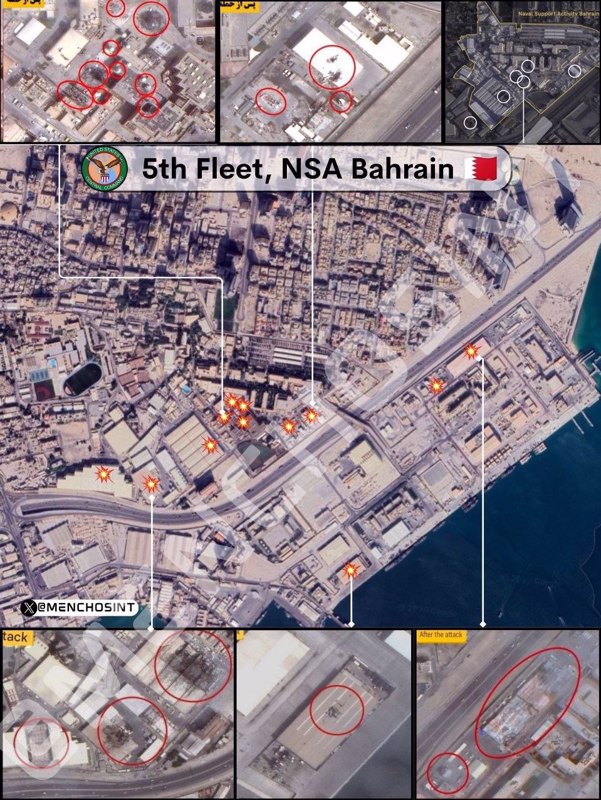
The headquarters of the US Navy’s Fifth Fleet — the nerve center coordinating American naval operations across the Persian Gulf, Gulf of Oman, and Arabian Sea — came under direct and sustained attack. Multiple Iranian ballistic missiles and kamikaze drones struck the installation, with video footage capturing impacts on a high-rise building reportedly housing American personnel. The Islamic Revolutionary Guard Corps (IRGC) announced that “a Fifth Fleet service center had been precisely targeted.” Follow-on strikes on March 1 hit naval command facilities with at least two additional ballistic missiles. Satellite imagery confirmed multiple destroyed buildings, burn scars, and debris fields concentrated across command-support compounds rather than waterfront assets, reflecting a deliberate strategy to disable the base’s command, communications, and sustainment functions.
ISA Air Base, Bahrain — Principal Aviation Installation Neutralized
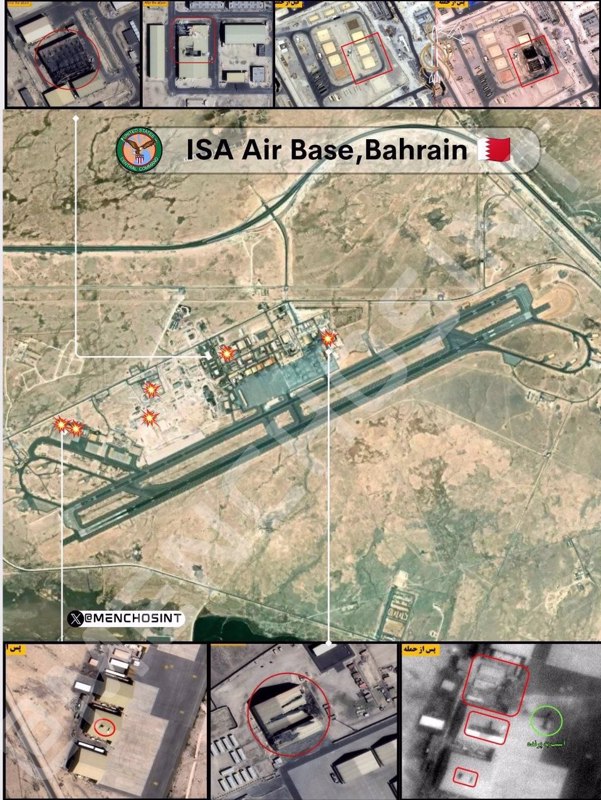
Bahrain’s principal military aviation facility sustained strikes concentrated in its northern operational zone, targeting hangar areas, maintenance compounds, and technical infrastructure. Satellite before-and-after comparisons revealed severe burn damage, roof collapse, and possible secondary explosions at key maintenance buildings. The targeting of maintenance infrastructure is strategically significant because, unlike runways — which can be rapidly repaired — specialized maintenance facilities require substantially longer restoration timelines.
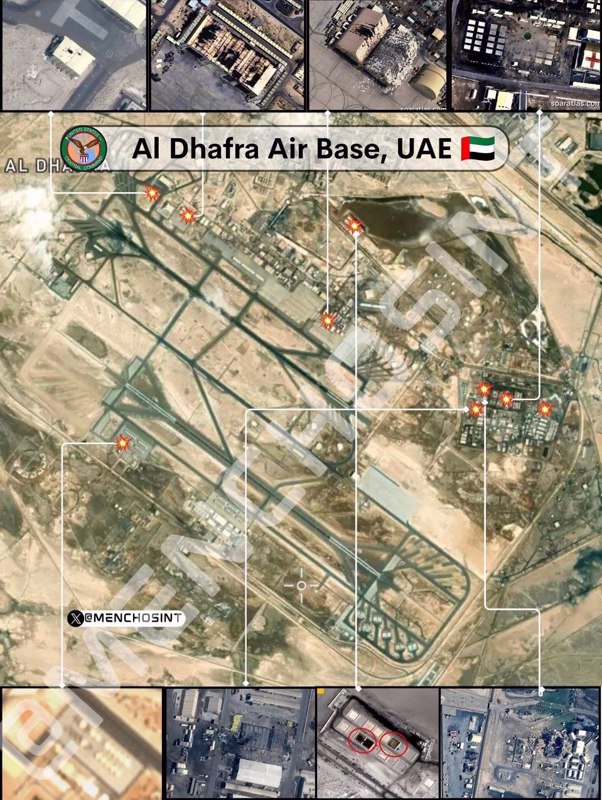
Al Dhafra Air Base, UAE — Intelligence Hub Degraded
Al Dhafra Air Base, one of the most sophisticated military aviation facilities in the Persian Gulf and a critical hub for intelligence, surveillance, reconnaissance, aerial refueling, and long-range strike support, was struck with what Iranian commanders described as “devastating precision.” The attack destroyed the American air warfare center, satellite communication center, early warning radars, and fire control radars. Satellite imagery showed damage distributed across aviation support areas, administrative sectors, utility zones, and communications facilities, indicating an intent to simultaneously degrade multiple operational functions. Aircraft themselves did not appear to be the principal target — the focus was clearly on the infrastructure enabling the base to function as a command and intelligence hub.
The Strategic Priority: Blinding America’s Air Defense Network
The most consequential achievement of Operation True Promise 4 was the systematic neutralization of long-range radar installations across the Persian Gulf — the sensor layer upon which the entire American integrated air-defense network depended.
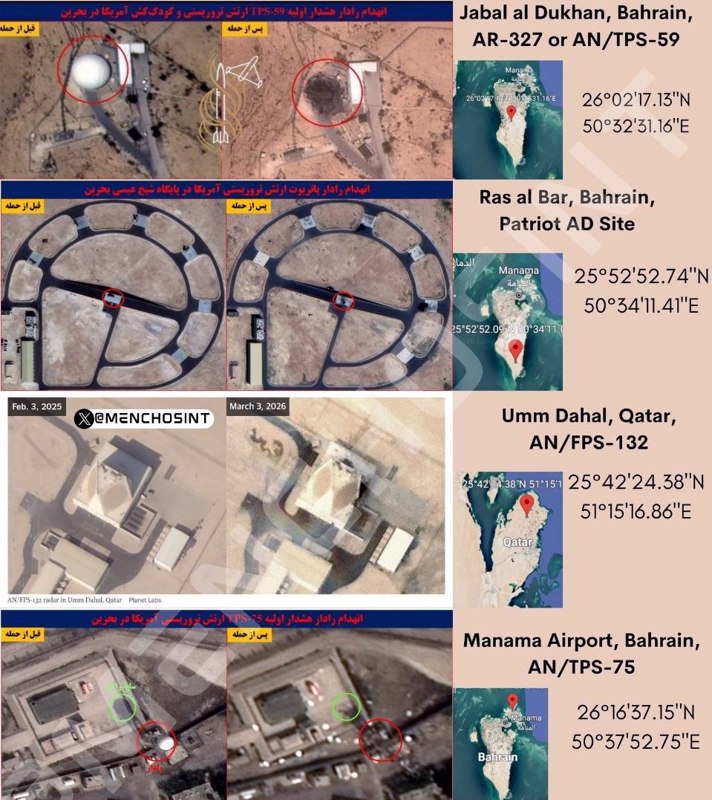
The centerpiece of this campaign was the destruction of the AN/FPS-132 Upgraded Early Warning Radar at Al-Udeid Air Base in Qatar — a fixed phased-array system valued at approximately $1.1 billion and designed specifically to detect and track ballistic missiles at extreme ranges. Its obliteration left the American air-defense network operating with severely degraded situational awareness. Leaked photographs published in global media revealed that Shahed drones struck the phased-array antenna, the ground floor of the facility, and the tower itself, with fire damage described as extensive and the degradation characterized as “irreversible.”
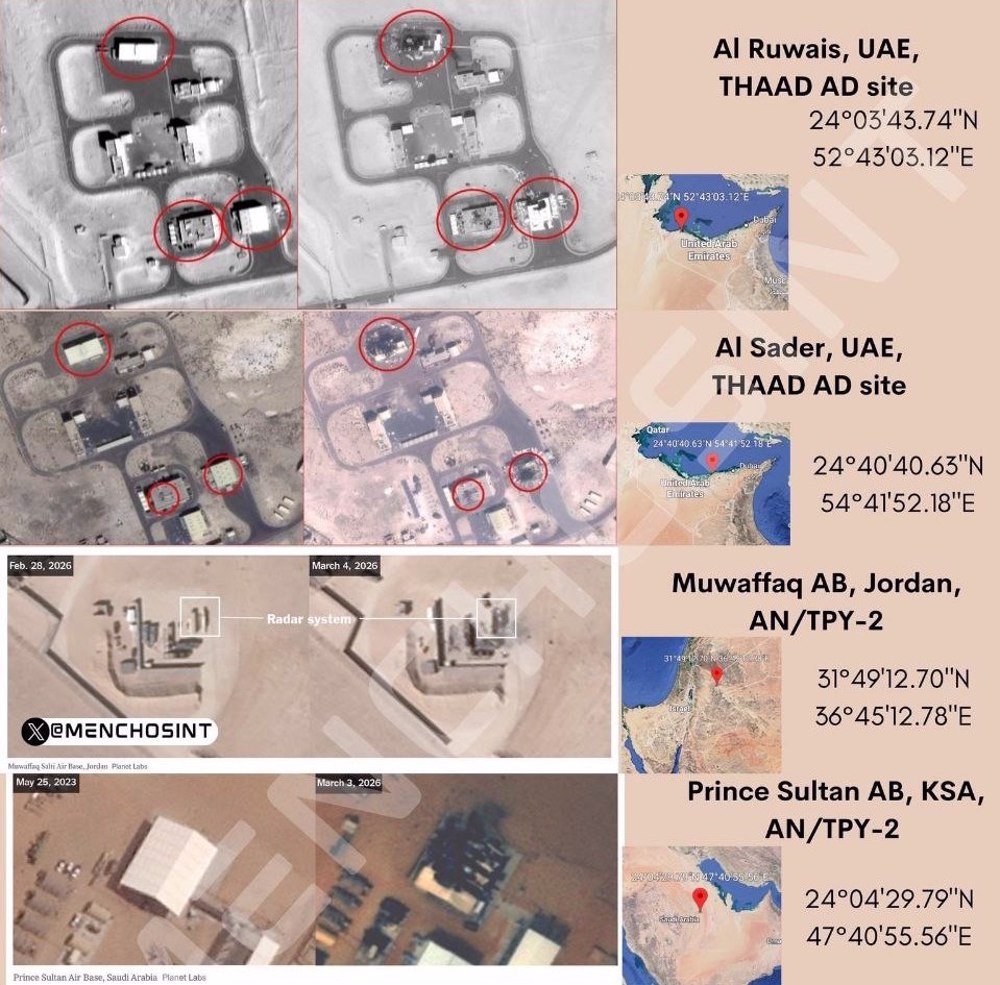
Further radar destruction was documented across the region: at Al Ruwais and Al Sader in the UAE, where THAAD sites sustained concentrated damage; at Muwaffaq Air Base in Jordan, where satellite imagery indicated a radar installation appeared “altered or partially absent” in post-strike imagery; at Jabal al Dukhan in Bahrain, where before-and-after satellite comparisons suggested a radome had been destroyed; and at Manama Airport in Bahrain, where an AN/TPS-75 radar installation showed disturbance and structural damage signatures.
In Jordan, Iranian long-range missiles struck the US Al-Azraq base, destroying hangars housing F-35 fighter jets and a command-and-control center. At Prince Sultan Air Base in Saudi Arabia, significant damage was sustained despite claims of partial interception.
The collective targeting pattern — forming a geographic arc spanning the UAE, Bahrain, Qatar, Jordan, and Saudi Arabia — was assessed as a deliberate suppression-of-air-defense strategy, creating corridors of vulnerability through which subsequent Iranian strikes could operate with reduced risk of interception.
A New Strategic Reality
The opening phase of the conflict exposed what analysts described as a fundamental transformation of the regional balance of power. Iranian missiles consistently penetrated American air-defense layers and struck their targets with a level of precision that rivaled or exceeded American weapons. Iranian drones descended upon US bases in volumes that overwhelmed defensive intercept capacity.
The destruction of the AN/FPS-132 radar — a system explicitly designed to defeat weapons like those Iran deployed — represented not merely a tactical failure but a direct challenge to the foundational assumptions of American air-defense doctrine.
The economic dimension was equally significant: Iranian missiles costing hundreds of thousands of dollars were being countered by American interceptors valued at several million each, a rate of exchange that systematically depleted US munitions stockpiles while Iran maintained its strike capacity.
Iranian commanders and regional analysts drew the same conclusion: the era of unchallenged American military dominance across West Asia had fundamentally shifted, and any future escalation would encounter a response of far greater severity than anything the region had previously witnessed.
Catch all the World News, Breaking News Event and Trending News Updates on GTV News
Join Our Whatsapp Channel GTV Whatsapp Official Channel to get the Daily News Update & Follow us on Google News.
Must Read

Pakistan
Funeral Prayers Held for Major Hasnain Shahzad Humayun and Captain Abdul Samad
13-October،2026