
Ali Khamenei’s Final Rites Highlight Iran’s Spiritual Power and Revolutionary Identity

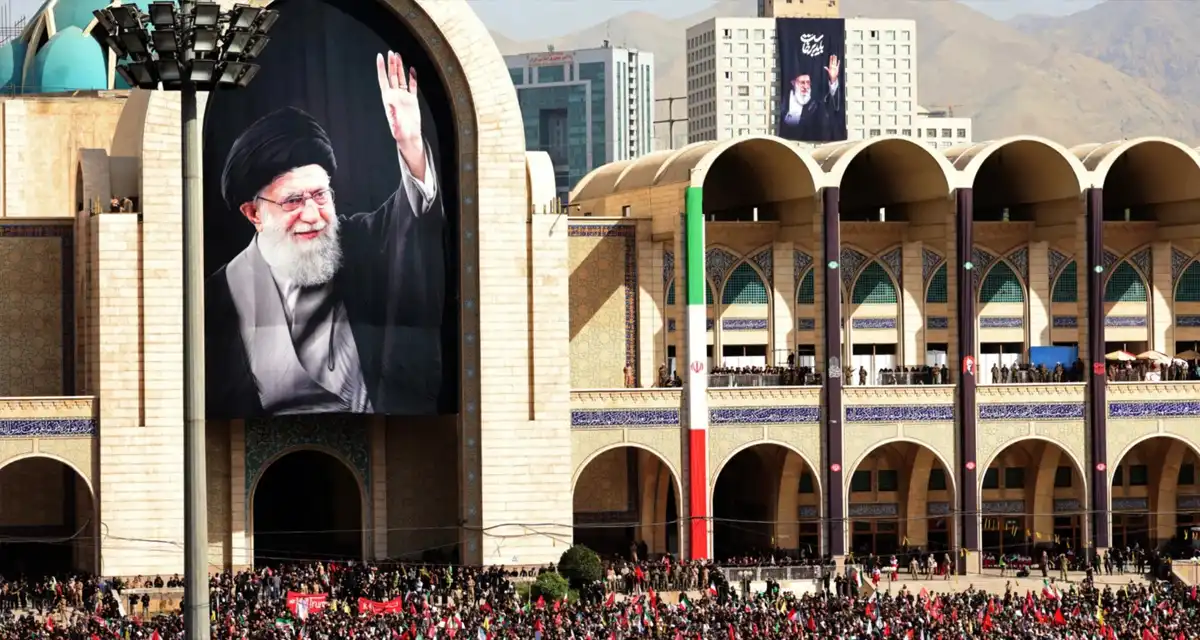
Iran transformed Supreme Leader Ayatollah Ali Khamenei’s funeral into elaborate strategic messaging operation, utilizing religious symbolism, geographic routing, and international delegation management to communicate multiple messages simultaneously to domestic constituencies, regional allies, and global adversaries. The six-day ceremonial spanning Tehran, Qom, Najaf, Karbala, and Mashhad represented deliberate projection of Iran’s regional influence and revolutionary ideology.
The funeral’s organizing slogan—”We must rise”—drawn from Quranic verse, framed mourning as religious obligation transforming personal grief into collective mobilization. This rhetorical choice shifted funeral meaning from commemorative event into ideological statement affirming revolutionary commitment transcending individual leadership. The implicit message: Khamenei’s death changes nothing regarding Iran’s strategic trajectory or ideological dedication.
Visual symbolism reinforced this messaging. The closed fist imagery—featured prominently in red and black—signified both vengeance and revolutionary continuity. This iconography connected current moment to decades of revolutionary struggle, positioning Khamenei’s death within historical continuum of sacrifice rather than representing rupture or institutional vulnerability.
The ceremonial route carried profound strategic significance. Beginning in Qom—center of Shia theological scholarship and site of revolutionary origin—established clerical legitimacy for succession transition. Passage through Najaf and Karbala extended Iran’s religious influence across international borders, visually demonstrating Tehran’s cultural and spiritual reach throughout Shia communities transcending state boundaries. Final burial in Mashhad positioned Khamenei within Iran’s sacred geography while honoring his provincial origins.
The red banner proclaiming “O avenger of Hussain’s blood” explicitly connected Khamenei’s death to Karbala’s historical martyrdom, transforming his assassination into religious duty frame rather than tragic loss. This theological positioning authorized Iranian retaliation as religious obligation while framing conflict with America and Israel as cosmic struggle between good and evil rather than geopolitical competition.
International delegations received carefully calculated attention revealing Iran’s strategic priorities. Resistance axis leaders—Hezbollah, Hamas, Islamic Jihad, and Houthi representatives—were positioned prominently, visually communicating that Iran’s regional alliance network remained intact despite Khamenei’s death. Their attendance demonstrated organizational continuity and allied commitment despite succession transition.
Pakistan’s elevated representation carried particular significance. Pakistan’s positioning as mediator between Iran and America—facilitating ceasefire negotiations—earned Pakistan explicit recognition as “brotherly nation.” This designation rewarded Pakistan’s neutrality while subtly communicating that Iran appreciates nations maintaining independent foreign policies rather than subordinating themselves to American pressure.
The most sophisticated messaging targeted Saudi Arabia’s delegation. Organizers selected the Quranic verse referencing the Battle of Badr, where believers faced double their number in enemies yet achieved victory through divine intervention. Analysts interpreted this selection as communicating to Riyadh that Iran, despite apparent military disadvantage, possesses superior commitment and capabilities. The implicit message: even numerical superiority cannot guarantee Saudi success against Iranian-led resistance.
Quranic verse selections for different delegations demonstrated sophisticated understanding of audience psychology. Loyalty and steadfastness verses addressed resistance axis allies, reinforcing commitment expectations. Peace-oriented verses acknowledged Pakistan’s mediation role. Military victory references warned potential adversaries. Each selection conveyed specific political message while maintaining religious legitimacy.
The funeral ultimately functioned as state theater communicating that Iran’s revolutionary ideology transcends individual leaders, that regional alliances remain robust, that Khamenei’s death represents martyrdom sanctifying anti-American resistance, and that Iran’s successor leadership possesses legitimacy and determination matching predecessor.
The ceremony demonstrated that even ceremonial events serve strategic purposes in geopolitical competition—Iran utilized mourning to reinforce ideological commitment, demonstrate regional influence, reward allies, and warn adversaries simultaneously.
Catch all the World News, Breaking News Event and Trending News Updates on GTV News
Join Our Whatsapp Channel GTV Whatsapp Official Channel to get the Daily News Update & Follow us on Google News.
Must Read
Pakistan
PIMS Breaks Silence on Imran Khan’s Eye Examination – Key Details Remain Hidden
22-August،2026