Syed Abul Ala Modudi: The Architect of Modern Islamic Political Thought

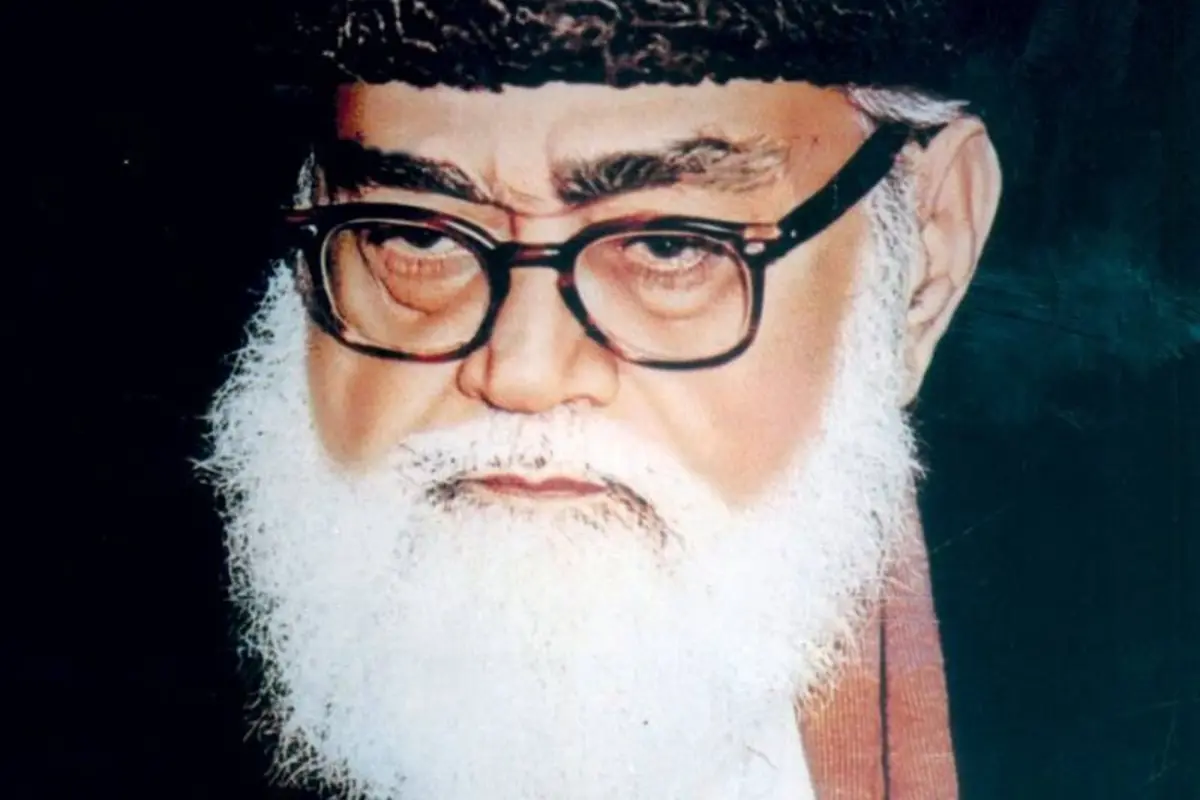
Syed Abul A’la Maududi holds a significant, controversial, and lasting position in the intellectual history of the modern Muslim world. Few Muslim thinkers from the twentieth century have sparked as much admiration, criticism, scholarship, and political impact as Maududi. Supporters regard him as a mujaddid (revivalist) who aimed to reconnect Muslims with the Qur’an and Sunnah during a time overshadowed by colonialism, secular nationalism, and ideological disarray. Detractors argue that he converted Islam into a political ideology, providing a framework that later groups interpreted in various often more radical ways than he originally intended. No matter one’s perspective, any serious examination of contemporary Islamic political thought must take his work into account. His writings still influence conversations about governance, constitutionalism and modern thought.
Maududi was born on 25 September 1903 in Aurangabad, in the princely state of Hyderabad Deccan. He grew up in a religious family with a strong spiritual heritage, tracing their roots to the Chishti tradition through Khwaja Qutbuddin Maudud Chishti. His father, Maulana Ahmad Hasan, was trained in both law and Islamic studies and made sure Maududi received a thorough education in Arabic, Persian, Qur’anic sciences, Hadith, and classical Islamic literature. Unlike many later Islamic scholars, Maududi did not limit himself to traditional religious texts. As a young man, he also studied philosophy, history, sociology, economics, and political thought. He translated works from Persian and explored European intellectual traditions, reading thinkers like Hegel, Rousseau, Adam Smith, Voltaire, and Charles Darwin. This wide-ranging education set his writings apart from those of many of his peers. Instead of rejecting modern political ideas, he tried to understand them before offering an Islamic perspective.
His early career in journalism became the laboratory in which his ideas matured. Before reaching the age of twenty, he had already become editor of influential Urdu newspapers and journals. Through Taj, Muslim and Al-Jam’iyat, he wrote on colonialism, Muslim identity, constitutional reforms and international affairs. Journalism sharpened his analytical style and gave him a practical understanding of politics that later defined his scholarship. Unlike many theologians who remained within seminaries, Maududi observed governments, constitutional debates, nationalist movements and ideological conflicts from close quarters. His prose combined classical Islamic reasoning with contemporary political analysis, making his writings accessible to educated Muslims struggling to understand the rapidly changing twentieth century.
The collapse of the Ottoman Caliphate in 1924 profoundly affected Muslim intellectuals across the world, and Maududi was no exception. The disintegration of an institution that had symbolized political unity for centuries forced many scholars to reconsider the relationship between Islam and political authority. During this period, Maududi became increasingly convinced that the decline of Muslim civilization was not merely the result of European colonial expansion but also of internal intellectual stagnation, political fragmentation and moral decay. He argued that Muslims had gradually reduced Islam to rituals while neglecting its ethical, legal, social and political dimensions. This conviction became the foundation of his lifelong intellectual project: to present Islam not simply as a private faith but as a comprehensive civilization capable of guiding every sphere of human life.
One of Maududi’s most enduring contributions was his insistence that Islam should be understood as a complete worldview rather than merely a collection of devotional practices. In Towards Understanding Islam, he argued that Islam encompasses politics, economics, law, ethics, education, social organization and moral conduct. He famously wrote that “Islam is not a religion in the sense this term is commonly understood. It is a system encompassing all fields of living.” This statement became central to twentieth-century Islamic revivalist thought because it challenged the modern assumption that religion belongs exclusively to the private sphere. Whether one agrees with his conclusion or not, Maududi fundamentally altered the language through which many Muslims discussed the relationship between religion and public life.
His interpretation of governance revolved around the concepts of Tawhid (the Oneness of God), Risalah (Prophethood) and Khilafah (vicegerency or stewardship). He proposed what he called a “theo-democracy,” arguing that ultimate sovereignty belongs to God while political authority should be exercised through consultation (shura) by the Muslim community within the framework of divine law. According to his writings, the legislature’s role is primarily to interpret and apply revealed principles rather than create laws independent of them. His supporters regarded this as an attempt to reconcile constitutional governance with Islamic principles. Critics, however, argued that such a model limited popular sovereignty and raised difficult questions about pluralism, legislative authority and the rights of religious minorities. These debates remain central to discussions of Islamic constitutionalism today.
Perhaps the most misunderstood aspect of Maududi’s intellectual legacy is his relationship with modernity. He is frequently portrayed as simply rejecting the modern world, yet his own writings reveal a far more complex engagement. He admired organization, discipline, constitutional government, education and scientific progress, while criticizing materialism, moral relativism and what he viewed as the excessive secularization of modern politics. Rather than calling for isolation from contemporary civilization, he sought to formulate an Islamic alternative capable of addressing the same political, economic and social questions. His engagement with European philosophy demonstrates that he believed Muslims could only respond meaningfully to modern ideas after understanding them thoroughly. This intellectual openness during his formative years explains why his works appealed not only to traditional scholars but also to university students, journalists, lawyers and professionals searching for an Islamic intellectual framework in the twentieth century.
Among Maududi’s numerous books, Khilafat o Malookiat remains perhaps his most influential and controversial historical work. Rather than serving merely as a chronicle of early Islamic history, the book offered a normative political analysis of how the institution of the Rashidun Caliphate gradually evolved into hereditary monarchy. Maududi argued that the transition from elective consultation to dynastic succession represented a profound constitutional and political transformation in Muslim history. He sought to distinguish between the ideals embodied during the period of Caliphs and the political realities that emerged thereafter. Supporters praised the work for encouraging Muslims to examine history critically instead of treating political history as beyond discussion. Many viewed it as a courageous attempt to revive the Qur’anic principles of accountability, consultation, justice and constitutional restraint.
At the same time, Khilafat o Malookiat generated intense criticism from sections of the traditional religious establishment. Some scholars argued that Maududi’s historical evaluations of certain early Muslim political figures exceeded acceptable scholarly criticism and risked undermining established Sunni understandings of the Companions and early Islamic leadership. Others objected to his methodology and conclusions, while still acknowledging his intellectual influence. These theological disagreements became part of a much broader debate over how Islamic history should be studied whether through reverential narrative alone or through constitutional, political and historical analysis.
One aspect of Maududi’s thought that receives comparatively less attention is his consistent concern for moral accountability in governance. He repeatedly warned against arbitrary state power, unchecked surveillance and authoritarian rule. In one of his discussions on governance, he criticized governments that cultivate fear and suspicion among citizens through excessive espionage, arguing that such practices destroy trust within society and contradict prophetic teachings. These arguments demonstrate that his political thought cannot be reduced solely to questions of state authority; it also emphasized ethical limitations on rulers and the preservation of human dignity within government.
Maududi’s influence extended far beyond Pakistan. His writings were translated into Arabic, Persian, Turkish, English and numerous other languages. They shaped discussions within Islamic movements from South Asia to the Middle East and inspired generations of activists, scholars and students. Yet his legacy also became contested because different movements selectively adopted different aspects of his thought. Some emphasized his constitutionalism and moral reform; others focused on his theory of Islamic governance; still others appropriated isolated concepts for purposes he may not have intended. Historians therefore often distinguish between Maududi’s original writings and the diverse interpretations that emerged after his death.
To define Syed Abul A’la Maududi solely as a theologian, politician or philosopher is to overlook the breadth of his intellectual project. He attempted to answer one of the defining questions facing Muslims in the twentieth century: how can a religious civilization respond to modern political, economic and intellectual challenges without losing its identity? Whether his answers are accepted, rejected or revised, the questions he raised continue to animate scholarly debate. His life demonstrates how one individual, armed primarily with books, journalism and ideas, could shape political vocabulary across continents.
Maududi remains neither a figure who can be dismissed with slogans nor one who can be understood through partisan admiration alone. His legacy belongs to the history of ideas. It is a legacy that continues to inspire, provoke, challenge and divide scholars, theologians, historians and political thinkers alike. Understanding Maududi therefore requires not reverence or hostility, but careful reading, historical context and intellectual honesty. Only then can one appreciate why his works remain central to discussions about Islam, politics, constitutional government and the future of Muslim societies in the modern world.
The publication of Khilafat o Malookiat marked one of the most significant moments in twentieth-century Islamic political literature. Unlike a conventional history book, it was an attempt to examine how political authority evolved in the Muslim world after the passing of Prophet Muhammad (PBUH). Maududi argued that the era of the Caliphs represented an ideal constitutional model founded upon consultation (shura), public accountability, equality before the law and moral responsibility, but creating reasoning and logical awareness on the same era as well, later Muslim empires increasingly adopted hereditary succession and monarchical structures. Whether historians agree with every conclusion or not, the book transformed the way many educated Muslims approached Islamic political history not merely as a sequence of rulers and battles, but as a constitutional and ethical question.
For Maududi, the distinction between Khilafah and monarchy was not simply about who ruled; it was about the source and nature of political legitimacy. He believed that the early caliphate demonstrated a government restrained by law, consultation and accountability, while hereditary kingship gradually concentrated authority in ruling families. His central argument was that Muslims should distinguish between the ideals established by revelation and the political realities that emerged through history. In his view, history deserved respect, but not unquestioning sanctification. This approach encouraged readers to separate Islamic principles from the actions of individual rulers, an intellectual method that earned admiration from some scholars while provoking criticism from others.
At the heart of Maududi’s political philosophy was the concept of Hakimiyyat—the sovereignty of God. He argued that ultimate legislative authority belongs to God and that human governments must operate within the moral and legal framework established through revelation. He described the Islamic polity as one in which legislative bodies interpret and apply divine guidance rather than exercise unrestricted law-making power. This formulation became one of the defining ideas of twentieth-century Islamic political thought. Supporters regarded it as a safeguard against tyranny by limiting rulers through transcendent moral law, whereas critics argued that it left unresolved questions about who possesses legitimate authority to interpret that law and how pluralistic societies could accommodate differing understandings.
One of the most interesting aspects of Maududi’s thought is that he did not reject constitutional governance as such. Instead, he attempted to redefine it within an Islamic vocabulary. He repeatedly emphasized shura (consultation), justice, accountability and the moral obligations of rulers. He also criticized authoritarian surveillance and governments that cultivate fear among citizens, arguing that excessive state intrusion destroys social trust and violates Islamic ethical principles. These writings demonstrate that his political project sought not merely to empower the state but also to place ethical restraints upon it. Whether his proposed constitutional framework achieves that balance remains a subject of continuing scholarly debate.
Maududi’s relationship with democracy has long been debated. He accepted popular participation, consultation and representative institutions but rejected the idea that the majority possesses unlimited authority to define moral and legal principles independent of revelation. He argued that democracy should function within a framework of enduring ethical norms rather than unrestricted parliamentary sovereignty. This led him to describe his model as a form of “theo-democracy,” a term intended to distinguish it from both absolute monarchy and secular liberal democracy. Political scientists continue to debate whether this represents a distinct constitutional model or simply another form of religious constitutionalism.
Maududi’s critique of secularism should also be understood within its historical context. Writing during the collapse of empires, the rise of nationalism and the spread of European colonial rule, he believed that the modern separation of religion from politics had fragmented Muslim civilization. He argued that Islam historically provided an integrated moral framework linking law, society, economics and governance. For him, secularism was not merely institutional neutrality but a philosophical claim that religion should be excluded from public life. His response was therefore directed less against scientific progress or constitutional government than against the marginalization of religious ethics within politics. Modern scholars note, however, that secularism itself has taken many different forms across societies, making Maududi’s critique more applicable to some historical contexts than others.
His engagement with Western thought was considerably deeper than is often acknowledged. Before developing his mature philosophy, he studied European political theory, economics, sociology and history in remarkable depth. Rather than dismissing Western intellectual traditions, he sought to understand the reasons for Europe’s scientific and political ascendancy. He admired organization, discipline, educational advancement and administrative efficiency while criticizing what he regarded as moral individualism, excessive materialism and colonial domination. This intellectual engagement helps explain why his writings appealed not only to graduates of religious seminaries but also to university students, civil servants, lawyers and journalists throughout South Asia and beyond.
Among Maududi’s greatest intellectual achievements was his effort to revive Qur’anic study for ordinary educated readers. His multi-volume Tafhim-ul-Qur’an presented scripture in accessible Urdu while relating Qur’anic themes to contemporary political, social and ethical questions. Rather than limiting exegesis to linguistic analysis or legal rulings, he attempted to demonstrate the continuing relevance of the Qur’an to modern civilization. Even scholars who disagreed with aspects of his political theory frequently acknowledged the enormous educational impact of Tafhim-ul-Qur’an in expanding Qur’anic literacy among Urdu-speaking Muslims.
Yet Maududi’s influence cannot be understood without examining the criticisms directed against him. A number of traditional Sunni scholars objected to portions of his historical analysis in Khilafat o Malookiat and other writings, particularly his treatment of certain Companions of the Prophet and early Islamic political disputes. They argued that his methodology departed from established Sunni approaches to Islamic history and theology. On the other hand, many modern historians criticized him from a different direction, arguing that he transformed Islam into a comprehensive political ideology shaped by modern concepts of the state. These contrasting criticisms illustrate how Maududi occupied a unique intellectual position: too modern for many traditionalists, yet too religious for secular political theorists.
The influence of his ideas extended far beyond Pakistan. His books were translated into numerous languages and read across the Middle East, Africa, Europe and Southeast Asia. Islamic revivalist organizations found in his writings a systematic political philosophy rooted in Islamic terminology yet expressed in the language of constitutionalism, economics and social reform. At the same time, historians caution against attributing the ideas or actions of every later Islamist movement to Maududi himself. His works have been interpreted, adapted and sometimes selectively quoted by movements operating in vastly different political environments. Understanding his legacy therefore requires distinguishing between Maududi’s original texts and the many interpretations that developed after his death.
Syed Abul A’la Maududi remains one of the defining figures in the history of modern Islamic thought. He neither belonged exclusively to the traditional madrasa nor entirely to the modern university. He wrote as a journalist, philosopher, exegete, political thinker and social critic, attempting to answer questions that continue to shape contemporary Muslim societies: What is the relationship between faith and the state? Can constitutional government be reconciled with divine law? How should Islamic history inform modern politics? Whether readers ultimately agree or disagree with his conclusions, these questions ensure that his writings remain part of serious academic, theological and political discourse throughout the Muslim world. His legacy is therefore best understood not as a finished doctrine but as an enduring conversation one that continues to invite scholarship, critique and reflection from every generation.
More than four decades after his passing, Syed Abul A’la Maududi remains one of the most studied and debated Muslim intellectuals of the modern era. His legacy cannot be understood through admiration alone, nor dismissed through criticism alone. He challenged Muslims to revisit the Qur’an with intellectual seriousness, to think critically about history, governance, justice, morality and the relationship between religion and public life. His writings inspired millions while simultaneously provoking rigorous theological, historical and political debate. Some regard him as a visionary revivalist who sought to revive Islam’s ethical and civilizational spirit in the modern age, while others argue that aspects of his political thought remain controversial and continue to invite scholarly scrutiny. Whatever one’s conclusions, Maududi transformed the vocabulary of twentieth-century Islamic discourse and ensured that questions of constitutional government, accountability, consultation, moral leadership and the role of religion in society would remain central to Muslim intellectual thought. His life ultimately reminds us that great thinkers are remembered not because everyone agrees with them, but because they compel generations to engage, question and rethink the ideas that shape civilizations.
Catch all the Blogs News, Breaking News Event and Trending News Updates on GTV News
Join Our Whatsapp Channel GTV Whatsapp Official Channel to get the Daily News Update & Follow us on Google News.
Must Read


Pakistan
Development Activities Continue Under Balochistan Special Development Initiative
10-October،2026