
Field Marshal Asim Munir and the New Architecture of Pakistan’s Statecraft

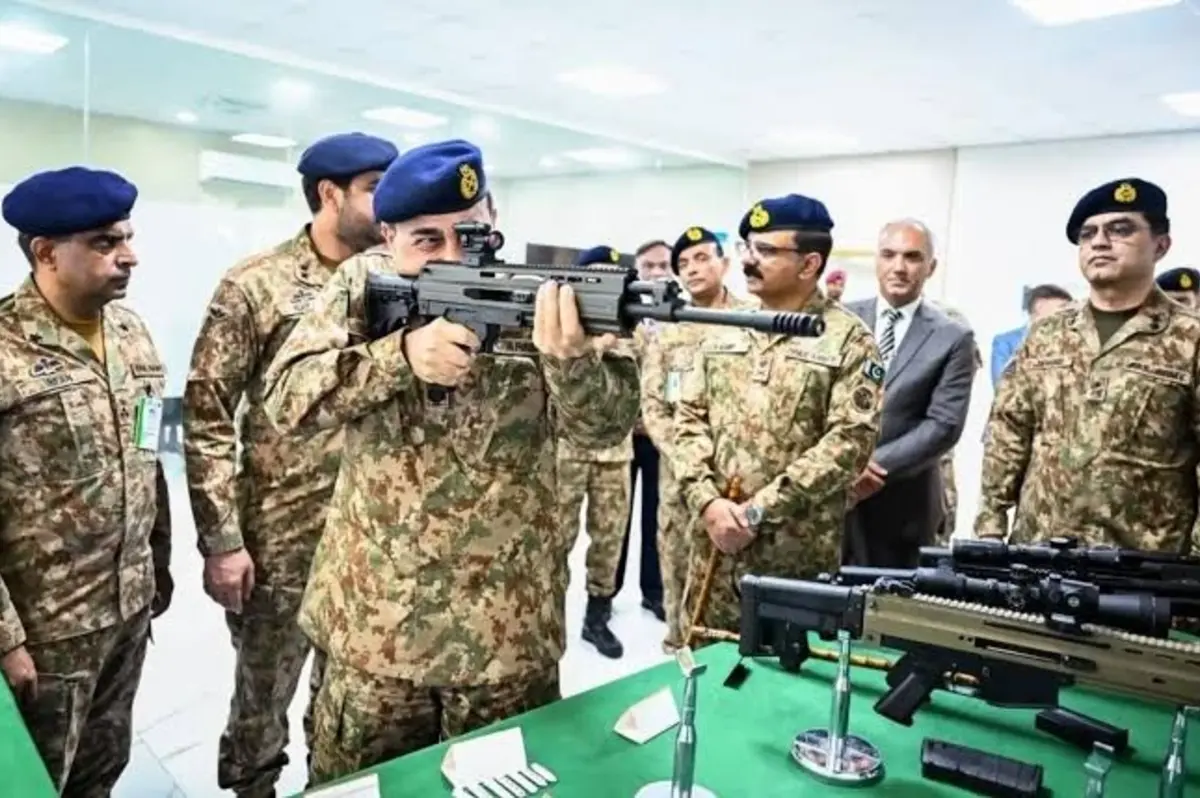
Pakistan’s contemporary search for a stronger and more stable national identity is inseparable from the question of how a state located at the intersection of South Asia, Central Asia, China and West Asia can convert its geopolitical position into sustainable national power. For decades, Pakistan’s international relevance was largely interpreted through the lenses of security, conflict, terrorism and strategic competition. Under Field Marshal Asim Munir, however, an emerging strategic narrative has sought to broaden this understanding by linking national security with economic strength, diplomatic relevance, regional stability and strategic autonomy. His approach can be understood as an attempt to move Pakistan from being primarily a state whose importance derives from its security problems to one whose importance derives from its capacity to contribute to solutions. The significance of this transition lies not simply in military strength, but in the possibility of redefining national power through diplomacy, economic connectivity and institutional confidence.
The philosophical foundation of such a transformation is the idea that sovereignty cannot ultimately be secured by military power alone. A state may possess a powerful army and still remain economically vulnerable, diplomatically constrained and socially divided. True sovereignty requires the capacity to make choices without being permanently compelled by external economic pressures. In this sense, the emphasis on economic security and self-reliance represents a broader conception of national defense. The traditional security state asks how a country can defend its territory; the modern strategic state must also ask how it can protect its economy, human capital, institutions and future generations. The movement from geopolitics toward geo-economics therefore carries a philosophical implication: Pakistan’s ultimate strength should be measured not merely by its ability to resist threats, but by its ability to create prosperity and opportunity for its citizens.
This approach also represents an effort to transform Pakistan’s geographical location from a strategic burden into a strategic asset. Pakistan connects the Arabian Sea with Central Asia, lies beside China and Afghanistan, and remains geographically close to Iran and the Gulf region. Historically, geography has often placed Pakistan at the center of conflicts involving larger powers. A more constructive strategy is to make the same geography a foundation for trade, investment, energy cooperation and regional connectivity. Under the emerging strategic vision associated with Munir, projects involving mining, agriculture, information technology, energy, infrastructure and foreign investment are not merely economic initiatives; they are instruments of national power. If successfully implemented, Pakistan could gradually evolve from a country through which strategic competition passes into a country through which commerce, connectivity and cooperation flow.
The diplomatic dimension is equally significant. Pakistan’s historical foreign policy has frequently been shaped by dependence on one major power or another, creating the recurring dilemma of choosing between competing international blocs. A more flexible strategy of strategic hedging seeks constructive relationships with multiple centers of power simultaneously. Pakistan can maintain its longstanding relationship with China while improving relations with the United States, strengthening ties with Saudi Arabia and the Gulf states, expanding cooperation with Turkiye and developing deeper engagement with Central Asian and regional economies. Such an approach does not require Pakistan to abandon its principles or friendships. Rather, it seeks to increase diplomatic room for manoeuvre. The objective is to ensure that Pakistan is not merely an object of great-power competition but an autonomous middle power capable of negotiating with different centres of influence.
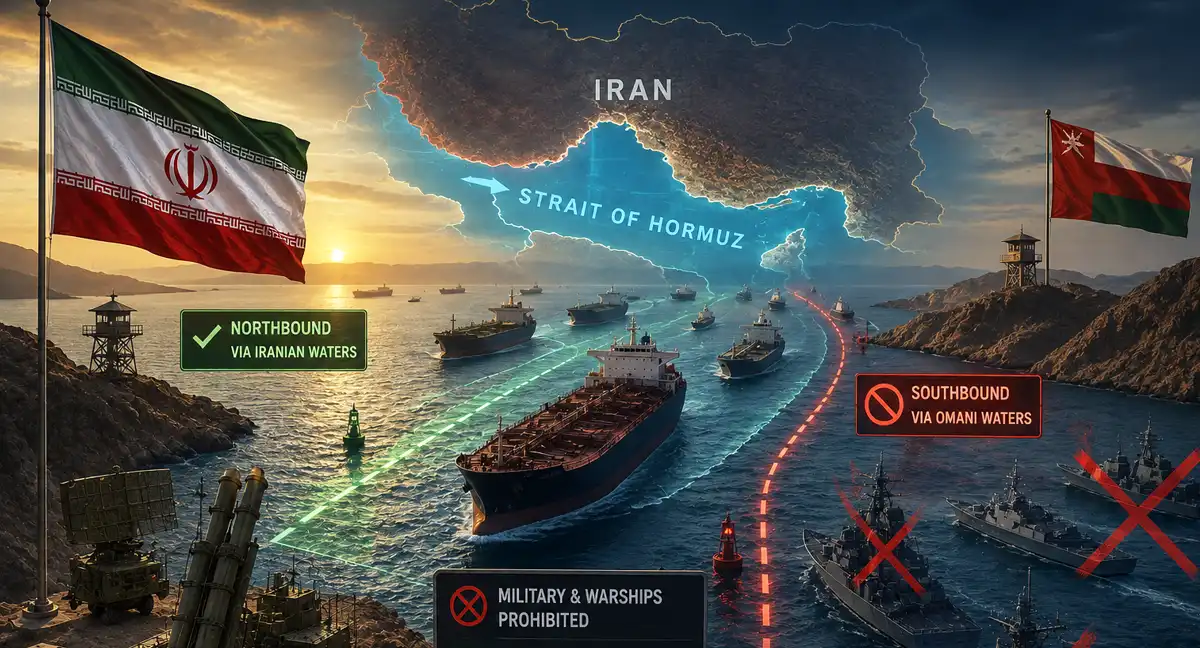
The emergence of Pakistan as a potential mediator between Iran and the United States provides an important illustration of this diplomatic transformation. In a period of intense regional confrontation, Islamabad’s geographical position, historical relationships and security links with multiple actors gave it a distinctive diplomatic utility. The significance of mediation is greater than the immediate outcome of any particular negotiation. A country becomes diplomatically relevant when competing sides believe that communication through its channels remains possible. Pakistan’s role demonstrates that middle powers do not necessarily need the economic weight of great powers to exercise international influence. Sometimes credibility, geography, historical relationships and the ability to communicate with otherwise competing actors can create diplomatic value. In this respect, Pakistan’s relevance can emerge from precisely the complexity of its relationships.
The social dimension of national transformation is perhaps even more important than diplomacy. No state can become stronger merely through elite agreements or military preparedness if its population remains economically insecure, educationally disadvantaged and politically alienated. Pakistan’s long-term stability requires a social contract in which citizens see the state not simply as an authority but as an institution capable of providing security, justice, education, employment and opportunity. A national strategy focused on investment, economic expansion and human development can therefore have consequences extending far beyond statistics such as GDP or foreign-exchange reserves. Economic opportunity reduces social frustration, creates space for the middle class and allows young people to imagine their future within their own country rather than exclusively through migration.
The political significance of the emerging doctrine lies in the recognition that stability and economic development are mutually dependent. Investors require security, businesses require predictable institutions, and citizens require confidence that political and economic systems will continue functioning. Pakistan has repeatedly suffered from cycles in which political confrontation produces institutional uncertainty, economic uncertainty generates social discontent, and instability further discourages investment. Breaking this cycle requires a broader conception of national interest in which political institutions, the economy and national security reinforce rather than undermine one another. For Pakistan’s military establishment, this also presents an important challenge: durable national progress ultimately depends on strong civilian institutions, rule-based governance and an economy capable of functioning beyond individual personalities or administrations.
The economic dimension is therefore central to any assessment of Munir’s strategic vision. Pakistan’s recurring dependence on external financing demonstrates that military capability alone cannot provide national independence. The emphasis on foreign direct investment, mineral resources, agriculture, information technology, energy and industrial development seeks to replace a culture of emergency financing with one based on productive capacity. The Special Investment Facilitation Council and similar initiatives reflect an attempt to reduce bureaucratic barriers and attract international capital. Pakistan possesses substantial natural and human resources, but resources become national wealth only when institutions can develop, regulate and distribute them effectively. The real test of an economic strategy will consequently be whether investment produces employment, exports, technological capability, tax revenue and broad-based prosperity rather than merely generating headline investment figures.
The philosophical question underlying all of this is what kind of state Pakistan wants to become. A state defined exclusively by insecurity will continually organize its politics around enemies and emergencies. A state defined by national development, however, must organize its energies around education, innovation, production, diplomacy and human dignity. Military strength remains necessary for national defense, particularly in a difficult regional environment, but its ultimate purpose should be to create the security conditions in which society can develop. In this understanding, the soldier and the entrepreneur, the diplomat and the teacher, the scientist and the farmer all become components of national power. Security protects development, while development ultimately strengthens security.
The most important contribution associated with the emerging Munir doctrine, therefore, is not any individual diplomatic visit, investment initiative or security decision. Its broader significance lies in the attempt to redefine Pakistan’s strategic imagination. The country does not have to choose permanently between being a military power and an economic power, between China and the United States, or between regional security and international diplomacy. It can seek a more balanced identity in which defense capability, economic resilience, diplomatic flexibility and social development reinforce one another. The success of this vision will ultimately depend on institutions rather than personalities, on measurable economic outcomes rather than declarations, and on whether ordinary Pakistanis experience greater security, opportunity and dignity. If Pakistan can translate its strategic location into connectivity, its military strength into stability, its diplomacy into mediation, and its resources into prosperity, it can move toward a more confident conception of statehood: not merely a country surviving between competing powers, but a middle power capable of shaping the environment around it.
Catch all the Blogs News, Breaking News Event and Trending News Updates on GTV News
Join Our Whatsapp Channel GTV Whatsapp Official Channel to get the Daily News Update & Follow us on Google News.
Must Read