
BRICS and the Rise of a Multipolar World: China, Russia, Africa and the Search for a New Economic Order

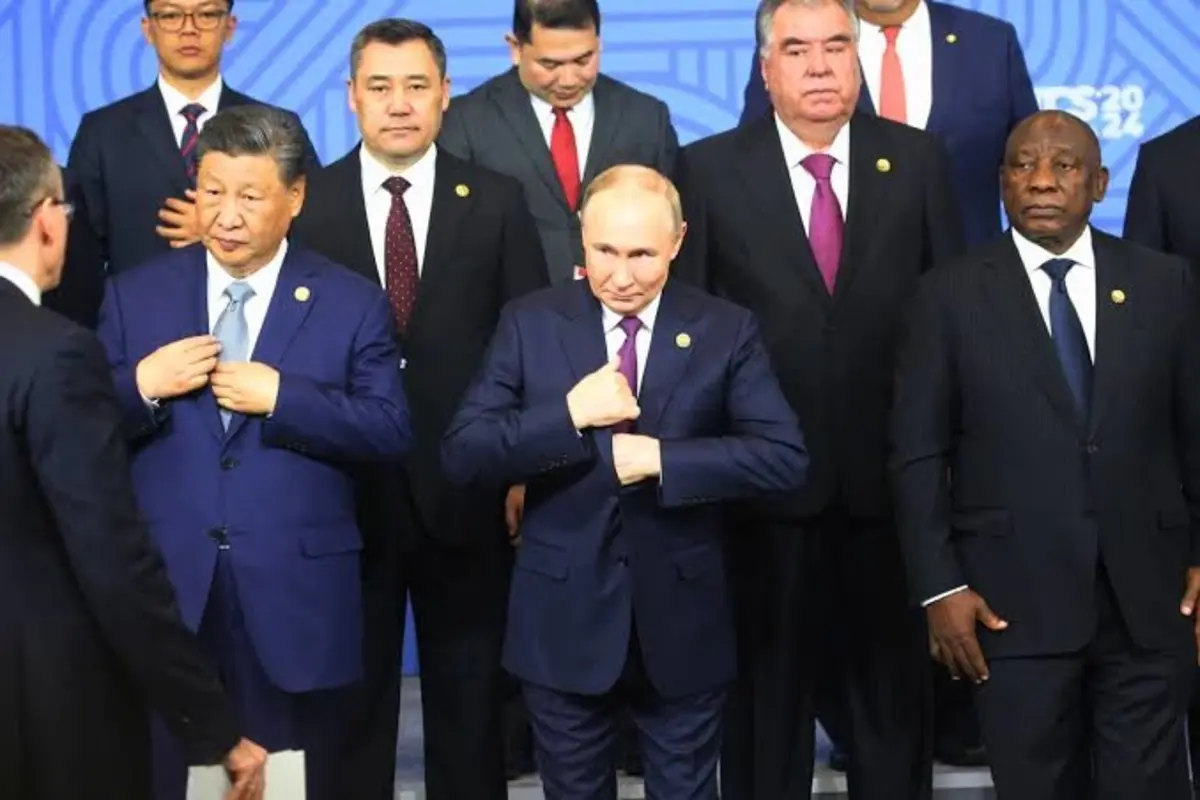
The expansion of BRICS has transformed it from a grouping of major emerging economies into an increasingly important platform for political, economic and social cooperation among countries of the Global South. The bloc now consists of 11 members Brazil, Russia, India, China, South Africa, Egypt, Ethiopia, Iran, the United Arab Emirates, Saudi Arabia and Indonesia and has also created a partner-country framework. The significance of BRICS therefore extends beyond trade: it reflects a broader debate about whether global governance should remain concentrated in institutions historically dominated by Western powers or become more representative of emerging economies.
The geopolitical importance of BRICS lies particularly in its potential to strengthen a multipolar international system. China and Russia have been among the strongest advocates of expanding BRICS cooperation, although the group itself contains countries with different political systems and foreign-policy priorities. The supplied research notes that BRICS members are not uniformly seeking an anti-Western bloc, many instead view the organization as a mechanism for greater autonomy, diversification and influence while maintaining relations with Western countries. This distinction is important because BRICS is better understood as a platform through which emerging powers can increase their collective bargaining capacity rather than as a military alliance.
China occupies a particularly important position in this transformation because of its enormous manufacturing capacity, trade networks, investment capabilities and growing role in the economies of the Global South. The source material describes China’s vision as one of “equal and orderly” multi-polarization combined with more inclusive economic globalization. China’s growing commercial engagement with Africa, Latin America and Asia gives BRICS an economic dimension that extends far beyond its original five members. Russia, meanwhile, brings substantial energy and commodity resources and has increasingly promoted BRICS as a mechanism for strengthening economic relationships outside Western-dominated financial channels. Yet the different interests of China, Russia, India, Brazil and other members remain a major limitation on how far their strategic coordination can develop.
For Africa, greater engagement with BRICS could provide opportunities to diversify trade, investment and development financing. Egypt, Ethiopia and South Africa are already members, while Nigeria and several other African states have participated through the partner-country framework. The BRICS model is particularly relevant to African countries because its institutions include the New Development Bank, which finances infrastructure and sustainable-development projects. Research supplied for this article notes that the NDB has approved more than 120 projects worth around $40 billion, including logistics, digital and social infrastructure. For African economies facing infrastructure deficits, limited fiscal space and high development costs, access to additional sources of financing could therefore be economically significant.
The social dimension of BRICS is equally important. Its agenda increasingly covers education, health, technology, climate change, poverty reduction, sustainable development and people-to-people cooperation. In 2025, BRICS education ministers emphasized education as an instrument for national development and cooperation across the Global South. The broader objective is not simply to increase GDP but to expand industrial capacity, human capital, technological skills and social inclusion. For African states, deeper cooperation could mean greater opportunities for scholarships, technology transfer, digital development, agricultural modernization and industrial partnerships—provided that such cooperation produces local productive capacity rather than simply increasing dependence on foreign capital.
One of the most discussed aspects of BRICS is de-dollarization. Members have promoted greater use of national currencies in trade and financial settlements and have discussed mechanisms that could reduce excessive dependence on the U.S. dollar. The supplied research notes that countries are increasingly diversifying reserves, accumulating gold and exploring local-currency settlements as part of a changing global financial environment. However, an important distinction must be made: BRICS has not launched a single common BRICS currency. Current efforts focus primarily on local-currency trade, payment mechanisms and alternatives to dollar-dependent transactions; Reuters reported in July 2026 that discussions around BRICS payment alternatives and de-dollarization were advancing, but remained fragmented among members.
A future BRICS currency or wider BRICS-based payment system could offer potential advantages. It could reduce transaction costs for some intra-BRICS trade, lower exposure to exchange-rate movements involving the dollar and provide countries facing sanctions or financial restrictions with additional payment options. It could also increase the international importance of currencies such as China’s renminbi. But the disadvantages are substantial: BRICS economies differ dramatically in inflation, monetary policy, exchange-rate systems, capital controls and financial-market depth. Creating a genuine common currency would therefore require a degree of monetary and institutional integration that BRICS does not currently possess. The present evidence supports describing de-dollarization and alternative payment systems as an ongoing process, not a completed currency revolution.
For Africa, joining or deepening cooperation with BRICS therefore presents both opportunities and risks. On the positive side, African countries could gain access to new markets, investment, development financing, technology partnerships and alternative sources of diplomatic support. BRICS’s expansion has already made the organization more representative of the Global South, while its partner framework includes African countries such as Nigeria and Uganda. On the other hand, African governments would need to avoid replacing one form of external dependence with another. Strong economic relations with China, Russia, India or other BRICS states would need to be evaluated according to national development interests, debt sustainability, technology transfer, employment creation and the development of domestic industries.
The greatest challenge facing BRICS is therefore internal cohesion. Its members disagree on numerous geopolitical issues, maintain different relationships with the United States and Europe, and sometimes have competing strategic interests. Analysts cited in the supplied material consequently debate whether BRICS will develop into a coherent geopolitical bloc or remain a flexible platform through which countries pursue different objectives. The expansion itself creates both greater economic weight and greater diversity, making consensus more difficult. BRICS’s decision-making is based on consensus, which can protect the interests of individual members but can also slow collective action.
Ultimately, the importance of BRICS may lie less in the creation of a rigid “East versus West” confrontation and more in the gradual redistribution of economic and diplomatic influence. China provides enormous economic weight, Russia contributes energy and strategic resources, India adds a major population and rapidly developing economy, Brazil represents Latin America, while African members connect the grouping to a continent with significant demographic, natural-resource and development potential. The New Development Bank, local-currency settlements, technological cooperation and expanding South-South trade demonstrate that this transformation is already taking institutional form. For African countries, the strategic question is therefore not simply whether to choose BRICS over the West, but how to use a more diversified international system to pursue sustainable development, economic sovereignty, technological advancement and greater representation in global governance.
Catch all the Blogs News, Breaking News Event and Trending News Updates on GTV News
Join Our Whatsapp Channel GTV Whatsapp Official Channel to get the Daily News Update & Follow us on Google News.
Must Read