
From Rebellion to Renewal: How Generation Z and Generation Alpha Are Challenging Old Systems and Reimagining Society

Generation Z, generally defined as those born from the late 1990s through the early 2010s, has entered adulthood amid digital transformation, economic uncertainty, political polarization, climate anxiety, and declining confidence in many established institutions. Generation Alpha, whose birth years are commonly placed from the early 2010s onward, is still largely growing up, but its relationship with technology, information, and authority is already developing under different conditions. Neither generation is ideologically uniform, and neither can be reduced to a universal rejection of tradition. Nevertheless, their experiences raise the possibility of a significant transformation in how younger people understand power, legitimacy, and social change.
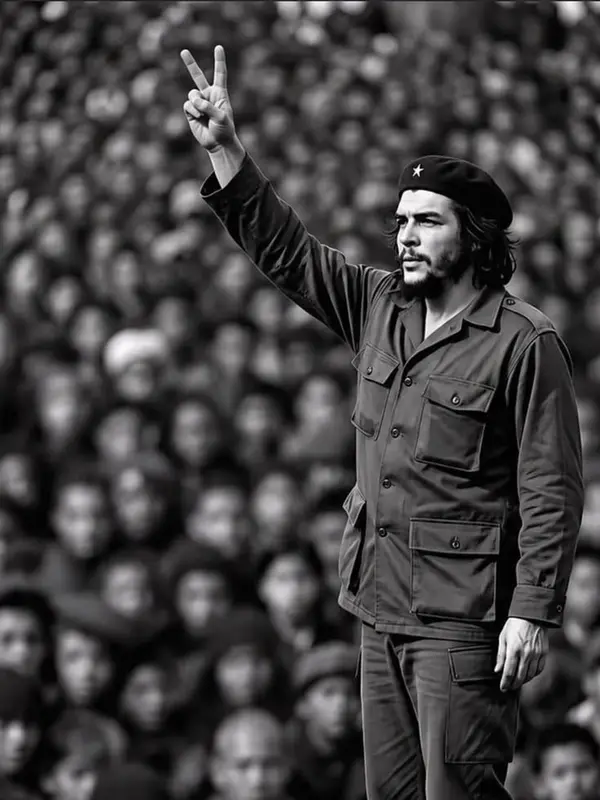
The central argument of this article is that youthful resistance is not necessarily a rejection of society itself. It can instead represent a rejection of particular ways in which society distributes authority, reproduces inequality, and demands obedience without accountability. Young people may distrust political parties while caring deeply about justice; question educational institutions while remaining committed to learning; reject inherited social expectations while seeking meaningful relationships and belonging. Their apparent contradiction—disliking established systems while wanting to transform them—is therefore philosophically important. It suggests that the conflict is often not between young people and civilization, but between inherited institutional arrangements and the possibility of a more just civilization.
The first arena of this transformation is often not parliament, the workplace, or the street, but the home. Families are among the earliest institutions through which individuals learn obedience, morality, identity, gender roles, social class, and the meaning of success. Parents may transmit valuable experience, but inherited authority can become restrictive when questioning is interpreted as disrespect. A young person who challenges a family’s career expectations, demands a voice in personal decisions, or questions discriminatory customs may be accused of abandoning tradition. The deeper conflict is between authority based on age alone and authority that earns respect through wisdom, care, and reason. A progressive family does not surrender its values simply because a younger generation asks questions; it creates the conditions in which those values can be examined, strengthened, or changed.
The second arena is the educational institution. Schools and colleges are expected to prepare young people for a changing world, yet some educational cultures continue to reward memorization, conformity, and unquestioning acceptance rather than intellectual independence. The contradiction becomes especially apparent when students are taught to value scientific reasoning but discouraged from questioning a teacher, to celebrate democracy but denied meaningful participation in institutional decisions, or to study history through a single unquestionable narrative. Paulo Freire’s Pedagogy of the Oppressed offers a useful philosophical framework for understanding this tension: education can become a process in which knowledge is deposited into passive learners, or a dialogical practice through which teachers and students investigate reality together. Generation Z and Generation Alpha need neither the abolition of educational authority nor the romanticization of youthful opinion. They need institutions in which discipline coexists with inquiry, teachers are respected without being treated as infallible, and disagreement becomes a method of learning rather than a reason for punishment.
The third arena is the wider social system, where inherited hierarchies often determine whose opinions matter, whose ambitions are considered legitimate, and who receives access to opportunity. In societies structured by class privilege, patronage, feudal relationships, rigid gender expectations, or political family networks, young people may discover that achievement alone does not guarantee advancement. Pierre Bourdieu’s analysis of social reproduction helps explain how established advantages can be passed between generations through wealth, cultural capital, connections, and institutional recognition. Under such conditions, demands for meritocracy, equal access, and transparent recruitment become more than personal aspirations; they become challenges to the reproduction of privilege. However, not every inherited practice is oppressive, and not every new idea is progressive. The essential task is to distinguish traditions that sustain solidarity and collective memory from arrangements that preserve domination. A society evolves when it can retain its cultural roots without making inherited status a permanent entitlement to power.
The fourth arena is political life itself. Young people encounter governments that speak of national progress while many citizens struggle with insecure employment, expensive housing, unequal educational opportunities, corruption allegations, environmental deterioration, or inadequate public services. The resulting frustration can produce a sense of political estrangement: elections change officeholders, but the deeper structures of power appear resistant to change. Max Weber’s account of bureaucratic authority, Hannah Arendt’s reflections on political action, and Jürgen Habermas’s theory of the public sphere provide different ways to understand this problem. Institutions require rules and continuity, but legitimacy also depends on whether citizens can participate meaningfully in decisions affecting their lives. When young people conclude that conventional channels are unresponsive, they may turn to protests, independent journalism, community organizing, boycotts, and digital campaigns. Their distrust should not automatically be interpreted as apathy. Equally, distrust alone cannot produce democratic renewal: lasting change requires institutions capable of converting public demands into accountable decisions.
The digital sphere has intensified this generational shift by changing how political information is produced, distributed, and challenged. A student can document an injustice, publish an argument, organize a campaign, or connect with activists in another country without waiting for a traditional political organization to grant access. The hashtag becomes a compressed public argument; the video becomes testimony; the online network becomes a potential space for collective action. Research on political campaigning has traced the increasing importance of digital platforms since the 2008 US presidential election, while subsequent controversies, including the Cambridge Analytica scandal, have demonstrated how data-driven targeting and disinformation can also distort public debate. Digital participation therefore carries a double possibility: it can widen access to political expression while strengthening polarization, misinformation, and algorithmic echo chambers. For younger generations, digital literacy must consequently mean more than the ability to use technology. It must include the ability to verify evidence, recognize manipulation, engage with opposing arguments, protect privacy, and translate online visibility into constructive public action.
Four international examples illustrate different dimensions of this transformation. In Bangladesh, student protests over public-sector employment quotas expanded into a broader confrontation with the government in 2024, culminating in Sheikh Hasina’s departure from office. The movement demonstrated how a grievance initially focused on access and fairness could develop into a much wider challenge to political authority. In Nepal, youth anger over corruption, privilege, and restrictions on social media became part of the protest wave of 2025, exposing the distance between the expectations of younger citizens and the conduct of political elites. In both cases, mobilization showed that governments cannot assume that young people will remain passive when established channels appear unable to address their concerns. Yet the departure of a leader is not equivalent to the transformation of a political system. Durable progress depends on credible institutions, lawful transitions, public accountability, and a clear program of reform that survives the initial energy of protest.
In Sri Lanka, the 2022 Aragalaya protest movement emerged amid severe economic hardship, shortages, inflation, and public anger over governance. Young people and other citizens occupied public spaces to demand political accountability, contributing to President Gotabaya Rajapaksa’s departure from office. The episode showed how economic breakdown can expose deeper questions about the social contract: what obligations do governments owe their citizens, and what happens when people believe those obligations have been abandoned? In Kenya, youth-led demonstrations in 2024 against proposed tax increases developed into a wider expression of frustration over the cost of living, governance, and political accountability. The government withdrew the contested finance bill, illustrating how organized public pressure can affect policy. These cases differ in their causes, participants, and outcomes, but together they demonstrate why governments should engage young people before grievances become a crisis. They also warn that mobilization alone cannot solve structural economic problems; taxation, public spending, employment, and social protection require sustained institutional work.
The philosophical danger, however, lies in confusing the destruction of an old arrangement with the creation of a better one. Georg Wilhelm Friedrich Hegel understood historical development through contradiction and transformation, although social change cannot be reduced to a simple formula in which every conflict inevitably produces progress. An established institution may contain injustice, but it may also preserve knowledge, stability, and collective experience. Likewise, a revolutionary movement may expose genuine failures without possessing the institutional competence to resolve them. Generation Z and Generation Alpha therefore face a fundamental challenge: they must become more than critics of the existing order. They must develop the intellectual discipline, ethical commitments, organizational capacity, and practical knowledge required to build alternatives. A generation that can identify corruption but cannot design transparent procedures, or criticize inequality without developing workable institutions, risks reproducing the very problems it seeks to overcome.
This is where the distinction between generational conflict and intergenerational cooperation becomes essential. Older people should not be treated as a homogeneous obstacle to progress, just as young people should not be idealized as naturally enlightened. Every generation contains reformers, traditionalists, opportunists, and individuals willing to reconsider their beliefs. The objective should be to dismantle the monopoly of age over authority, not to replace it with a monopoly of youth. Families can introduce shared decision-making; schools can establish student councils with meaningful responsibilities; universities can protect academic freedom and independent debate; workplaces can create transparent promotion systems and genuine opportunities for younger employees to contribute. Political parties can open candidate selection and policymaking to younger members, while public institutions can establish youth advisory bodies whose recommendations receive formal consideration. These mechanisms turn generational dialogue from a symbolic gesture into a structure of participation.
Generation Alpha adds another dimension because its members are growing up in an environment shaped by artificial intelligence, automated systems, digital entertainment, and increasingly personalized information. Their political consciousness will develop under conditions that differ from those experienced by Generation Z, but technology alone will not make them more democratic, tolerant, or intellectually independent. Algorithms can broaden horizons or narrow them; artificial intelligence can support learning or reproduce existing biases; digital networks can create solidarity or facilitate harassment. The responsibility of schools, families, technology companies, and governments is therefore to develop the capacities that democratic societies require: critical thinking, empathy, scientific reasoning, privacy awareness, media literacy, and an understanding of constitutional rights. Younger people must also learn that freedom includes responsibility toward those with whom they disagree. The future belongs neither automatically to the most technologically sophisticated generation nor to those who reject technology, but to societies that can place technological power in the service of human dignity.
The ultimate test is whether youthful resistance can evolve into a constructive social philosophy. Generation Z and Generation Alpha need opportunities to participate not only when governments fail, but also when budgets are prepared, educational policies are designed, cities are planned, environmental decisions are made, and public services are evaluated. Their participation must extend beyond demonstrations and social-media trends into local government, research, entrepreneurship, trade unions, civil society, political parties, and public administration. In Pakistan and elsewhere, this means addressing the structural barriers that separate young citizens from meaningful influence: unequal access to education, unemployment, patronage, restricted opportunities for independent thought, and the concentration of decision-making among established elites. Reform must also recognize differences among young people themselves, including those shaped by class, gender, disability, geography, and access to technology. A truly inclusive system does not simply invite a small number of privileged young voices into existing institutions; it expands the opportunity for diverse young people to influence the decisions that govern their lives.
Ultimately, the conflict between generations is a question about the nature of civilization itself. A society that demands obedience without allowing questions risks stagnation; a society that rejects every inherited institution risks losing the knowledge and continuity required for collective life. Progress emerges when inherited wisdom becomes open to examination, authority becomes accountable, education develops independent judgment, and political participation extends beyond a privileged few. Generation Z and Generation Alpha do not need to hate society in order to transform it. They need to recognize that society is neither a finished structure nor the private property of those who currently control it. It is a continuing human project, recreated through relationships, institutions, ideas, and struggles over justice. Their most consequential achievement will not be the number of established figures they displace or the systems they condemn, but the quality of the institutions they help build afterward. When young people can challenge their families without losing belonging, question their teachers without fear, enter public life without patronage, and hold governments accountable without repression, generational rebellion can become democratic renewal. The purpose of change is not to make the old world disappear merely because it is old; it is to ensure that no generation inherits a world in which its future has already been decided by someone else.
Catch all the Blogs News, Breaking News Event and Trending News Updates on GTV News
Join Our Whatsapp Channel GTV Whatsapp Official Channel to get the Daily News Update & Follow us on Google News.
Must Read

Pakistan
Funeral Prayers Held for Major Hasnain Shahzad Humayun and Captain Abdul Samad
13-October،2026