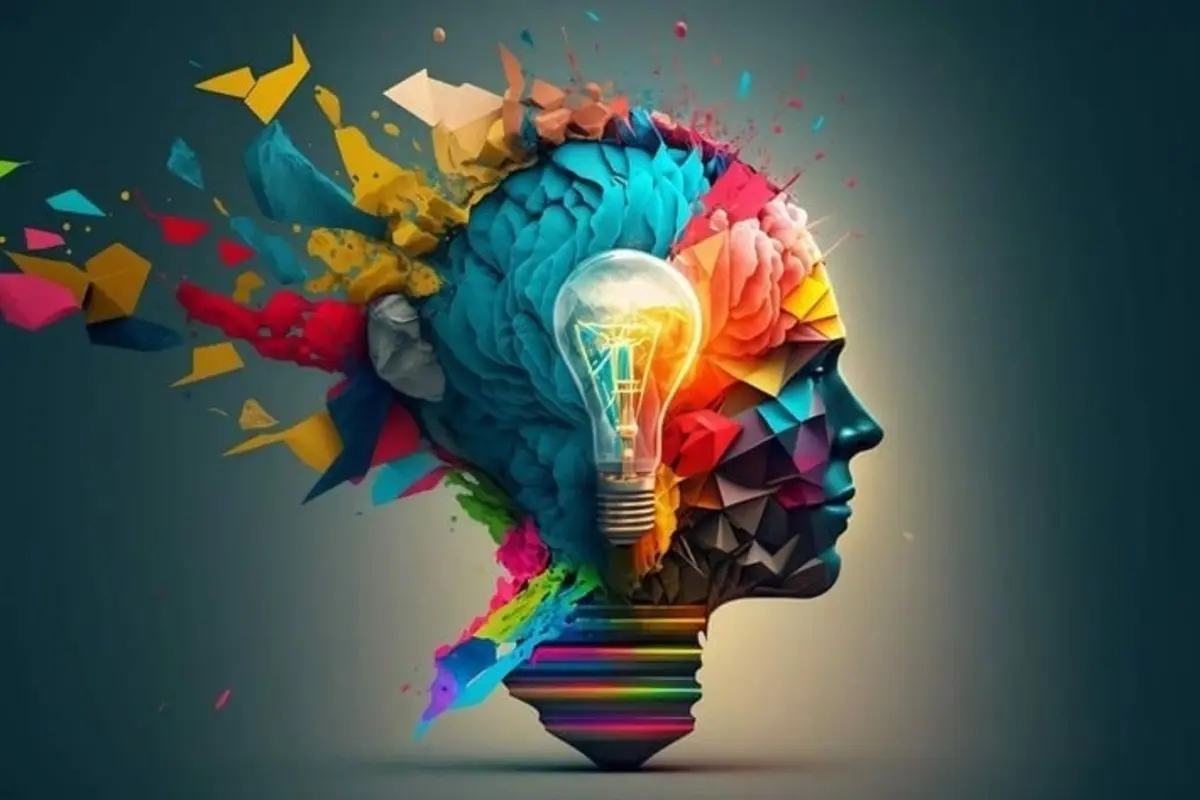

Born Digital, Becoming Political: Gen Z and Gen Alpha Reshape the World


Generation Z and Generation Alpha represent more than successive age groups; they constitute a historical transition in the relationship between the individual, society, technology and political power. Gen Z, broadly identified with those born from the late 1990s to the early 2010s, came of age during the expansion of smartphones, social media, globalization and political polarization, while Gen Alpha is growing up in an environment increasingly structured by artificial intelligence, algorithmic systems, immersive technologies and instantaneous communication. Their importance therefore cannot be understood only through consumer behavior or technological familiarity. They are developing new attitudes toward authority, identity, citizenship, work, culture and political participation. They are becoming the generation for whom the boundaries between the social, political, economic and technological spheres are increasingly porous.
From a philosophical perspective, their emergence represents a transformation in the meaning of human agency. Classical political philosophers such as Aristotle understood human beings as political animals whose identity develops through participation in a community. John Locke placed individual rights and consent at the centre of political legitimacy, while Jean-Jacques Rousseau explored the relationship between individual freedom and collective will. In the contemporary digital environment, these questions have acquired new dimensions. Gen Z and Gen Alpha exercise political and social agency not only through elections, political parties or traditional institutions but also through digital expression, online communities, campaigns, creative production and networked activism. The smartphone has effectively become a new political instrument through which individuals communicate, organize, criticize institutions and construct collective identities.
Social media has consequently altered the architecture of political communication. In the twentieth century, political communication was largely controlled by newspapers, television networks, political parties and state institutions. The digital generation has disrupted this hierarchy by creating a decentralized public sphere in which an individual with a mobile phone can potentially address millions of people. The political theories of Jürgen Habermas concerning the public sphere acquire renewed relevance here, although the digital public sphere is considerably more fragmented than the traditional ideal of rational public debate. TikTok, YouTube, Instagram, X and other platforms have transformed political messages into short videos, images, memes and emotionally powerful narratives. Politics has become faster, more visual and more participatory, but also more vulnerable to misinformation, polarization and manipulation.
The political identity of these generations is therefore increasingly shaped by issues rather than exclusively by traditional ideological or partisan structures. Climate change, human rights, gender equality, economic opportunity, privacy, racial and cultural recognition, technological ethics and mental health can become political questions through digital networks. Young people can encounter political ideas from different parts of the world before they fully understand the political structures of their own societies. This produces a new form of political consciousness in which national citizenship coexists with global awareness. A young person may feel simultaneously connected to a local neighborhood, a national political community and a global digital movement. Political identity is consequently becoming layered, fluid and increasingly transnational.
Their relationship with tradition is equally significant. Gen Z and Gen Alpha are not necessarily rejecting inherited culture; rather, they are interrogating it. The authority of tradition is increasingly subjected to questions: Why should a practice continue? What values does it represent? Is it compatible with equality, dignity and individual freedom? In this sense, the younger generations embody a tension between Edmund Burke’s emphasis on inherited social continuity and the modern impulse toward rational criticism and reform. They may preserve traditional music while transforming its presentation through digital platforms, maintain family customs while questioning social restrictions, and celebrate national culture while participating in global cultural movements. Tradition therefore becomes less a fixed inheritance and more a subject of negotiation between generations.
The transformation of culture is closely connected with the transformation of power. Michel Foucault demonstrated that power does not operate only through governments and formal institutions; it also operates through knowledge, social norms, institutions and systems of observation. In the digital age, algorithms have become important mechanisms through which attention and information are organized. Young people may believe they are freely choosing what to watch, read or purchase, while algorithmic systems continuously shape the environment from which those choices emerge. This creates a new political question: who controls the architecture through which citizens receive information? Political power in the twenty-first century therefore extends beyond parliament, government and bureaucracy into data, platforms, algorithms and digital infrastructure.
Artificial intelligence will deepen this transformation. Gen Alpha is likely to experience AI not as a revolutionary invention but as an ordinary component of everyday life. AI may become a tutor, translator, research assistant, creative partner, medical information system, career adviser and productivity tool. This has enormous democratic potential because sophisticated knowledge can become accessible to people who previously lacked institutional resources. But it also raises questions concerning accountability, surveillance and the concentration of technological power. If a small number of corporations control the most powerful AI systems, then technological infrastructure may acquire political significance comparable to traditional institutions. The political philosophy of the future will therefore have to address not only the distribution of land, wealth and political authority but also the distribution of computational power, data and access to intelligence.
The economic transformation associated with these generations is equally profound. Gen Z has already helped normalize the creator economy, social commerce, remote work, freelancing, digital entrepreneurship and online education. Gen Alpha is likely to enter an economy in which artificial intelligence and automation are deeply integrated into professional life. The traditional relationship between education, employment and income may therefore change. Instead of acquiring one profession and maintaining it for decades, individuals may continuously acquire skills and collaborate with intelligent systems. The economic question will be whether technological productivity produces wider prosperity or further concentrates wealth. Classical thinkers from Adam Smith and Karl Marx to contemporary political economists provide different frameworks for understanding this dilemma, but the fundamental question remains familiar: who owns the productive forces, who benefits from them and how should the gains of technological progress be distributed?
The political economy of social media has already demonstrated that attention itself can become a commodity. Young people generate enormous quantities of cultural and behavioural data through their everyday activities, while platforms transform that data into economic value. A teenager watching videos, creating content, searching for products or communicating with friends simultaneously participates in a vast information economy. The distinction between consumer and producer consequently becomes increasingly unclear. Gen Z and Gen Alpha may therefore become economically powerful not only because of what they purchase but because of the cultural value they generate. Their creativity, networks and digital identities can become forms of economic capital, creating opportunities for entrepreneurship while also raising questions about exploitation, ownership and fair compensation.
Yet technological empowerment does not automatically produce political freedom. Digital societies can become highly connected while simultaneously becoming highly controlled. Surveillance technologies, facial recognition, predictive algorithms, targeted political advertising, misinformation and automated content recommendation can influence citizens without traditional forms of coercion. This makes John Stuart Mill’s defence of individual liberty particularly relevant. Freedom requires not merely the absence of physical coercion but the ability to develop one’s own judgment. For Gen Z and Gen Alpha, digital literacy must therefore become a component of democratic citizenship. Knowing how to use technology is insufficient; citizens must understand how algorithms influence attention, how information is manipulated, how data is collected and how digital platforms can shape political behaviour.
The future political culture of these generations may consequently be less hierarchical and more networked. Traditional political organizations often depend upon centralized leadership, fixed membership and long institutional structures, whereas digital movements can emerge rapidly around particular causes and disappear just as quickly. This has advantages and limitations. It allows marginalized voices to gain visibility and enables rapid mobilization, but it can also encourage political fragmentation, emotional polarization and movements without durable institutional structures. The challenge for Gen Z and Gen Alpha will be to transform digital energy into lasting civic institutions. Democracy requires more than expression; it requires organization, deliberation, compromise, accountability and the ability to convert public demands into sustainable policy.
The historical significance of Gen Z and Gen Alpha will ultimately depend on whether they can reconcile technological power with human values. They are inheriting a world in which artificial intelligence can expand knowledge, social media can democratize expression, digital markets can create new economic opportunities and global communication can bring distant societies into immediate contact. Yet they also inherit inequality, ecological crisis, political polarization, surveillance and unprecedented concentrations of technological power. Their task is therefore philosophical as much as technological and political. They must determine what kind of society should emerge from the tools they possess. If Aristotle’s political community, Locke’s individual liberty, Rousseau’s collective responsibility, Marx’s critique of economic power, Arendt’s conception of public action, Foucault’s analysis of power and Habermas’s ideal of democratic communication are placed alongside the realities of artificial intelligence and social media, a central principle emerges: technology must ultimately remain subordinate to human dignity, political freedom and the common good. Gen Z and Gen Alpha are not simply preparing to live in the future; through their choices, institutions and ideas, they are already constructing it.
The resistance of Gen Z and Gen Alpha to feudal and hierarchical mindsets can already be seen in everyday social and political behaviour. A young person who questions why a political position should pass from father to son, why a landlord or tribal elite should automatically command social authority, or why a wealthy family should receive greater respect than a highly educated professional is challenging the traditional logic of inherited power. In Pakistan, young people increasingly use TikTok, YouTube, Instagram, X and other digital platforms to question political dynasties, expose local injustices, discuss merit-based opportunities and demand accountability from powerful individuals. A university student can publicly challenge a politician’s argument; a young entrepreneur can build a business without belonging to an influential family; a woman from a conservative background can create an independent professional identity through digital platforms; and a young journalist or content creator can reach an audience without depending entirely on established media institutions. Similar tendencies can be observed globally: young climate activists challenge governments and corporations, student movements question university authorities, young entrepreneurs challenge traditional business structures, and digital creators bypass established cultural gatekeepers. These examples illustrate a broader philosophical transition from status by inheritance to legitimacy through ability, participation and ideas. The young generation is increasingly asking a fundamentally political question: Why should authority belong to someone because of who their parents were rather than because of what they can contribute to society? This question strikes at the intellectual foundation of feudalism and opens the possibility of a society in which knowledge, merit, citizenship and human dignity carry greater weight than lineage, wealth and inherited influence.
Catch all the Blogs News, Breaking News Event and Trending News Updates on GTV News
Join Our Whatsapp Channel GTV Whatsapp Official Channel to get the Daily News Update & Follow us on Google News.
Must Read