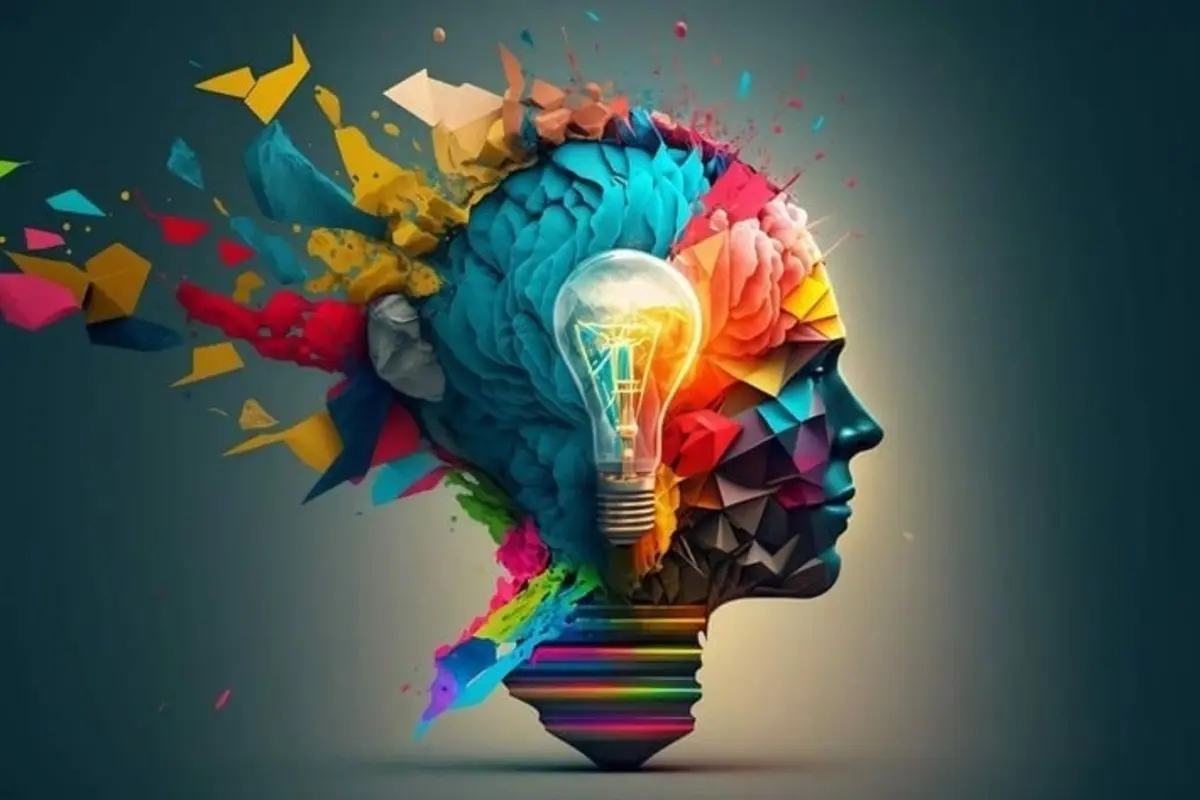
Teachers: The Architect of Civilizations


International Teachers’ Day, observed on 5 October, is more than an occasion to exchange greetings with teachers. It is an opportunity to reflect on one of the oldest and most consequential relationships in human civilization: the relationship between the teacher and the student. A teacher does not merely transfer information from one mind to another; a teacher participates in the formation of character, intellect and conscience. Before there were modern universities, laboratories or digital classrooms, human beings gathered around teachers to understand nature, morality, society and the meaning of existence. Every civilization that achieved intellectual greatness did so, in part, because it produced teachers capable of transmitting knowledge while also questioning inherited assumptions. The history of humanity can therefore be read as a history of teachers and students: generations teaching generations how to think, how to live and, ultimately, how to imagine a better world.
Ancient Greece provides one of the clearest examples of the transformative power of teaching. Socrates did not establish his importance through a textbook or a formal institution. He taught through questions. He challenged Athenians to examine their assumptions about justice, virtue, knowledge and citizenship. His method suggested that education begins not with the accumulation of answers but with the courage to ask better questions. His student Plato transformed those conversations into a philosophical system, while Aristotle, in turn, became one of history’s greatest teachers and taught Alexander of Macedon. Alexander later acknowledged the profound influence of Aristotle on his intellectual development. The Greek tradition demonstrates that a teacher’s greatest achievement is not producing students who repeat the teacher’s words, but students capable of extending knowledge beyond the teacher’s own intellectual boundaries.
The Islamic intellectual tradition offers another extraordinary example in Imam Jafar al-Sadiq, whose intellectual influence extended far beyond the religious sciences. His intellectual circle became associated with the study of jurisprudence, theology, philosophy and the natural sciences, and he is remembered as an important teacher in the formative period of Islamic scholarship. His intellectual legacy represents an important principle of education: knowledge should cultivate the intellect rather than merely fill the memory. The great intellectual traditions of Islam developed through teachers, students, debate, questioning and transmission of knowledge. The lesson is profound: a civilization becomes intellectually strong when it creates environments in which students are encouraged to think, inquire and engage with knowledge rather than simply memorize conclusions. The true teacher therefore does not imprison the student inside his own knowledge; he opens the door through which the student can discover new knowledge.
The ancient understanding of teaching was never exclusively academic. Socrates connected knowledge with virtue; Plato connected education with the formation of the just citizen; Aristotle considered education essential to the development of a virtuous society. This idea remains relevant today. A technically educated person may possess enormous knowledge and still lack wisdom, compassion or moral responsibility. The modern education system sometimes measures success through examinations, degrees and employment, but these measurements cannot capture the entire purpose of education. A teacher should help students distinguish between intelligence and wisdom, information and knowledge, success and significance. The classroom should therefore be more than a place where students prepare for examinations. It should be a laboratory of citizenship, ethics, dialogue and intellectual freedom.
From a purely academic perspective, teachers are the architects of intellectual development. They transform difficult concepts into understandable ideas, identify the strengths and weaknesses of students, encourage curiosity and create the conditions in which independent thought can emerge. A good teacher does not simply explain what is already known; they cultivate the ability to discover what is not yet known. This responsibility has become even more important in the age of artificial intelligence. Students today can access an extraordinary quantity of information within seconds, but access to information does not automatically produce understanding. AI can provide answers, but teachers remain essential in teaching students how to evaluate those answers, identify misinformation, ask meaningful questions and exercise judgment. In the information age, the teacher’s importance has therefore not disappeared; in many ways, it has become greater.
A teacher also enters the emotional world of a student. Behind every examination result is a human being carrying hopes, fears, family problems, insecurities and ambitions. A sensitive teacher may notice when a normally active student becomes silent, when confidence begins to disappear or when academic failure is actually the consequence of problems outside the classroom. This does not mean that teachers must replace parents, counsellors or psychologists. It means that teaching is fundamentally a human relationship. A word of encouragement from a respected teacher can remain in a student’s memory for decades, just as humiliation or unjust treatment can leave a lasting wound. This is why teachers must understand the extraordinary influence they possess. Their behaviour becomes, consciously or unconsciously, a lesson.
Respect for teachers should never mean unquestioning acceptance of everything a teacher does. The teaching profession carries authority, and authority without ethics can become destructive. A teacher who humiliates, discriminates against, physically abuses, emotionally manipulates or deliberately discourages students violates the very purpose of education. Such conduct can create fear where there should be curiosity and resentment where there should be trust. The damage may continue long after a student leaves the classroom. Children frequently imitate the behaviour of adults who possess authority over them, which means an unethical teacher can reproduce intolerance and cruelty through generations of students. The dignity of teachers therefore requires an equally strong commitment to the dignity and safety of students. The best educational relationship is neither authoritarian nor submissive; it is founded upon respect, responsibility and intellectual trust.
The social importance of teachers extends far beyond schools and universities. Doctors, engineers, judges, scientists, writers, civil servants, entrepreneurs, political leaders and artists all pass through the hands of teachers. Every profession ultimately has an educational history. A nation may construct roads, bridges and technological infrastructure, but its most important infrastructure remains human intelligence and character. When teachers are poorly trained, inadequately paid, professionally ignored or placed in unhealthy working conditions, the consequences eventually appear throughout society. Conversely, when teachers are respected, professionally developed and given meaningful participation in educational policy, they become powerful agents of social transformation. The quality of a country’s future can therefore often be anticipated by examining the quality of attention it gives to its teachers.
The teacher of 2026 confronts challenges unimaginable to many earlier generations. Artificial intelligence, social media, misinformation, climate change, migration, inequality and rapidly changing labour markets have transformed the educational environment. UNESCO’s 2026 World Teachers’ Day theme, “Standing with teachers: 60 years of protecting the profession, advancing its status and shaping our futures,” marks six decades since the 1966 ILO/UNESCO Recommendation concerning the Status of Teachers. The occasion reminds governments that appreciation cannot be limited to ceremonial speeches. Teachers require professional autonomy, continuing education, fair remuneration, manageable workloads, safe working environments and participation in decisions affecting education. The global teacher shortage reinforces the urgency of this issue. If societies genuinely believe that teachers shape the future, then teachers must be treated not as an expendable workforce but as one of the central institutions of civilization.
Ultimately, the greatest tribute to a teacher is not a flower, a greeting card or a social-media message posted once a year. It is a student who learns to think independently, acts with integrity, respects human dignity and uses knowledge for the improvement of society. The greatest teachers continue to live through the minds they have shaped. Socrates survives through Plato; Aristotle survives through generations of students and intellectual traditions; the legacy associated with Imam Jafar al-Sadiq continues through the scholars and schools influenced by his intellectual tradition. This is the philosophical immortality of teaching: a teacher may leave the classroom, but an idea planted in a student’s mind can travel across centuries. On International Teachers’ Day, therefore, we should not merely ask what teachers have done for us. We should ask what kind of society we are building for them and what kind of human beings their teaching enables us to become. A civilization ultimately reveals its priorities not only through the monuments it builds, but through the minds it chooses to cultivate.
Catch all the Blogs News, Breaking News Event and Trending News Updates on GTV News
Join Our Whatsapp Channel GTV Whatsapp Official Channel to get the Daily News Update & Follow us on Google News.
Must Read


Entertainment
Sass Jordan, Juno Award-Winning Singer and Canadian Idol Judge, Dies at 65
5-October،2026