
Race, Culture, Ethnicity and Human Evolution: The Changing Nature of Human Identity

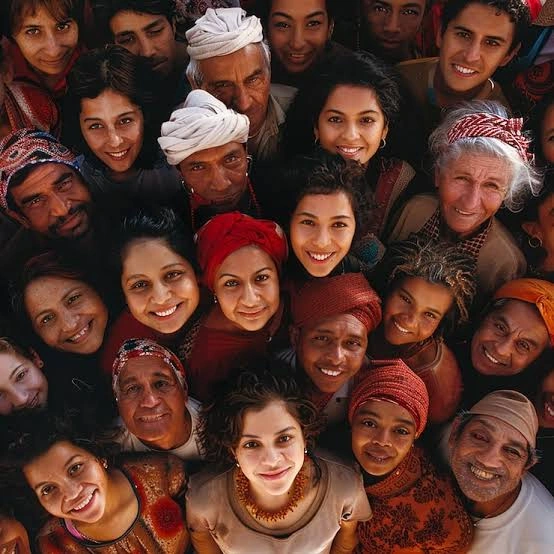
Race is among the most enduring and controversial concepts through which human societies have attempted to understand difference. In ordinary language, race is generally associated with visible characteristics such as skin color, hair texture, facial structure and other physical features, but historically it has represented far more than physical description. Racial categories have been used to establish ideas of belonging and exclusion, civilization and primitiveness, superiority and inferiority, and even the supposed moral or intellectual worth of different populations. Modern science, however, has made it necessary to distinguish between biological variation and the social categories constructed around that variation. Human beings unquestionably differ from one another, and populations have developed different genetic frequencies through migration, mutation, natural selection, genetic drift and adaptation. Yet these differences do not divide humanity into a few perfectly separated biological races. Human genetic variation is extensive within populations and overlaps considerably across populations, while the boundaries imposed by racial classification are historically variable and socially constructed. The important point is therefore not that human beings are identical, but that human difference does not organize itself according to the rigid racial compartments historically created by societies. The material provided emphasizes that genetic markers of ancestry and population history should not automatically be interpreted as markers of racial identity.
The question of race becomes much clearer when it is placed within the much longer history of human evolution. Homo sapiens emerged through an evolutionary process extending across immense periods of time and involving migration, adaptation, reproduction, environmental pressures and continual interaction between populations. Human beings did not evolve as isolated groups that remained permanently separated after spreading across the planet. Populations moved, encountered one another, intermarried and exchanged genes. Trade, conquest, warfare, slavery, migration and ordinary movement between neighboring communities created countless opportunities for genetic exchange. Consequently, the history of humanity resembles a constantly moving network rather than a collection of sealed biological compartments. Evolution produced differences between populations because populations experienced different environments and histories, but it simultaneously maintained connections between them through gene flow. This is why the biological history of humanity cannot easily be reduced to the racial classifications developed much later by particular societies. The human species has always been characterized by both differentiation and connection: populations adapted to particular circumstances while remaining part of a wider, interrelated evolutionary history.
Charles Darwin’s theory of evolution by natural selection provides one of the fundamental frameworks for understanding this process. Darwin demonstrated that populations change over generations when inherited variations affect survival and reproduction under particular environmental conditions. Applied to human history, this means that characteristics common in one population may reflect adaptation to its particular environment rather than membership in a fundamentally different biological race. Skin pigmentation provides one of the clearest examples. Populations living for long periods in areas of intense ultraviolet radiation generally developed greater melanin pigmentation, while populations living in northern environments with weaker sunlight experienced different selective pressures associated with vitamin-D synthesis. Such changes developed gradually across geographical space. There was no moment at which one race suddenly became another. Instead, evolutionary pressures produced a continuum of variation. The same logic applies to adaptations associated with altitude, temperature, disease and nutrition. The supplied material describes how environmental conditions influenced skin pigmentation and other physical characteristics, demonstrating that visible human diversity can be understood through adaptation rather than racial hierarchy.
The concept of a genetic cline is particularly important because it demonstrates how evolution differs from rigid racial classification. A cline refers to gradual variation across geographical space rather than a sharp division between groups. Human skin colour, for example, varies through innumerable degrees rather than existing as a handful of clearly separated categories. Populations living in neighbouring geographical regions may share many characteristics, while populations living thousands of miles apart can sometimes display similar characteristics because they experienced comparable environmental pressures. Dark pigmentation occurs not only among African populations but also among peoples of parts of South Asia, Australia, Melanesia and other tropical regions. Conversely, populations living in northern environments developed lighter pigmentation through complex evolutionary histories. The attempt to draw racial boundaries across such continuous variation necessarily involves arbitrary decisions. Evolution does not recognize the categories humans subsequently created. Nature provides variation; society interprets, organizes and sometimes politicizes that variation. The scientific study of human diversity therefore becomes more precise when it investigates individual traits, population histories and environmental pressures rather than assuming that visible characteristics form a single package called race.
Genetic ancestry is consequently real and important, but ancestry and race are not synonymous. Modern genetics can reveal patterns of population history, migration and inherited variation, and certain genetic variants can occur at different frequencies among populations. Yet the presence of such differences does not establish that humanity consists of discrete racial groups. Human characteristics do not consistently travel together as a single genetic package. An individual may possess one genetic variant that is relatively common in one population while possessing other variants associated with populations elsewhere. Sickle-cell variation illustrates this principle. The trait became more frequent in areas where malaria was historically prevalent because carrying one copy of the relevant variant can provide some protection against malaria. Yet the trait is not restricted to a single racial group; it occurs in populations across several geographical regions that have experienced similar environmental pressures. The meaningful biological question is therefore often not “Which race possesses this trait?” but rather “What population history and environmental conditions help explain its distribution?” Such a question replaces racial essentialism with evolutionary investigation.
The history of racial thought demonstrates how easily observations of physical difference can become theories of human hierarchy. European intellectual traditions increasingly classified humanity according to geography and appearance, eventually attaching broader assumptions about intelligence, morality, temperament and civilization to these categories. The problem was not simply that people noticed differences; it was that differences were interpreted as evidence of inherent human inequality. These ideas became connected with colonialism, slavery, eugenics and social Darwinism, transforming descriptive classifications into political doctrines. The nineteenth-century example of Samuel Cartwright’s alleged diagnosis of “drapetomania,” which presented enslaved African Americans’ attempts to escape slavery as a supposed disease, is particularly revealing. The behaviour was actually a rational response to oppression, yet the social circumstances were converted into an alleged biological defect. The example illustrates a recurring danger in human history: when a society creates unequal conditions and subsequently explains the consequences of those conditions as characteristics of the people suffering from them, social arrangements are disguised as nature.
Culture represents another fundamental dimension of human evolution, but it operates through mechanisms different from biological inheritance. Culture consists of learned systems of meaning that include language, customs, traditions, religion, food, dress, art, family organization, rituals, values, moral expectations and social institutions. A human child does not biologically inherit a particular language or set of customs in the same manner in which genetic characteristics are inherited. Rather, children acquire culture through observation, imitation, education, participation and communication. This ability to transmit knowledge socially has allowed humans to adapt not only through genetic evolution but also through cultural evolution. A community can change its technology, language, political organization or social norms within a few generations far more rapidly than genetic evolution could normally produce comparable changes. Culture therefore gives humanity an additional evolutionary mechanism. Human beings inherit genes from their parents, but they also inherit stories, symbols, institutions, knowledge and traditions from previous generations. These two forms of inheritance constantly interact.
Ethnicity develops largely through this intersection of ancestry, culture, memory and collective identity. Whereas race has historically been constructed primarily around physical distinctions, ethnicity is generally associated with shared cultural traditions, language, religion, historical experiences, ancestry and a sense of belonging to a particular community. Ethnic identities can therefore develop, merge and transform as societies change. A community may preserve a language or religious tradition for centuries while simultaneously adopting customs from neighboring peoples. Migration can create new ethnic identities when populations settle in unfamiliar environments and negotiate relationships with existing communities. Intermarriage can further complicate inherited categories, creating individuals and families whose identities cannot be reduced to a single ancestral origin. Ethnicity is therefore neither simply biological nor completely arbitrary. It is a historical process through which people interpret ancestry, culture and collective memory. It gives individuals a narrative about where they came from and where they belong, while remaining capable of transformation as circumstances change.
This understanding has a strong connection with the ideas of Ibn Khaldun, whose analysis of human society emphasized the importance of group solidarity, social organization, environment, political power and historical change. His concept of asabiyyah, often translated as group solidarity or social cohesion, provides a useful way of thinking about how communities develop collective identities. Human beings do not live merely as biological individuals; they form families, tribes, clans, communities and political societies whose members develop shared loyalties. Such solidarity can become the basis for cooperation and collective achievement, but it can also produce distinctions between insiders and outsiders. Ibn Khaldun’s historical sociology recognized that societies change, that power moves between groups and that forms of social organization do not remain permanently fixed. From this perspective, ethnicity can be understood not merely as an inherited label but as a living social relationship. Groups become conscious of common history and common interests, strengthen their internal bonds, encounter other groups and sometimes merge into larger political identities. Human civilization is therefore an ongoing process of social formation rather than a static arrangement of permanent communities.
Philosophy adds a deeper question: if race and ethnicity are partly constructed, does that make them unreal? The answer depends upon what is meant by “real.” Many institutions that shape human existence are created through collective agreement and social practice, yet their consequences are unquestionably real. Money, citizenship, political borders, social class and legal institutions are human creations, but people experience their effects materially every day. Race operates in a comparable way. A racial category may not represent a discrete biological population, yet it can influence how individuals are treated, where they live, what opportunities they receive and how they understand themselves. The philosophical mistake is therefore to assume that something must be biologically fundamental in order to be socially powerful. A category can be socially constructed and historically contingent while simultaneously possessing enormous practical consequences. The proper philosophical task is not simply to ask whether race is “real” or “unreal,” but to ask what kind of reality it possesses, who created its boundaries, how those boundaries changed and what consequences followed from them.
Sociology demonstrates how racial and ethnic categories become embedded in institutions and social structures. Once societies assign meaning to a category, that meaning can influence education, employment, housing, political representation, healthcare and interpersonal relations. Historical discrimination can continue to produce unequal outcomes even after explicit discriminatory laws disappear, because institutions and accumulated advantages do not change instantly. This explains why rejecting biological racial hierarchy does not require rejecting the study of racial inequality. On the contrary, it makes sociological investigation more important. If a health disparity exists between groups, for example, researchers must ask whether it reflects genetic ancestry, environmental exposure, socioeconomic inequality, unequal healthcare access, discrimination, stress or some combination of these factors. Race may therefore be a valuable social variable without being a reliable biological explanation. The supplied material makes this distinction particularly clearly, emphasizing that race can shape lived experience and health through social institutions even though racial categories do not correspond neatly to genetic divisions.
Psychology further explains why human beings continually create and maintain categories of identity. The human mind depends upon categorization to organize an extraordinarily complex social world. People classify themselves and others according to nationality, religion, language, profession, ethnicity, race, gender, political community and countless other characteristics. These categories can provide belonging and emotional security, but they can also produce stereotypes when individuals are assumed to possess the characteristics associated with their group. Psychological processes such as confirmation bias, social categorization and in-group identification can reinforce perceptions of difference. At the same time, identity is not mechanically imposed upon individuals. People interpret, accept, reject and combine social identities according to their personal experiences. A person may identify strongly with an ethnic community while feeling less attachment to a racial category, or may place nationality and religion above both. Identity is therefore both psychological and social: individuals construct a sense of self through interaction with the categories available within their societies.
The psychological relationship between identity and culture also explains why ethnicity can survive migration and geographical separation. People preserve languages, family stories, religious ceremonies, food, music and traditions because these practices provide continuity between generations. Cultural memory gives individuals a sense that they belong to a historical community extending beyond their immediate lives. Yet cultural continuity does not mean cultural immobility. Younger generations often reinterpret inherited traditions according to the society in which they live. A community may preserve its ancestral language while incorporating new vocabulary, maintain traditional celebrations while changing their form, or retain religious practices while adopting new social norms. Individuals can consequently inhabit several cultural worlds simultaneously. This is particularly important in modern societies where migration and communication constantly bring populations into contact. Human identity increasingly resembles a layered structure rather than a single category: biological ancestry may constitute one layer, ethnicity another, nationality another, religion another, and personal experience another.
Modern genetics has made these distinctions even more important. Genetic research can identify population-level differences and can reveal ancestry, migration and inherited susceptibility to particular diseases. Such information is scientifically valuable, but it should not be transformed into a simplistic racial theory. A broad racial category can conceal enormous genetic variation among the people placed within it, while people assigned to different racial categories can share significant ancestry or particular genetic variants. Medicine therefore benefits from identifying the actual biological factors relevant to a disease rather than assuming that a racial label provides sufficient explanation. At the same time, social race can remain medically significant because discrimination, socioeconomic conditions, environmental exposure and unequal treatment can affect health. The most sophisticated approach therefore recognizes two realities simultaneously: biological ancestry can matter, and social experience can matter. Neither should be substituted automatically for the other.
Human history ultimately reveals that race, ethnicity, culture and social identity are evolving systems rather than permanent structures. Human beings have migrated across continents, adapted to different environments, formed families with people from different populations, created new languages, absorbed foreign traditions, established states and empires, developed religions and philosophies, and repeatedly redefined the boundaries of belonging. Agricultural societies transformed earlier forms of social organization; cities brought diverse populations together; trade connected distant civilizations; empires mixed peoples and cultures; colonialism imposed new racial classifications; industrialization transformed communities; and modern migration and communication have accelerated cultural interaction still further. What appears to be a timeless identity from one historical moment may therefore be the product of particular political, economic and cultural circumstances. Humanity’s continuing evolution is not merely biological. It is genetic, cultural, psychological and institutional at the same time.
The deepest lesson is that human diversity and human unity are not contradictory ideas. Humanity contains extraordinary variation in appearance, ancestry, language, culture, personality and social experience, but this diversity exists within one interconnected species with a shared evolutionary history. Evolution produced populations that adapted differently to different environments, while migration and reproduction continually connected those populations. Culture then transformed biological beings into social beings capable of transmitting knowledge, traditions, values and institutions across generations. Ethnicity emerged through shared histories and collective identities; race became a powerful social classification shaped by historical circumstances; psychology gave individuals emotional relationships with group identities; sociology revealed how those identities become connected with institutions and power; and philosophy asks what it means for a category to be simultaneously constructed and socially consequential. The most intellectually responsible position is therefore neither to deny human differences nor to transform them into biological hierarchies. Race can be studied as a historical and social phenomenon, ancestry as a genetic and evolutionary history, ethnicity as a form of collective identity, culture as learned social inheritance, and identity as a continuing psychological and philosophical process. Humanity’s history is ultimately not the history of separate races evolving independently, but the history of one species continually migrating, adapting, mixing, remembering, forgetting, creating and recreating itself. In that sense, human evolution has never stopped—not only because genes continue to change, but because human beings continually transform the cultures, identities, norms and social worlds through which they understand themselves and one another.
Catch all the Blogs News, Breaking News Event and Trending News Updates on GTV News
Join Our Whatsapp Channel GTV Whatsapp Official Channel to get the Daily News Update & Follow us on Google News.
Must Read


Pakistan
Development Activities Continue Under Balochistan Special Development Initiative
10-October،2026