
Gorakh Hills and Dadu: Where Sindh Touches the Sky

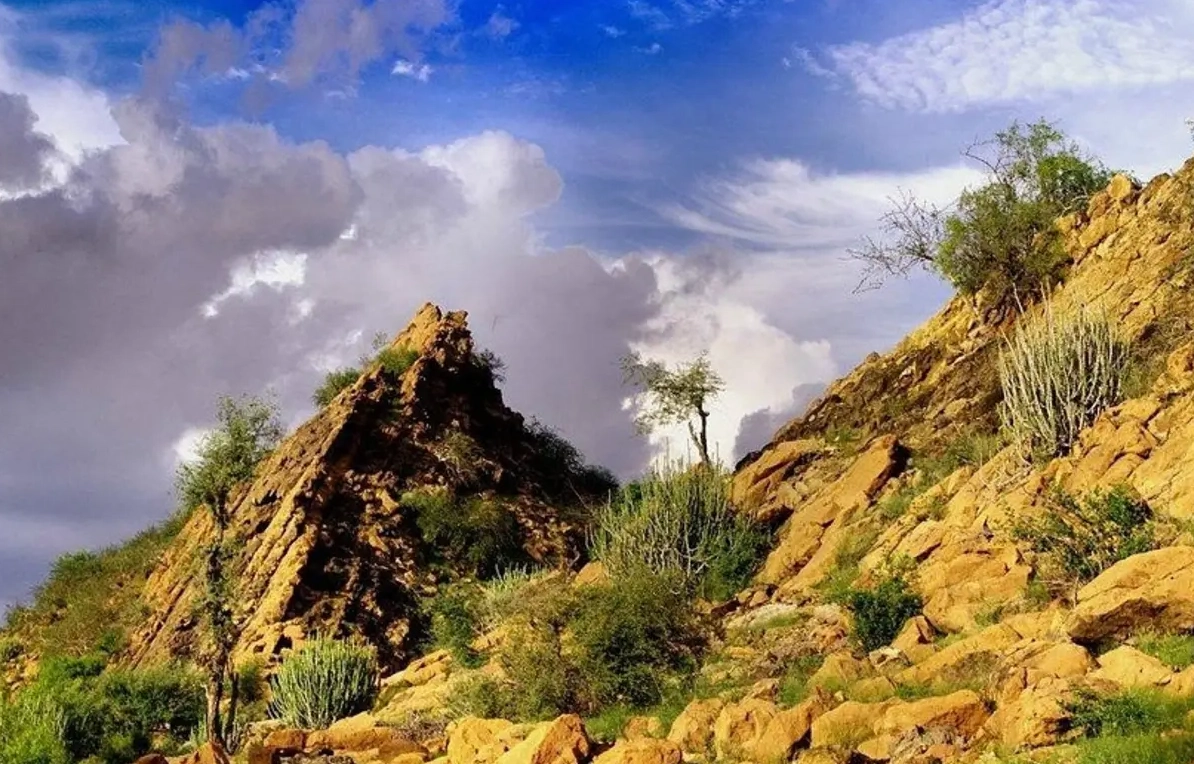
There are places that tourists visit once, photograph and leave behind. Then there are places that become part of their memory. Gorakh Hills and the wider Dadu region have the potential to become one of those unforgettable destinations. Rising from the rugged Kirthar Mountain Range, Gorakh offers cool mountain air, dramatic cliffs, vast valleys, changing weather, winter frost and occasional snowfall a remarkable contrast to the hot plains of Sindh. Yet the true value of Gorakh is much greater than its natural beauty. With thoughtful development, Dadu could transform its mountains, archaeological heritage, wildlife, spiritual sites and cultural diversity into a major tourism economy for Sindh.
The journey toward Gorakh is itself an experience. As travelers leave the populated plains behind, the landscape gradually changes into rocky valleys and mountain passes. Wahi Pandhi becomes an important gateway before the road begins climbing into the Kirthar range. The final journey through rugged terrain gives visitors the feeling of entering an unexplored world. From elevated viewpoints, the plains below appear to stretch endlessly, while clouds often gather around the peaks during the monsoon. At sunset, the mountains turn shades of gold, orange and red, creating a landscape that could easily become one of Pakistan’s most recognizable travel images.
Imagine a tourist arriving at Gorakh just before sunset. The air is cool, the mountains are surrounded by clouds and the noise of the city has completely disappeared. The visitor walks toward a viewpoint and watches the sun slowly disappear behind the Kirthar peaks. As darkness arrives, the mountains become silhouettes beneath a sky filled with stars. A simple campsite, a warm bonfire and traditional food prepared by local families could turn an ordinary night into an unforgettable experience.
Gorakh’s greatest advantage is that it can offer something different in every season. Summer provides an escape from the intense heat of the Sindh plains. Monsoon brings clouds, mist and dramatic mountain scenery. Winter creates the possibility of frost and occasional snowfall, attracting visitors from Karachi, Hyderabad, Dadu and other parts of Sindh who may otherwise have to travel hundreds of kilometres north to experience cold weather. Spring can bring a softer landscape, while autumn offers clearer skies and ideal conditions for hiking, photography and camping.
The region could build an entire tourism calendar around these seasonal attractions. A winter Gorakh Snow Festival, for example, could bring families, photographers, students and adventure tourists to the mountains. A Kirthar Cultural and Heritage Week could celebrate Sindhi, Balochi and other communities living in and around the mountain region. A Gorakh Night Sky Festival could introduce astronomy camps, telescope observations and educational programs for young people. Such events could turn tourism from a few busy weekends into a year-round economic activity.
The economic potential is enormous. Every tourist who travels to Gorakh spends money on transport, accommodation, food, guides, camping equipment, fuel, handicrafts and local services. If even a fraction of the millions of people living in Karachi and other major cities of Sindh regularly visited Dadu, the resulting economic activity could support thousands of livelihoods.
A properly planned tourism economy could create opportunities for local drivers, jeep operators, hotel and guesthouse owners, restaurant workers, cooks, tour guides, photographers, mechanics, shopkeepers, farmers, artisans and small entrepreneurs. Young people who currently have limited employment opportunities could be trained as professional mountain guides, wildlife interpreters, rescue workers and tourism managers. Women could participate through home-based food businesses, handicrafts, embroidery, cultural products and community-owned guesthouses.
Tourism can therefore become more than an entertainment industry. It can become a tool for local economic empowerment.
A traveler staying at a locally owned guesthouse could eat food prepared by a nearby family, hire a local 4×4 driver, purchase handmade products from local artisans and employ a community guide. Instead of tourism revenue disappearing into large companies outside the region, money would circulate through local communities. This would create a stronger connection between conservation and economic development: when residents earn sustainable incomes from visitors, protecting mountains, wildlife and heritage becomes economically valuable as well.
The ethnic and cultural diversity of the Kirthar region provides another powerful tourism opportunity. Dadu and the surrounding mountain areas are home to communities with Sindhi and Balochi cultural traditions, including different tribal groups whose lifestyles have historically been connected to livestock, agriculture and the landscape. These communities possess traditions, stories, languages, crafts, clothing, music and cuisines that could become an important part of the visitor experience.
Tourism should not turn these cultures into performances for outsiders. Instead, local communities should have a leading role in deciding how their heritage is presented. Visitors could participate in cultural evenings featuring traditional music, regional cuisine, storytelling and handicrafts, while community elders could explain the history of their settlements and relationship with the mountains.
Imagine a Kirthar Cultural Village where visitors can stay in traditional-style accommodation, taste authentic local food, watch artisans work and listen to stories about the mountains. The village could bring together different communities of the region and present Sindh’s cultural diversity as a strength rather than a division.
Such a project could also have a significant social impact. Tourism creates opportunities for people from different backgrounds to interact peacefully. A family from Karachi, a student from Hyderabad, a local Sindhi community, a Balochi herder and an international traveler could meet around the same campfire. In this sense, tourism can become a form of social integration, creating spaces where people encounter cultures different from their own.
Dadu’s historical heritage adds another dimension. The Kirthar mountains contain prehistoric rock-art sites and archaeological remains that provide evidence of human activity stretching deep into the past. Reported carvings around Pachhal Dhoro, Hur Dhoro, Zainy Dhoro, Peepal Spring and Sado-Mado include representations of animals, human figures and symbolic forms. These sites could become the foundation of an archaeological tourism circuit, provided they are properly documented, protected and managed.
Instead of allowing ancient sites to deteriorate, authorities could establish small heritage interpretation centres near major access points. Visitors could learn about prehistoric communities through replicas, digital displays and guided tours, while the original carvings would remain protected. Local young people could be trained as heritage guides, creating employment while giving communities a direct economic interest in preserving their history.
A fictional but realistic attraction could be the Kirthar Heritage Trail, connecting archaeological locations through designated routes. Each location could tell a different chapter of the region’s story prehistoric hunters, ancient settlements, the civilizations associated with the Indus Valley, Buddhist influences, medieval Sindh, Kalhora-era heritage and the living cultures of today’s mountain communities.
The spiritual heritage of Dadu could form another part of this circuit. Sehwan Sharif, with the shrine of Hazrat Lal Shahbaz Qalandar, attracts visitors from across Pakistan and beyond. Its longstanding spiritual tradition offers an opportunity to connect religious tourism with the region’s natural and historical attractions. A visitor could spend a day in Sehwan, explore its cultural heritage and then continue toward the mountains of Kirthar.
Dadu could therefore develop a three-dimensional tourism identity: nature, heritage and spirituality.
Nature lovers could explore Kirthar National Park, where rugged landscapes and wildlife create opportunities for guided 4×4 safaris, hiking and birdwatching. The park and surrounding areas offer habitat for species including Sindh ibex, urial and chinkara, while numerous bird and reptile species add to the region’s ecological importance. Tourism must, however, remain carefully regulated so that increased visitors do not damage fragile habitats.
A community-based Kirthar Wildlife Safari could be developed with local guides trained in conservation. Visitors would travel along designated routes, observe animals from safe distances and learn about the ecological importance of the mountains. A portion of tourism revenue could be directed toward wildlife protection, local schools, water facilities and community development.
The social benefits could extend to education. Dadu could become an outdoor classroom for universities and schools from across Sindh. Students could visit the region to study geology, archaeology, wildlife, anthropology, climate, environmental science and local cultures. Universities could establish annual research camps, while schools could organize supervised educational trips.
Young people from Dadu could benefit especially from this transformation. Instead of seeing tourism as something that happens elsewhere, they could become the people who explain their own region to the rest of Pakistan. A teenager from Wahi Pandhi could become a trained mountain guide. A university graduate from Dadu could establish a tourism company. A local photographer could sell images internationally. A family could convert part of its home into a guesthouse. A woman could establish a small food or handicraft business.
This is how tourism becomes an engine of inclusive development.
Infrastructure would be critical. Better roads, reliable electricity, clean water, telecommunications, medical facilities, emergency rescue services, waste-management systems and safe accommodation would make Gorakh significantly more accessible. But development must not destroy the landscape. Instead of covering the mountains with concrete hotels, Sindh could promote eco-lodges, solar-powered camps, environmentally responsible cabins and locally designed accommodation.
A Gorakh Eco-Village could serve as a model. Buildings could use locally appropriate materials, solar panels could provide electricity, rainwater could be collected and treated, and waste could be transported away from environmentally sensitive areas. Plastic use could be restricted, while tourists could be encouraged to follow a “leave no trace” principle.
Tourism also requires security and professional organization. Rescue teams trained for mountain emergencies could operate during peak seasons. Tourist information centres could provide maps, weather updates and guide services. A regulated system for 4×4 vehicles could reduce accidents and prevent inexperienced drivers from entering dangerous terrain.
The digital economy could further expand Gorakh’s reach. A dedicated tourism platform could allow visitors to book guesthouses, jeeps, guides, camping equipment and cultural experiences. Local businesses could list their services online rather than depending entirely on word of mouth. Digital maps could highlight hiking trails, archaeological sites, viewpoints, wildlife areas and cultural attractions.
Social media could play a major role as well. A dramatic photograph of Gorakh covered in clouds, a video of snowfall, a sunrise over Kirthar or a short documentary about local communities could reach millions of potential visitors. The region does not need expensive international advertising if its natural beauty is presented professionally and consistently.
Another imaginative attraction could be the “Gorakh Sky Walk” a carefully engineered, environmentally sensitive viewing platform extending over a safe mountain edge. Built without dominating the landscape, it could allow visitors to look across the valleys from an extraordinary height. At sunset, the platform could become one of the most photographed locations in Sindh.
A Mountain Cinema Under the Stars could provide evening entertainment without damaging the environment. Local and Pakistani films could be screened outdoors against the backdrop of the mountains, accompanied by local food stalls and cultural performances. It would give families and young people an additional reason to spend the night rather than returning immediately to the plains.
For adventure travelers, a network of marked trails could introduce hiking, trekking, mountain biking and controlled climbing. Different trails could be designed for different abilities, from easy family walks to challenging multi-hour routes. Each trail could have emergency markers, information boards and designated resting points.
Photography tourism could become another major industry. Gorakh’s changing skies, unusual rock formations, wildlife and mountain landscapes provide material for professional photographers and filmmakers. Annual photography competitions could encourage visitors to explore lesser-known parts of the region while promoting Dadu internationally.
The region could also develop a “Taste of Dadu” culinary trail. Visitors could travel through local markets and community kitchens, tasting regional dishes while learning about the food traditions of Sindh and the Kirthar communities. Local farmers could supply restaurants, creating another economic connection between tourism and agriculture.
Handicrafts could similarly become an export opportunity. Locally produced textiles, embroidery, traditional designs, pottery and other crafts could be branded under a “Made in Dadu” identity. Tourists could purchase products directly from artisans, while online stores could allow those products to reach customers across Pakistan and abroad.
The greatest opportunity, however, is to ensure that the benefits of tourism do not remain concentrated in one location. Gorakh should become the centre of a Dadu Tourism Corridor linking Gorakh Hills, Wahi Pandhi, Kirthar National Park, archaeological sites, Sehwan Sharif, Khudabad and other attractions. Visitors could be encouraged to spend several days in the region instead of simply visiting Gorakh for a few hours.
A three-day journey, for example, could begin in Sehwan Sharif, continue through the historic landscapes of Dadu, explore archaeological sites and wildlife areas, and conclude with two nights among the mountains of Gorakh. Such a circuit would increase hotel occupancy, transport demand, restaurant sales, guide employment and local purchases throughout the district.
This could have a multiplier effect across the local economy. A tourist does not only pay a hotel. The hotel buys food from farmers, hires local workers, purchases fuel and uses local services. The jeep driver buys fuel and repairs vehicles locally. The guide spends his income in local markets. The artisan uses tourism income to support a household. In this way, one tourist’s expenditure can support several layers of the local economy.
The benefits could also encourage infrastructure development that serves residents as well as tourists. Better roads would help farmers transport crops. Better telecommunications would help students and businesses. Improved emergency services would benefit communities year-round. Reliable electricity and clean water systems would improve everyday life. Tourism infrastructure, if planned correctly, can therefore become community infrastructure.
Gorakh could eventually become one of the most important examples of community-led tourism in Pakistan. Rather than waiting for large investors to arrive, local communities could form cooperatives, manage guesthouses, operate tourism services and share revenues. Government agencies could provide training, infrastructure and regulation, while private investors could support sustainable accommodation and transportation.
The mountains should never become overcrowded. Their value lies partly in their quietness. The objective should not be to attract unlimited numbers of visitors but to attract responsible visitors who stay longer, spend more locally and respect the environment.
Dadu also has the potential to change its image. Too often, parts of interior Sindh are discussed primarily through the lens of economic hardship or environmental challenges. Tourism can offer a different narrative one that presents Dadu as a region of beauty, history, hospitality, culture and opportunity.
It can show Pakistan that Sindh is not only the land of ancient cities and fertile plains. It is also a land of mountains, clouds, cold winds, wildlife, archaeological mysteries and extraordinary human diversity.
And perhaps the most powerful tourism attraction will remain the simplest one: the feeling of standing on Gorakh Hill at night, looking down toward the distant lights of the plains while millions of stars stretch overhead.
A visitor might arrive expecting only a mountain trip and leave carrying a much larger memory of Sindhi hospitality, Balochi traditions, ancient rock carvings, spiritual cities, wild landscapes and the realization that one of Pakistan’s most remarkable tourism stories has been waiting quietly in Dadu.
Gorakh does not need to become another Murree, another northern resort or another heavily commercialized destination. It can become something uniquely its own a sustainable mountain gateway where nature generates livelihoods, heritage generates knowledge, tourism generates economic opportunity, and cultural diversity becomes a source of pride.
If developed with vision, responsibility and community participation, Gorakh Hills could become far more than a weekend escape. It could become a symbol of what tourism can achieve in Sindh connecting people, creating jobs, protecting heritage, supporting local communities and opening a new economic chapter for Dadu while preserving the wild beauty that brought travelers there in the first place.
Catch all the Blogs News, Breaking News Event and Trending News Updates on GTV News
Join Our Whatsapp Channel GTV Whatsapp Official Channel to get the Daily News Update & Follow us on Google News.
Must Read

Pakistan
Development Activities Continue Under Balochistan Special Development Initiative
10-October،2026