Bank of England Holds Rate at 3.75% as Middle East War Fuels Inflation Concerns

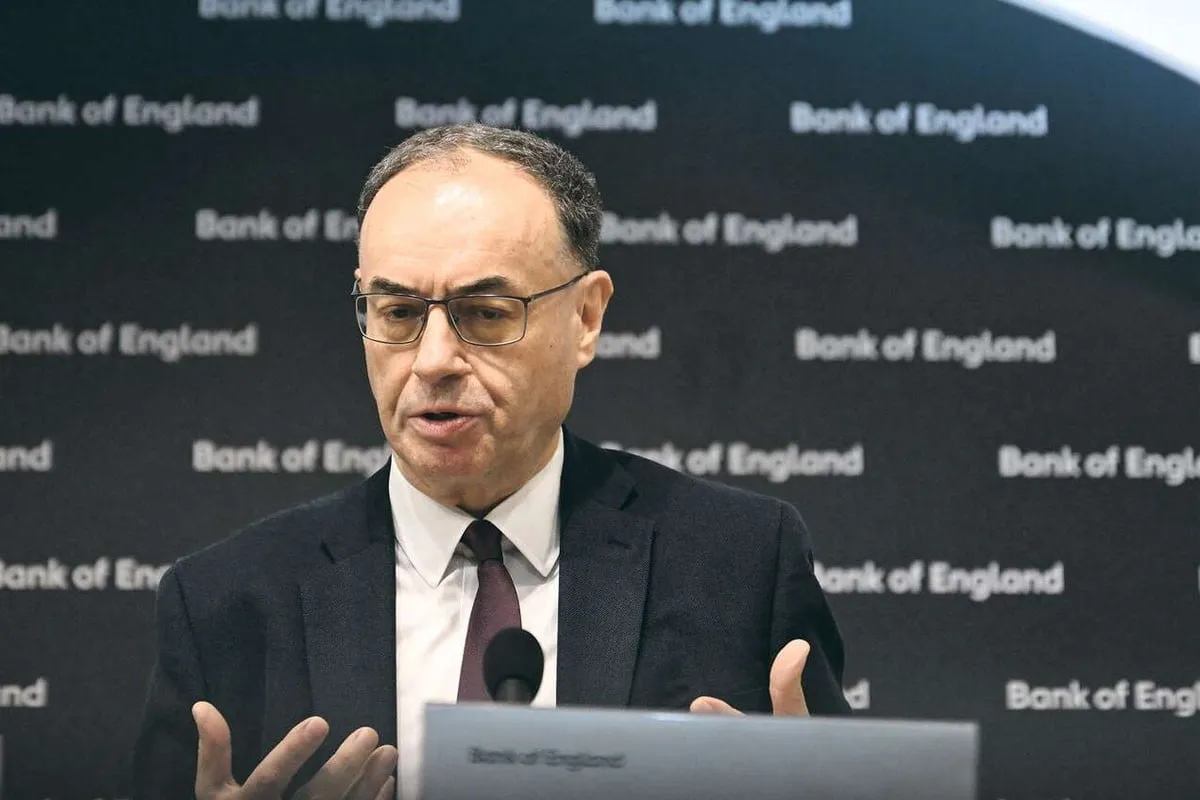
LONDON: The Bank of England has kept its benchmark interest rate unchanged at 3.75 percent, while warning that prolonged conflict in the Middle East and persistently high energy prices could force it to raise borrowing costs to contain inflation.
The Bank’s Monetary Policy Committee voted 6-3 to leave Bank Rate at 3.75 percent. Three members favoured a quarter-point increase to 4 percent.
Energy Prices Raise Inflation Risks
The Bank of England said the prolonged conflict in the Middle East had contributed to further increases in crude and refined energy prices.
UK consumer price inflation rose to 3.1 percent in August, well above the Bank’s 2 percent target. The central bank said the direct impact of higher energy prices was already visible in inflation, although there had so far been limited evidence of significant second-round effects through wages and wider prices.
Governor Andrew Bailey said the future path of interest rates would depend heavily on the scale and duration of the energy shock and how it spreads through the wider economy.
Three Policymakers Back Rate Hike
Three MPC members — Megan Greene, Catherine L Mann and Huw Pill — voted to increase Bank Rate to 4 percent.
They argued that the escalation and duration of the Middle East conflict could push energy and food prices higher and increase the risk of broader inflationary effects. They favoured a proactive increase to help keep inflation expectations under control.
The six members supporting the 3.75 percent rate, including Bailey, said the evidence of second-round effects remained limited and that it was appropriate to wait for further data while maintaining a restrictive monetary stance.
Inflation Could Rise Above 4%
The Bank’s latest assessment showed that inflation could rise to around 3.75 percent in the final quarter of 2026 and reach slightly above 4 percent in the first quarter of 2027, based on energy prices prevailing in mid-September.
The central bank said higher energy costs could also feed indirectly into food and other prices if the shock persists for longer.
Higher Rates Could Raise Borrowing Costs
The warning has significant implications for British households and businesses.
The Bank noted that lending rates had already remained materially higher since the start of the conflict. Its minutes said the quoted rate on two-year fixed mortgages was around 95 basis points higher than before the conflict.
A further increase in Bank Rate could therefore raise the cost of mortgages, household borrowing and business financing, potentially weighing on consumer spending and investment.
US Federal Reserve Also Raises Rates
The Bank of England’s decision came one day after the US Federal Reserve raised its benchmark interest-rate range by 0.25 percentage points to 3.75-4 percent on September 16. The Fed said inflation remained elevated and that the move would support a return toward its 2 percent target.
The latest decisions by the two central banks highlight how the global energy shock is complicating monetary policy, with policymakers attempting to contain inflation while avoiding unnecessary damage to economic activity.
For the Bank of England, the immediate decision was to hold rates at 3.75 percent, but officials made clear that a prolonged energy shock could change the policy outlook and increase the need for tighter monetary policy.
Catch all the World News, Breaking News Event and Trending News Updates on GTV News
Join Our Whatsapp Channel GTV Whatsapp Official Channel to get the Daily News Update & Follow us on Google News.
Must Read

Entertainment
Salman Iqbal Reveals ARY Plus Plans to Become Biggest Urdu Streaming Platform
18-September،2026

Entertainment
Ducky Bhai Responds to Nadia Afgan’s Criticism, Calls Out ‘Double Standards’
18-September،2026

Pakistan
Mir Raza Case: Commission Tells Business Partner to Answer Family’s Questions
18-September،2026