
ECC clears brownfield refinery agreements under $6bn upgrade plan

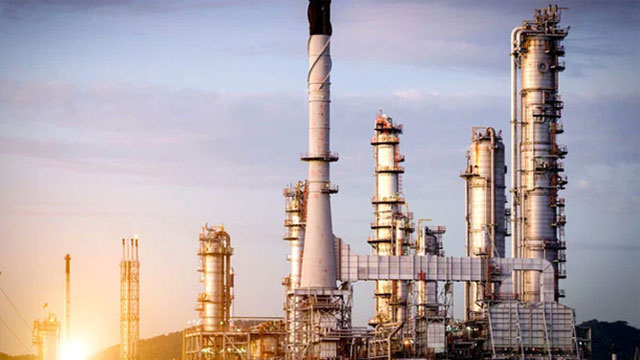
ISLAMABAD: The Economic Coordination Committee (ECC) on Monday approved the upgrade agreement under the government’s brownfield refinery policy, clearing the way for an estimated $6 billion investment in the modernisation of Pakistan’s five major existing refineries.
The agreements with Pak-Arab Refinery Ltd (PARCO), Pakistan Refinery Ltd (PRL), National Refinery Ltd (NRL), Cnergyico Pakistan Ltd (CPL) and Attock Refinery Ltd (ARL) are expected to be signed this month, subject to the availability of Prime Minister Shehbaz Sharif, according to officials.
The ECC approval marks a major step towards implementation of the Pakistan Oil Refining Policy for Upgradation of Existing (Brownfield) Refineries, 2023, aimed at attracting billions of dollars in investment to upgrade ageing plants, increase domestic production of Euro-V compliant petrol and diesel and substantially reduce furnace oil output.
The five refineries account for the bulk of Pakistan’s existing refining capacity and are expected to undertake projects involving a combined investment of around $6 billion.
The Petroleum Division had prepared and finalised a uniform upgrade agreement after consultations with the Law and Justice Division, Finance Division, Oil and Gas Regulatory Authority (Ogra), Special Investment Facilitation Council (SIFC), Inter State Gas Systems (ISGS) and representatives of the refineries.
The agreement is the principal contractual instrument linking government incentives with specific investment, project milestones and performance commitments by each refinery.
Officials said the ECC approval would now enable the government to proceed with formal execution of the agreements. The signing ceremony is likely to be held later this month, subject to the prime minister’s availability.
Under the arrangement, ISGS has been designated as the implementing entity on behalf of the Petroleum Division. It will execute the agreements, operate refinery upgradation accounts, monitor implementation, appoint technical consultants and auditors and administer incentive payments.
The upgrade agreements require the participating refineries to undertake projects aimed at maximising production of Euro-V compliant motor gasoline and high-speed diesel, increasing value-added petroleum products and substantially reducing furnace oil production.
The refineries will have to meet specified milestones covering feasibility studies, front-end engineering design (FEED), financial close and engineering, procurement and construction (EPC). The final configuration, equipment and technology will be determined on a project-specific basis.
A key incentive under the amended policy is 10pc tariff protection on imported motor gasoline and diesel for seven years. Refineries will receive 10pc deemed duty on the ex-refinery price of petrol and diesel for seven years from the signing of the upgrade agreement and opening of their dedicated upgradation accounts.
The incentive, however, will not be available as unrestricted cash. A specified portion of the deemed duty will be channelled into dedicated Refinery Upgradation Accounts, from which funds can be withdrawn only for eligible capital expenditure on approved upgrade projects.
Under the mechanism, 2.5pc of the deemed duty on high-speed diesel and the entire 10pc incremental incentive on motor gasoline will be deposited into the respective upgradation accounts.
The existing 7.5pc deemed duty on HSD for sustainability will continue after expiry of the seven-year incentive period for up to 20 years, or until deregulation, whichever occurs earlier.
The policy also imposes financial safeguards to ensure that refineries remain committed to completing their projects within agreed timelines.
Each refinery signing the agreement will be required to furnish an unconditional and irrevocable bank guarantee of Rs1 billion from an eligible bank. It will also have to provide an irrevocable letter of credit or equivalent financial instrument equal to 10pc of the amount proposed to be withdrawn against relevant project milestones.
The amount that can be drawn from the upgradation account will also be subject to limits. Refineries using new plant, machinery and equipment can withdraw up to 27.5pc of project cost, while those using eligible used equipment can draw up to 24.5pc. The remaining cost will have to be financed by the refineries themselves.
Disbursement of incentives will be linked to achievement of prescribed milestones. Funds can be released after financial close and upon meeting specified conditions, including at least 25pc physical progress or opening of matching letters of credit.
The policy also offers an incentive for early completion. A refinery completing its project ahead of schedule can qualify for an additional incentive equivalent to 0.5pc of project cost for every year saved, subject to the overall limits prescribed under the policy.
Failure to meet agreed deadlines, meanwhile, can result in encashment of the bank guarantee and recovery of incentives already disbursed. The Petroleum Division will monitor implementation through third-party technical consultants.
The refineries have been given five years from signing the upgrade agreement and opening the upgradation account to complete their respective projects, subject to approved cure and force-majeure periods. The federal government may consider a further one-year extension on a case-by-case basis.
The government has also tightened the consequences for refineries that fail to sign the agreements within the prescribed timeframe.
Under the amended policy, the HSD deemed duty for refineries that had missed the earlier deadline was reduced from 7.5pc to 5pc. It will decline further to 2.5pc for refineries failing to sign the agreement by Oct 1, 2026, and will be withdrawn altogether on Nov 15.
The incentive framework is also linked to payment of government dues. A refinery in default of petroleum or climate-support levies will not be permitted to utilise its upgradation account until it reaches a legally binding settlement and clears outstanding dues.
The broader objective is to transform Pakistan’s refining mix by increasing domestic production of petrol and diesel while reducing furnace oil output.
Feasibility-based projections indicate substantial increases in petrol and diesel production following completion of the projects. At PRL, for instance, petrol production is projected to rise from 783 tonnes per day to 4,500 tonnes, while diesel production is expected to increase from 1,793 tonnes to 5,000 tonnes per day.
At the same time, PRL’s furnace oil output is projected to fall sharply from 1,350 tonnes per day to around 250 tonnes.
The government expects the brownfield programme to improve fuel quality, strengthen domestic refining capacity, reduce furnace oil production and lower dependence on imported refined petroleum products.
With the ECC approval in place, the focus will now shift towards signing the agreements and meeting the subsequent financial and technical milestones, bringing the long-delayed $6bn refinery modernisation programme into its implementation phase.
Catch all the Business News, Breaking News Event and Trending News Updates on GTV News
Join Our Whatsapp Channel GTV Whatsapp Official Channel to get the Daily News Update & Follow us on Google News.
Must Read