The Middle Class in Global Socioeconomic and Political Transformation


The middle class is one of the most influential yet conceptually disputed social formations in modern political economy. It cannot be understood merely as a group defined by income because its position also depends on occupation, education, property, social status, political influence, access to institutions and expectations about the future. Historically, the emergence of merchants, professionals, administrators, artisans and entrepreneurs between hereditary elites and laboring populations accompanied the transition from feudalism to commercial and industrial capitalism. Karl Marx interpreted this development through the relationship between classes and the means of production, while Max Weber broadened the analysis by distinguishing economic class from status and political power. Aristotle, much earlier, had already recognized the political importance of a substantial middle stratum, arguing that societies become more stable when neither the wealthy nor the poor possess overwhelming dominance. The contemporary middle class is therefore not simply an economic category; it is simultaneously a product of capitalism, education, state institutions and political history.
The historical experience of Europe demonstrates that the middle class can become a powerful agent of political transformation when it acquires economic independence and educational capacity. The European bourgeoisie challenged aristocratic privilege during the liberal revolutions of the eighteenth and nineteenth centuries and became an important force behind constitutional government, private property, commercial freedom and representative institutions. Yet the bourgeoisie’s historical role was deeply contradictory. It demanded political equality when confronting hereditary privilege but did not necessarily demand economic equality for workers. Marx identified this contradiction by arguing that the bourgeois revolutions replaced one form of domination with another based primarily on economic relations. Thus, when the middle class becomes politically powerful, it does not automatically abolish hierarchy; frequently, it seeks to replace inherited privilege with achievement, property, education and professional status as the new foundations of social authority. The historical lesson is that the middle class often fights inequality when it is excluded from power but may defend inequality once it becomes part of the ruling structure.
This paradox can be observed particularly clearly in the development of Western Europe and the United States. The nineteenth-century middle classes demanded constitutionalism, legal equality and political representation because these institutions allowed commercial and professional groups to challenge aristocratic monopolies. But as industrial capitalism expanded, the interests of workers and the bourgeoisie increasingly diverged. The middle class frequently feared revolutionary socialism because it threatened private property and social stability. After the Second World War, however, Western European governments developed welfare states that created a broader social compromise between capital and labor. Public education, healthcare, social insurance, collective bargaining, pensions and rising wages enabled millions of working families to enter a more secure middle-class existence. This historical transformation demonstrates that the middle class is not created by markets alone. It can be produced through political decisions that distribute the gains of productivity more widely. The European welfare state effectively converted part of the working class into economically secure citizens, reducing the revolutionary pressures that had characterized nineteenth-century capitalism.
The philosophical behavior of the middle class when it becomes a decision-making force is particularly complex. It generally values order, property, education, merit, institutional stability and upward mobility because these are the mechanisms through which it achieved or hopes to achieve its position. Consequently, middle-class political behavior often becomes conservative once its own status is secured. The same group that demands reform while excluded from power may resist further redistribution after acquiring property, professional status or institutional influence. Alexis de Tocqueville’s observations about democratic societies are relevant here: citizens seek equality but may simultaneously develop strong interests in protecting what they have acquired. This creates a political psychology of aspiration and preservation. The middle class wants society to remain open enough for its children to rise but stable enough to ensure that its own achievements are not threatened. It therefore occupies a political space between revolutionary transformation and reactionary preservation.
This contradiction becomes even more visible when middle-class groups enter government or become major decision-makers. They often replace inherited aristocratic authority with bureaucratic, professional and technocratic forms of authority. Max Weber’s theory of bureaucracy helps explain this transformation: modern states increasingly rely on educated officials, administrators, lawyers, economists, engineers and specialists whose authority derives from expertise rather than birth. This can strengthen rational administration, merit-based recruitment and institutional efficiency. Yet technocracy has its own danger. Decision-makers may begin to regard society as a problem to be managed rather than a community whose citizens possess competing values and legitimate grievances. The middle-class administrator may believe that rational planning is superior to political negotiation, while the professional elite may gradually become detached from the working population. In this sense, the rise of the middle class can democratize authority while simultaneously bureaucratizing it.
Education is consequently one of the most powerful instruments through which middle-class power is created and reproduced. Human-capital theory views education as an investment that increases productivity and income, while Pierre Bourdieu emphasizes that education also transmits cultural capital, social networks and behavioral norms. Historically, expanding literacy and universities helped produce lawyers, teachers, journalists, civil servants, engineers and entrepreneurs who became the intellectual infrastructure of modern states. But when educated groups become decision-makers, they may also construct institutions around their own cultural standards. What appears to be meritocracy can therefore reproduce class privilege. A child from a wealthy family may possess superior schooling, language skills, professional connections and financial security before entering the competition. Michael Sandel’s critique of meritocracy is relevant because successful people can come to believe that their position is entirely self-created, while unsuccessful people are treated as responsible for their own failures. A mature middle-class political philosophy must therefore recognize both individual effort and structural opportunity.
Africa presents a different but equally important experience of middle-class formation. In countries such as Kenya, Nigeria, Ghana and South Africa, urban professionals, entrepreneurs, technology workers, civil servants and small-business owners have become increasingly important economic actors. Yet their middle-class status often remains precarious because informal employment, inadequate infrastructure, expensive private education and healthcare, unemployment and inflation place significant pressure on households. African middle classes may therefore behave politically in ways that differ from their Western counterparts. They can demand democracy and accountability because they depend upon functioning institutions, but they can also favor strong governments when instability threatens property and economic opportunity. In South Africa, for example, class interacts with the historical legacies of race and spatial inequality, demonstrating that middle-class power cannot be separated from the historical structures within which it develops. The central question is not simply whether Africa has a middle class, but whether its middle class can become a broad social coalition capable of demanding institutions that benefit society beyond itself.
Central Asia provides another distinctive model because its contemporary middle classes emerged from the transition from Soviet socialism toward market-oriented economies. In Kazakhstan, Uzbekistan, Kyrgyzstan and other Central Asian societies, professionals, entrepreneurs, private-sector employees and educated urban populations have gradually acquired new economic roles. Yet the political influence of these groups remains shaped by strong states, resource dependence, bureaucratic institutions and uneven market reforms. The Central Asian middle class often desires predictable government, economic opportunity, property protection and better public services rather than revolutionary political change. Its political behavior demonstrates an important principle: middle classes tend to demand political liberalization when institutions obstruct their economic aspirations, but they may tolerate authoritarianism when governments provide stability and protect their economic interests. Political freedom and economic security do not always develop simultaneously.
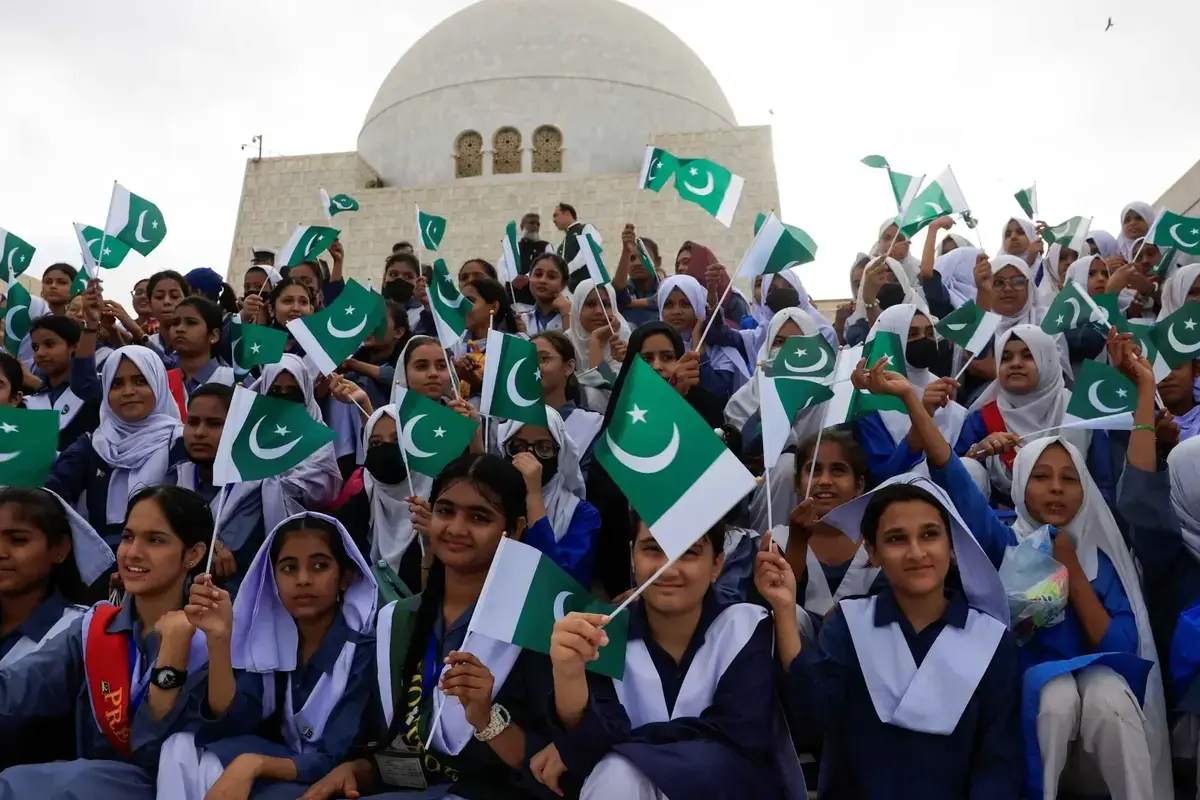
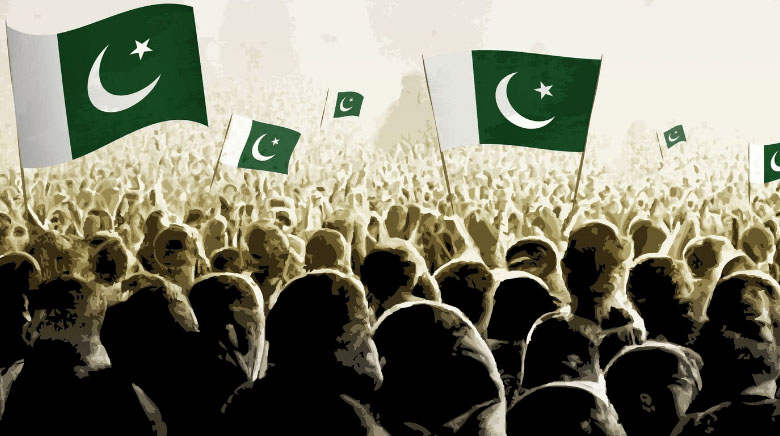
Pakistan illustrates perhaps most clearly the contemporary transformation of the middle class through education, technology and political mobilization. Urban professionals, freelancers, small entrepreneurs, teachers, engineers, doctors, IT workers and salaried employees increasingly participate in national political discourse through social media. Digital technology has lowered the cost of political organization and allowed educated younger citizens to bypass traditional political intermediaries. Yet Pakistan’s middle class remains economically vulnerable because inflation, energy costs, housing, healthcare, transportation and educational expenses consume a substantial proportion of household income. Its political expectations are consequently contradictory: it demands accountability, merit and institutional reform while simultaneously seeking economic stability and protection of property and employment. When middle-class groups become powerful political actors, they often place enormous faith in leaders who promise transformational change. But history demonstrates that mobilization and governance are fundamentally different capacities. A movement can successfully challenge an established political order while still lacking the institutional program necessary to construct a new one.
The deepest historical and philosophical lesson is therefore that the middle class should neither be romanticized as the natural bearer of democracy nor condemned as an inevitable defender of privilege. When excluded from power, it frequently becomes reformist because it seeks representation, opportunity and recognition; when it acquires power, it often becomes institutionalist because it wants stability and protection of its newly acquired position; and when it becomes economically threatened, it can become politically volatile, supporting either progressive redistribution or authoritarian order depending on which it perceives as protecting its future. Aristotle’s warning against extremes, Weber’s distinction between class and status, Marx’s analysis of class power, Bourdieu’s theory of cultural reproduction, Rawls’s conception of distributive justice and Sen’s capability approach all illuminate different dimensions of this behavior. The ideal middle class is therefore not simply one that consumes more, earns more or possesses university degrees. It is one that converts its economic and educational advantages into social responsibility: defending political equality without destroying economic incentives, supporting markets without accepting exploitation, demanding state efficiency without abandoning democratic participation, and seeking prosperity without treating poverty as a moral failure. Ultimately, the historical success of a middle class should be judged by what it does after it acquires power. If it merely replaces an old elite with a new professional elite, it reproduces hierarchy; if it uses its political influence to expand education, healthcare, decent employment, social mobility, institutional accountability and human dignity for those below it, it becomes a genuine instrument of democratic development. As John Rawls’s philosophical framework suggests, the legitimacy of social institutions cannot be judged only by how they reward the successful, but also by whether they remain just to those who begin with the least power and opportunity.
Catch all the Blogs News, Breaking News Event and Trending News Updates on GTV News
Join Our Whatsapp Channel GTV Whatsapp Official Channel to get the Daily News Update & Follow us on Google News.
Must Read

Pakistan
Development Activities Continue Under Balochistan Special Development Initiative
10-October،2026