
Where Are Kouri Richins’ Kids Now? Three Sons’ Lives After Mother Sentenced to Life for Eric Richins Murder


Where Are Kouri Richins' Kids Now? Three Sons' Lives After Mother Sentenced to Life for Eric Richins Murder
On May 13, 2026, a Utah courtroom heard something that stopped the proceeding cold — three young boys, all under fourteen, submitting victim impact statements asking a judge to impose the harshest sentence available on the woman who murdered their father. That woman was Kouri Richins, their mother. The judge sentenced her to life without parole. The case of the children’s book author who poisoned her husband with a fentanyl-laced cocktail and then published a grief guide for children has concluded in the courtroom. The story of what happens to those children is just beginning.
What the Boys Said — and Why It Mattered to the Sentence
The victim impact statements submitted by Kouri Richins’ three sons during the May 13 sentencing hearing are among the most devastating documents to emerge from an already devastating trial. The eldest son’s statement, obtained by PEOPLE, expressed explicit fear that his mother would harm him and his brothers if ever released from prison.
That level of fear — articulated clearly, in writing, by a child about his own mother — is not routine in criminal sentencing proceedings. It reflects years of accumulated knowledge about who Kouri Richins was in private, beyond the soccer mom and grief author image she had carefully constructed for public consumption. All three boys expressed similar concerns. Family members who spoke to reporters after the verdict described the boys as surrounded by love and doing well — but the content of those statements tells a more complex emotional story about children processing betrayal at the most fundamental level possible.

The statements reportedly influenced the judge’s decision to impose life without parole rather than any lesser available sentence. That outcome means the boys will grow into adulthood, middle age, and eventually old age without any realistic prospect of their mother’s release into their lives uninvited.
Where the Boys Are Now — Custody, Stability and Eric’s Family
When Kouri Richins was arrested in May 2023 — over a year after Eric’s death in March 2022 — custody of all three sons transferred immediately to Eric Richins’ family. Court proceedings formalised those arrangements in 2024, granting Eric’s relatives official custody rights while Kouri remained incarcerated awaiting trial.
The boys have lived with Eric’s family continuously since that transfer. Family members speaking after the March 2026 guilty verdict described the environment as loving and stable — a deliberate and consistent message about the children’s wellbeing in what could easily have become a public narrative of ongoing victimhood. A cousin of Eric told reporters simply: they are great boys, surrounded by love, and they are going to be fine.

That framing — protective, forward-looking, firmly refusing to centre the children’s trauma in media coverage — reflects a family that has thought carefully about what the boys need from their public narrative as well as their private one. Their exact ages have been kept undisclosed throughout proceedings, a privacy decision that has been consistently maintained across four years of intense national media attention.
The Case That Made Kouri Richins a National Story
Eric Richins was found dead in his bedroom on March 4, 2022, at the couple’s home near Park City, Utah. He was 39. Initial investigations suggested an overdose, but toxicology revealed fentanyl in his system — a finding that transformed a tragic death into a criminal investigation that consumed the next four years.
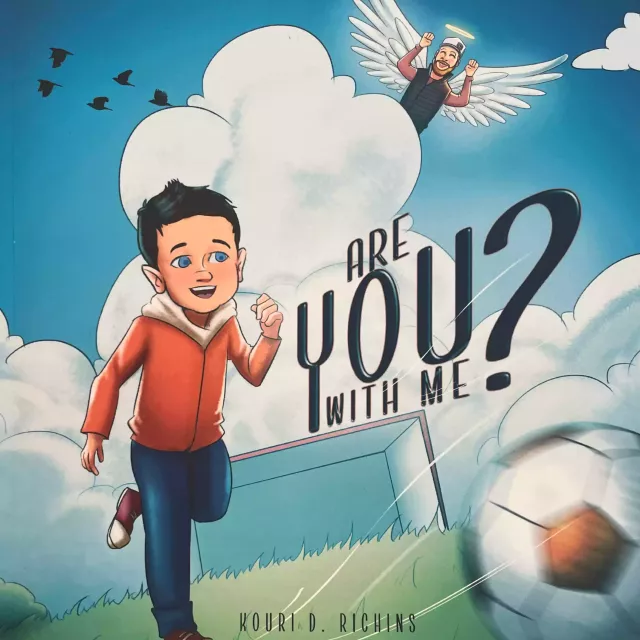
Kouri’s public response to Eric’s death amplified the eventual horror of the charges against her. She published a children’s book — Are You With Me? — featuring a little boy processing the loss of his father. The book generated genuine public sympathy for a young widow helping her children cope with grief. That sympathy collapsed entirely when she was arrested in May 2023 and prosecutors revealed the alleged mechanism of Eric’s death: a cocktail spiked with five times the lethal dose of fentanyl, administered before he went to sleep.
Prosecutors argued this may not have been the first attempt on Eric’s life, citing an earlier incident in which he became severely ill after consuming food allegedly prepared by Kouri. Her 911 call — played in court and dissected extensively — became central to the prosecution’s case. Prosecutor Brad Bloodworth’s characterisation of it as the sound of “a wife becoming a black widow” rather than a genuinely panicked widow became one of the trial’s most replayed moments.

On March 16, 2026, the jury returned guilty verdicts on charges of aggravated murder, attempted murder, fraud, and forgery. The May 13 sentencing finalised what the verdict had initiated.
The Children’s Book That Became Evidence of Character
The publication of Are You With Me? occupies a uniquely disturbing place in this case’s public narrative. A children’s grief guide authored by a woman who had allegedly murdered the father whose loss the book addressed — and who had done so with calculation and premeditation — represents a level of psychological compartmentalisation that prosecutors and media commentators have consistently found difficult to fully articulate.
Child psychology professionals have noted that the three boys’ experience of their mother’s book — written about a child losing a father, authored by the person responsible for that loss — creates a particular form of psychological complexity that standard grief frameworks do not address. The book has been removed from sale since Kouri’s arrest.
What This Case Reveals About Domestic Homicide and Public Perception
The Kouri Richins case followed a pattern that domestic violence researchers have documented extensively — a perpetrator who maintained a carefully constructed public image of devoted motherhood and community engagement while allegedly engaging in sustained criminal behaviour at home. The speed with which public sympathy reversed after her arrest reflects both the strength of that constructed image and the shock of its dismantling.

The “black widow” label applied by media and public commentary has been critiqued by some as reductive — collapsing a complex criminal case into a sensationalised archetype. But the label’s persistence reflects genuine public difficulty processing a case in which the evidence of premeditation was extensive and the victim’s children were simultaneously the objects of the perpetrator’s public grief performance and the witnesses to her private reality.

FAQ
Where are Kouri Richins’ sons now? Living with Eric Richins’ family, who received official custody in 2024. They are described as stable, loved, and doing well.
What did the boys say in court? All three submitted victim impact statements expressing fear of their mother and requesting the harshest possible sentence.
What sentence did Kouri Richins receive? Life without parole, confirmed at the May 13, 2026 sentencing hearing.
What was Eric Richins killed with? Prosecutors proved he was poisoned with a fentanyl-laced cocktail — allegedly containing five times the lethal dose.
Did Kouri Richins admit guilt? No — she has consistently maintained her innocence despite the guilty verdict on all charges.
Catch all the Entertainment News, Breaking News Event and Trending News Updates on GTV News
Join Our Whatsapp Channel GTV Whatsapp Official Channel to get the Daily News Update & Follow us on Google News.
Must Read